The appalling use of chemical weapons has continued, and rapid developments in science and technology threaten to make their acquisition and use even easier. We cannot allow this to continue. In the name of all victims of chemical warfare, I urge States to reaffirm their commitment to a world free of these repugnant weapons.
Developments and trends, 2025
In 2025, the Secretary-General continued to emphasize that the use of chemical weapons anywhere, by anyone and under any circumstances, is intolerable, and that impunity for their use is equally unacceptable. Against a backdrop of continued allegations of chemical weapons use across the world, he urged States to reaffirm their commitment to the Chemical Weapons Convention and called for unity in the Security Council to identify and hold accountable those responsible for any use of such weapons. The centenary of the 1925 Geneva Protocol provided an important occasion to recall the enduring significance of the international norm against chemical and biological weapons, and to renew collective commitments to a world free of such weapons.
The Office also continued to support the Secretary-General’s good offices in furthering the implementation of Security Council resolution 2118 (2013) on the elimination of the chemical weapons programme in the Syrian Arab Republic. Following the collapse of the former Government in late 2024, the Office worked with the Organisation for the Prohibition of Chemical Weapons (OPCW), the new Syrian Government and members of the Security Council in their efforts to obtain long-overdue clarifications regarding the full extent and scope of the Syrian chemical weapons programme, restore cooperation and uphold the global norm against chemical weapons.
The OPCW continued to promote the full and effective implementation of the Chemical Weapons Convention. With the destruction of declared stockpiled chemical weapons completed in 2023, the Organisation maintained its focus on verification, including the destruction of old and abandoned chemical weapons, knowledge retention and preparedness for future contingencies. It also continued efforts to prevent the re-emergence of chemical weapons through industry verification, support for national implementation, assistance and protection, international cooperation, engagement with the chemical industry, and outreach to States not yet party to the Convention.
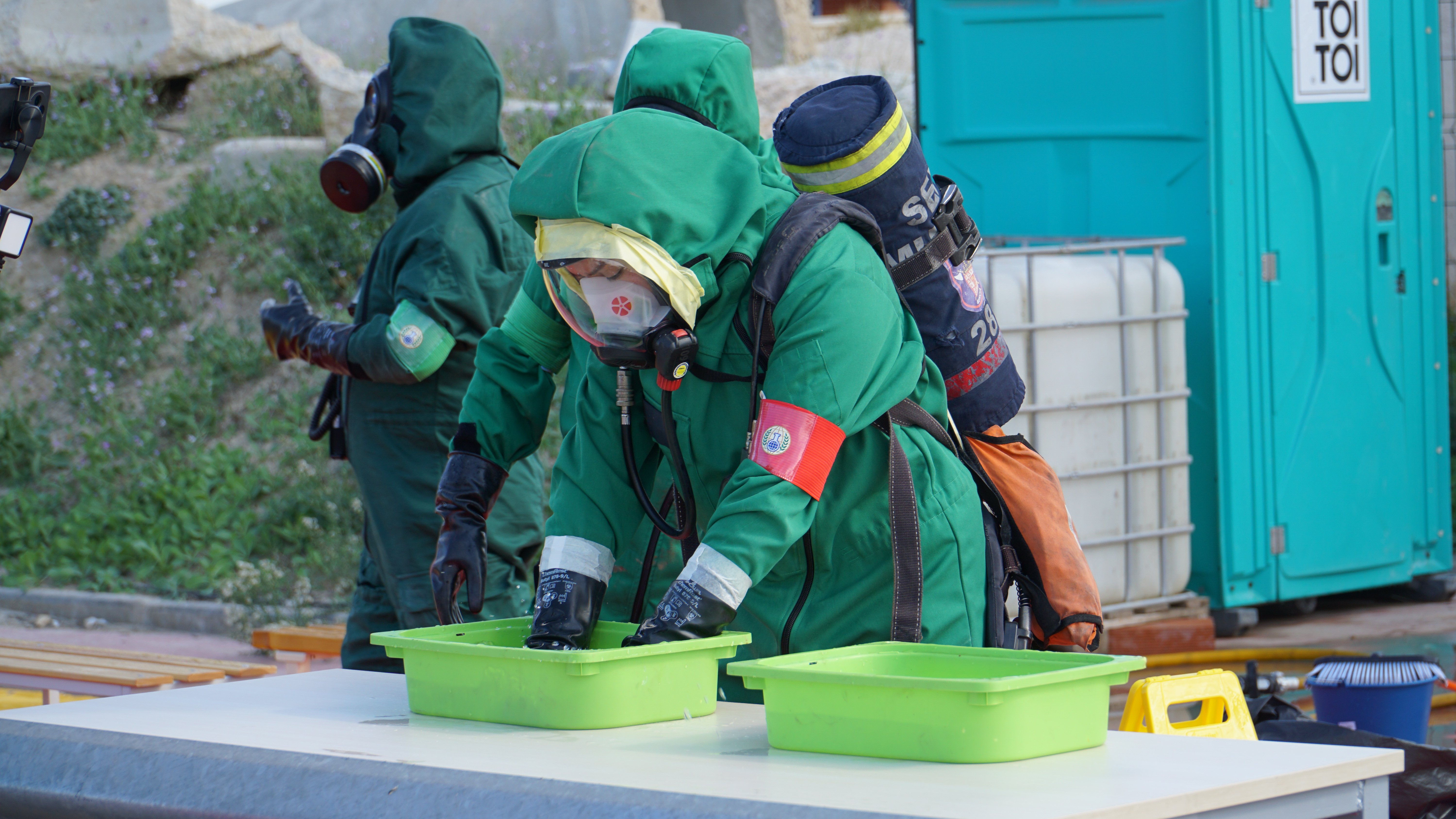
Experienced first responders from across Latin America and the Caribbean strengthened their ability to respond to and manage a complex chemical emergency during a training in November 2025 conducted jointly by the OPCW, the Government of Spain, the Murcia City Council and the Murcia Fire Brigade in Murcia, Spain. (Photo credit: OPCW)
During the year, the OPCW also continued to adapt its work to developments in science and technology. The Organisation deepened its consideration of emerging technologies, including artificial intelligence, chemical forensics and biotoxins, while making further use of the OPCW Centre for Chemistry and Technology as a platform for training, proficiency testing, research, analysis and capacity-building. Those efforts underscored the need for the chemical weapons disarmament regime to remain responsive to scientific and technological change while supporting the peaceful uses of chemistry.
Efforts to strengthen and institutionalize the Biological Weapons Convention continued through the Working Group established by the ninth Review Conference. At its 2025 sessions, the Working Group considered possible specific and effective measures, including possible legally binding measures, in areas such as international cooperation and assistance, science and technology, confidence-building and transparency, compliance and verification, national implementation, assistance, response and preparedness, and institutional arrangements. Although consensus was not reached on elements of the strengthening process, engagement among States parties continued, and further sessions were scheduled for 2026.
The Office for Disarmament Affairs and the Biological Weapons Convention Implementation Support Unit continued to assist States parties in implementing the Convention, including through support for confidence-building measures, national contact points, legislative and regulatory frameworks, universalization, assistance and capacity-building. Activities in Africa, Asia and the Pacific, the Caribbean and other regions reflected sustained demand for practical support, regional dialogue and strengthened national capacities. Youth, education and outreach initiatives, including the Youth for Biosecurity Fellowship Programme and anniversary-related activities, further contributed to broadening engagement with the Convention and fostering a culture of responsible science.
Figure 2.1. Biological Weapons Convention implementation tracker
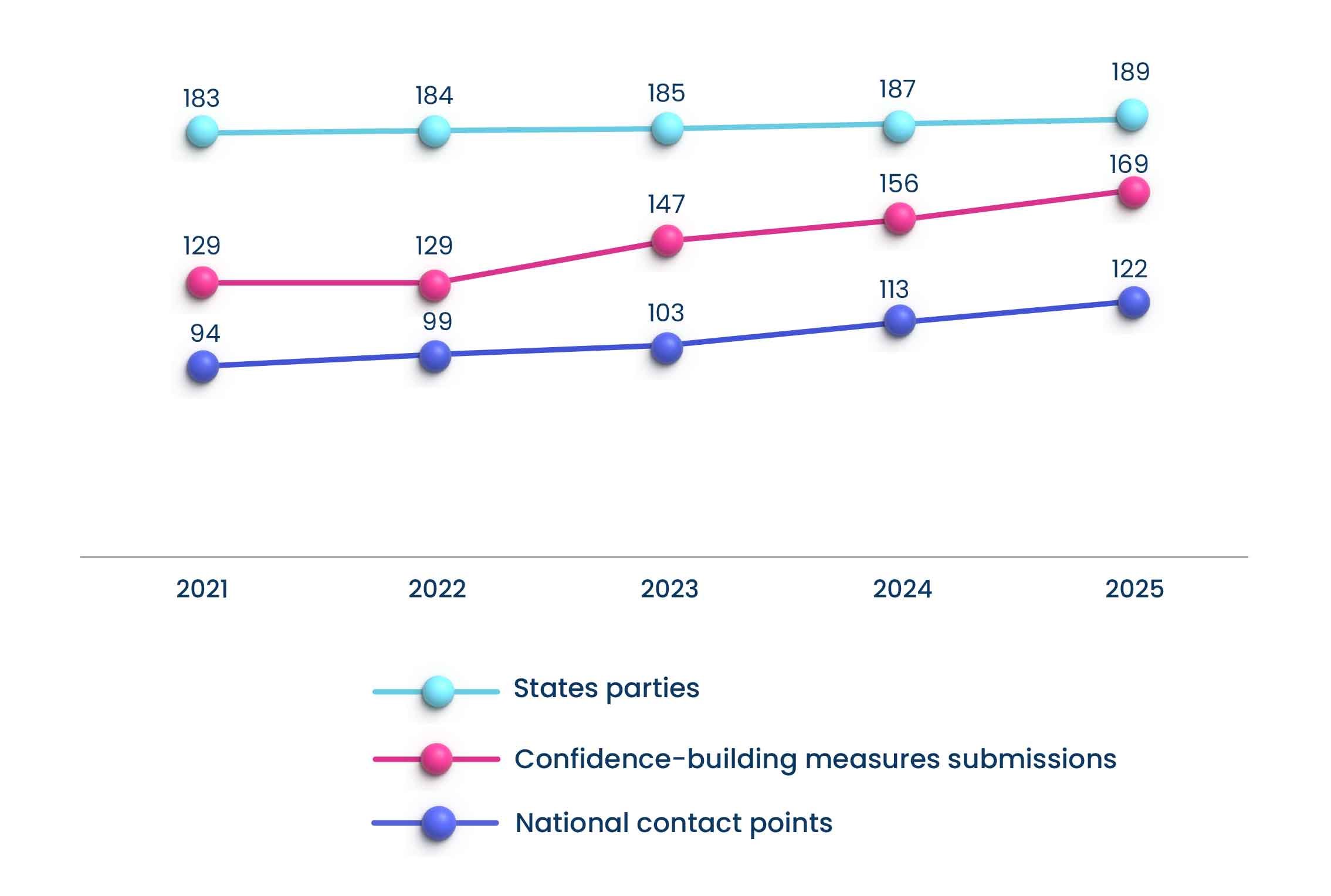
This graph shows the number of States parties, designated contact points and confidence-building measures (CBM) submissions from 2021 to 2025. In 2025, of the 189 States parties recorded, 169 had designated national contact points, and 122 submitted CBM reports, resulting in a participation rate of more than 65 per cent, the highest since the CBM system was introduced in 1987.
The Office for Disarmament Affairs continued to strengthen the operational readiness of the Secretary-General’s Mechanism for Investigation of Alleged Use of Chemical and Biological Weapons. As custodian of the Mechanism, the Office maintained the roster of nominated experts and laboratories. It also supported training, exercises, outreach, information-management work and cooperation with relevant international and regional partners. Those efforts remained essential to ensuring that the Secretary-General could call upon the Mechanism to conduct timely and credible investigations.
Figure 2.2. Expanding global participation in the Secretary-General’s Mechanism: nominations of experts, consultants and laboratories by region, 2021–2025
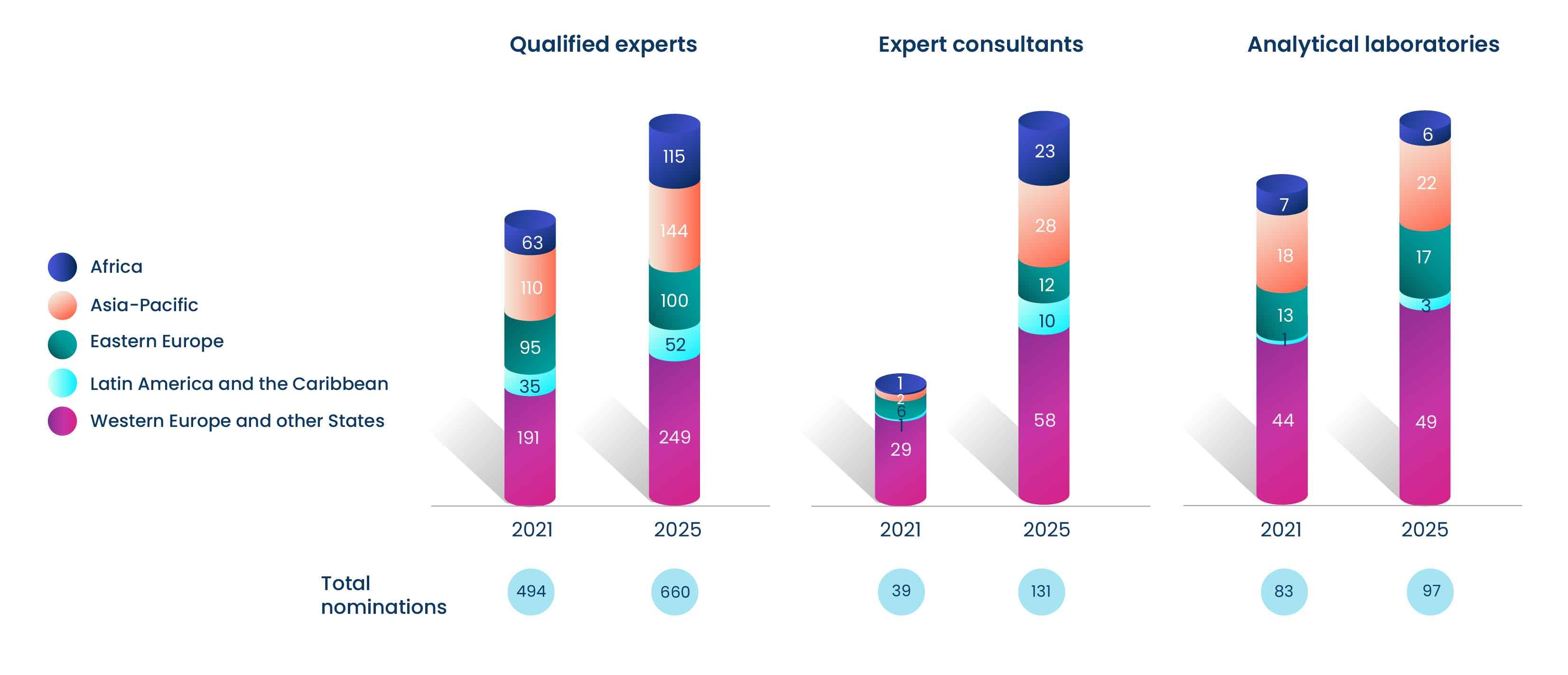
As custodian of the Secretary-General’s Mechanism for the Investigation of Alleged Use of Chemical and Biological Weapons, the Office for Disarmament Affairs maintains the roster of qualified experts, expert consultants and analytical laboratories nominated by Member States in accordance with the Mechanism’s Guidelines and Procedures to assist investigations at short notice.
The regional distribution of nominations between 2021 and 2025 highlights growing participation from a wider range of Member States, including notable increases from previously underrepresented regions, particularly Africa, Asia and the Pacific, and Latin America and the Caribbean. Increased nominations from these regions have enhanced not only the geographical balance of the roster but also the diversity of expertise and specialized capabilities available to support the Mechanism’s investigations.
Export-control-related developments also continued to support the objectives of the chemical and biological weapons disarmament regimes. The Australia Group marked 40 years of cooperation at the forefront of global counter-proliferation efforts to prevent the acquisition and development of chemical and biological weapons. All Australia Group members recalled their full commitment to the Biological Weapons Convention and the Chemical Weapons Convention.
Chemical weapons
In 2025, the OPCW continued to deliver on its mandate to promote the full and effective implementation of the Convention on the Prohibition of the Development, Production, Stockpiling and Use of Chemical Weapons and on Their Destruction (Chemical Weapons Convention).
During the year, the OPCW completed its final review visit to the Blue Grass Chemical Agent-Destruction Pilot Plant in Kentucky, United States, verifying the disposal of chemical weapons component wastes. That step marked the successful conclusion of an additional process related to the destruction of stockpiled chemical weapons completed in 2023. In parallel, the Organisation continued to verify the destruction of old and abandoned chemical weapons. In March, the Director-General, along with the Chairperson and members of the Executive Council, visited the GEKA[1] destruction facility and Dethlinger Pond site in Münster, Germany. The OPCW also continued to encourage and facilitate the sharing of specialized expertise on the destruction of chemical weapons between States parties while prioritizing knowledge retention on verification activities.
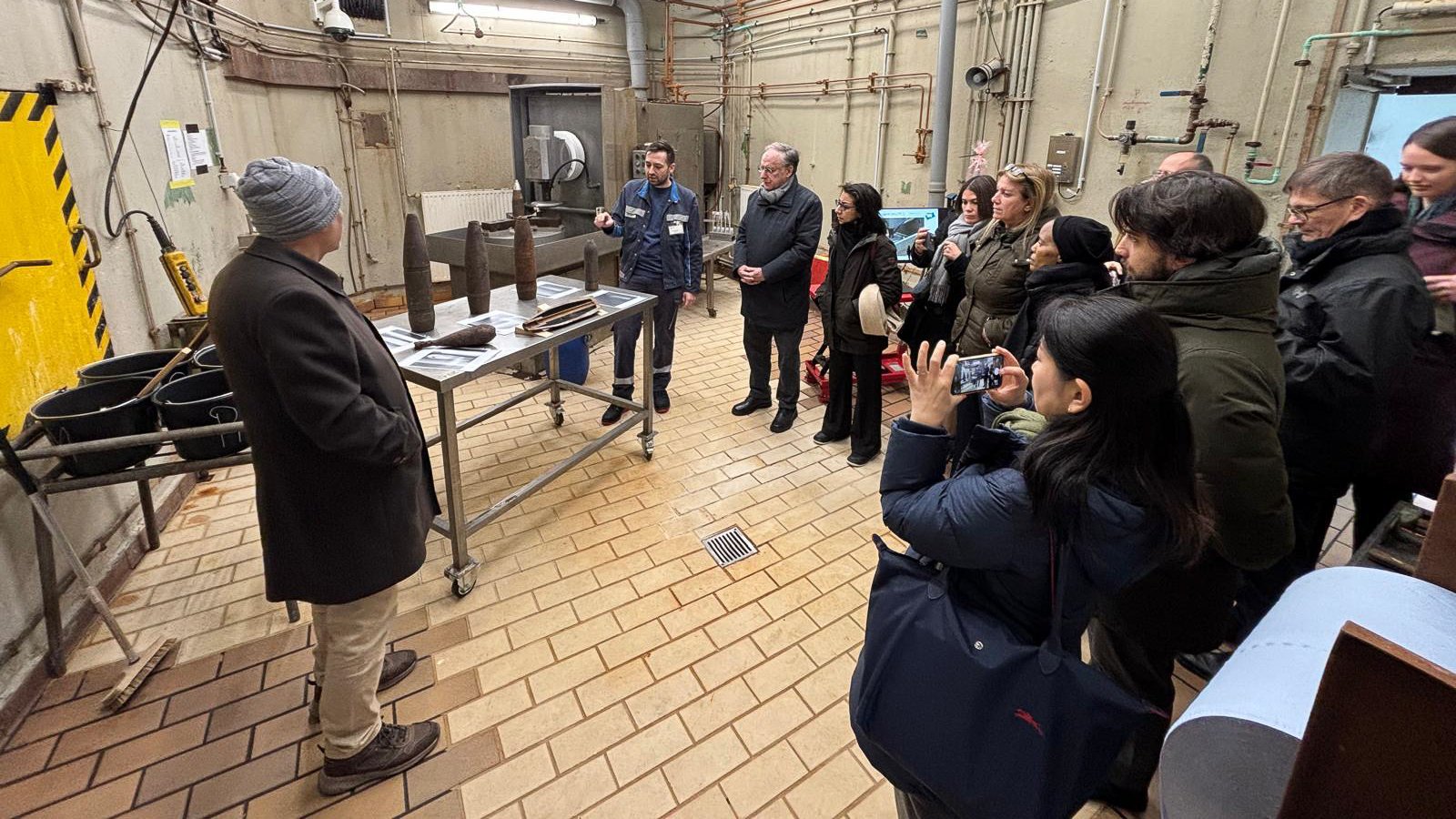
OPCW Executive Council and the OPCW Director-General visit the GEKA Destruction Facility and Dethlinger Pond site in Münster, Germany, from 13 to 14 March 2025. (Photo credit: Permanent Mission of Germany to the OPCW)
The Organisation maintained its focus on preventing the re-emergence and proliferation of chemical weapons: in 2025, it met its mandated target of 200 industry inspections. The OPCW also deepened its engagement with emerging technologies and their implications for the implementation of the Convention. Throughout the year, the Temporary Working Group on Artificial Intelligence (AI), operating under the OPCW Scientific Advisory Board, contributed to informing the Organisation’s work on AI. The Technical Secretariat also continued its engagement with OPCW member States on adapting their national measures for implementing the Chemical Weapons Convention to reflect recent scientific and technological developments, including in the areas of chemical safety and security.
The OPCW Centre for Chemistry and Technology (ChemTech Centre) continued to enhance and bolster the Organisation’s implementation capacity for the Convention. In 2025, the Centre hosted activities that included training of inspectors, laboratory exercises, proficiency testing and capacity building events. Notably, the Centre conducted the First Trial OPCW Biotoxins Proficiency Test — part of an effort by the Technical Secretariat to strengthen expertise in analysing the biotoxins listed in the Annex of Chemicals to the Convention; and to further explore the need for an official OPCW proficiency test on biotoxins.
Additionally, OPCW maintained its efforts to achieve the universality of the Chemical Weapons Convention, encouraging the remaining States not party to join without delay or preconditions.
Responding to the use or threat of use of chemical weapons remained a core priority of the Organisation.
Throughout 2025, the OPCW continued to implement its mandates relating to the Syrian chemical weapons dossier, where significant progress followed the change in government in December 2024. In historic developments, the Director-General visited the Syrian Arab Republic and held meetings with President Ahmed Al‑Sharaa and with the Minister of Foreign Affairs, Asaad Al‑Shaibani. Both officials reaffirmed their country’s commitment to its obligations under the Convention and to all OPCW mandates related to the Syrian Arab Republic, including the mandate to identify perpetrators of chemical weapons use (C‑SS‑4/DEC.3). At the Director‑General’s invitation, the Minister of Foreign Affairs addressed the OPCW Executive Council at its 108th Session, reaffirming Syria’s commitment to destroying remaining elements of the chemical weapons programme developed by the previous government, delivering justice to victims, and complying with international law.
In the Syrian Arab Republic, the Technical Secretariat focused on supporting the Government in identifying and securing any remaining chemical weapons-related facilities and materials, as well as determining the true extent of the former chemical weapons programme. It also continued its investigations to establish the facts surrounding allegations of use of chemical weapons in the country and to identify the perpetrators of their use. Beginning in March, teams from the Technical Secretariat conducted several deployments to the Syrian Arab Republic. In October, the OPCW re-established a continuous presence in the country.
On 1 June, the OPCW Director-General established the Office of Special Missions to oversee all non-routine work of the Technical Secretariat. The Office integrates the activities in the Syrian Arab Republic and the mandates previously implemented by the Declaration Assessment Team, the Fact-Finding Mission and the Investigation and Identification Team, as well as other mandated activities. The Office is also responsible for implementing other special missions, including assisting States parties at their request in accordance with the Convention and relevant decisions by the policymaking organs.
In 2025, the Technical Secretariat continued to assist Ukraine at its request, including through training first responders and investigators, as well as supplying equipment for those purposes financed through voluntary contributions from States parties.
In addition, following requests from Ukraine under article VIII, paragraph 38(e) of the Convention, the Secretariat conducted technical assistance visits to Ukraine. Following an initial report issued in 2024, the Technical Secretariat issued two further reports in February and in June 2025 on the outcome of technical assistance visits. The three reports reached similar conclusions: in all three instances, two OPCW-designated laboratories conducted analysis separately and independently from one another and confirmed the presence of the riot control agent 2-chlorobenzalmalononitrile (CS gas) in grenade and soil samples provided by Ukraine. The samples were collected by Ukrainian investigators from locations along the confrontation lines. The technical assistance visit teams confirmed, using the latest technological tools, that the chain of custody of the samples collected by Ukraine had been maintained.
On 7 July 2025, the Russian Federation seized the Technical Secretariat with a request for technical assistance related to reported intent of chemical weapons use in Ukraine. Consultations took place between the Secretariat and the Russian Federation with respect to clarifying legal and technical issues related to the request, which remain unresolved. The Secretariat will continue to engage with the Russian Federation to seek further clarifications on all pending issues.
The Technical Secretariat also monitored the situation in Sudan, where allegations of use of chemical weapons emerged. Ahead of the 109th Session of the Executive Council in July, Benin, Chad, and Mauritania, supported by Guinea-Bissau, seized the Council under article IX of the Convention, requesting clarifications from Sudan on allegations of chemical weapons use. Following Sudan’s responses, the parties engaged in dialogue under the direct purview of the Executive Council in accordance with article IX. As at the end of 2025, the Technical Secretariat had not received any sufficiently substantiated information regarding those allegations, nor substantiated requests for further actions on its part.
Thirtieth session of the Conference of the States Parties
The thirtieth session of the Conference of the States Parties to the Chemical Weapons Convention took place from 24 to 28 November 2025 in The Hague. Representatives of 157 States parties, one signatory State and one non-signatory State attended the Conference (C-30/5, paras. 1.2–1.4). Delegates from 132 civil society organizations registered to participate (C-30/DEC.4, annex), along with representatives from the chemical industry and scientific community (C-30/DEC.3, annex). The session was also attended by seven international organizations, specialized agencies and other international bodies (C-30/DEC.2, annex).
The thirtieth session of the Conference considered questions, matters and issues within the scope of the Chemical Weapons Convention, including disarmament, the prevention of the re-emergence of chemical weapons, assistance and protection, international cooperation, and emerging technologies.
The Conference considered and approved the biennial programme and budget of OPCW for 2026–2027 (C-30/DEC.6), providing the necessary resources for OPCW operations. The Conference also appointed, by acclamation, Ms. Sabrina Dallafior Matter as the next Director-General of the Technical Secretariat of the OPCW, for a term of office of four years beginning on 25 July 2026 (C-30/DEC.7).
Activities of the Technical Secretariat
Verification activities
Since the destruction of all categories of declared stockpiled chemical weapons was achieved in July 2023, the OPCW has increased its attention on retaining knowledge related to verification practices for chemical weapons destruction to maintain preparedness for the possible future accession of new States parties.
During 2025, the Technical Secretariat conducted a workshop on verification practices for chemical weapons destruction. The event addressed the issue of knowledge retention and transfer in order to prevent the loss of institutional expertise related to the destruction of chemical weapons. The workshop captured core knowledge related to methodologies, challenges and lessons learned during destruction operations and enhanced the Technical Secretariat’s knowledge management repository.
The year 2025 saw the continued destruction of non-stockpiled weapons. This included abandoned chemical weapons in Haerbaling, China, as well as the excavation of chemical weapons abandoned by Japan in several other locations in China. Furthermore, China, Japan and the Technical Secretariat held their forty-first and forty-second trilateral meetings virtually, focusing on practical and technical aspects of the ongoing destruction projects. Additionally, in 2025, the Technical Secretariat verified the destruction of chemical weapons declared by Germany as abandoned chemical weapons.
The destruction of old chemical weapons continued in 2025. As of the end of 2025, 19 States parties had declared a total of 162,114 old chemical weapons, of which 124,427 had been verified as destroyed.
Regarding industry verification activities in 2025, the Technical Secretariat carried out all 200 planned inspections pursuant to article VI of the Chemical Weapons Convention, including 11 Schedule 1 inspections, 49 Schedule 2 inspections, 10 Schedule 3 inspections and 130 inspections of other chemical production facilities.
The OPCW ChemTech Centre continued to enhance the Organisation’s capability to fulfil the objectives of the Convention by enhancing its ability to respond to emerging threats such as chemical terrorism, prevent the re-emergence of chemical weapons, and keep pace with developments in science and technology. The Centre also served as a high-quality platform for research, analysis, training and activities related to international cooperation and assistance in support of the Convention’s implementation.
Based on recommendations by the Scientific Advisory Board (SAB-37/1, dated 1 September 2023) and its Temporary Working Group on the Analysis of Biotoxins (SAB-37/1, annex 2), the OPCW Laboratory organized the First Trial OPCW Biotoxins Proficiency Test. The assessment focused on the low molecular weight toxin saxitoxin and attracted 28 participating laboratories. Samples were prepared at the ChemTech Centre with the assistance of the Swedish Defence Research Agency.[2] Guidelines, reporting templates and a scoring system were harmonized with practices at laboratories nominated to the roster of the Secretary-General’s Mechanism for Investigation of Alleged Use of Chemical and Biological Weapons, as well as participants in the OPCW Designated Laboratory network. A total of 23 participating laboratories obtained the maximum score of “A” in the trial test. The Second Trial OPCW Biotoxins Proficiency Test, focused on ricin, started in August remained ongoing at the end of 2025 with 26 laboratories participating. The purpose of these evaluations was (a) to build additional expertise in the analysis of the two Convention-listed toxins; and (b) to further explore the need for an official OPCW proficiency test on biotoxins.
In addition to training inspectors, carrying out laboratory exercises and conducting proficiency testing at its ChemTech Centre, the OPCW used the Centre to convene numerous capacity-building events and topical meetings. Those events included an analytical chemistry course for women chemists, a training course on the investigation of incidents involving toxic industrial chemicals and a meeting on the relevance of AI to the Chemical Weapons Convention.
Furthermore, through its Technology and Training Hub, the ChemTech Centre continued to function as a platform for logistical support for operational verification work as well as assistance and protection activities. The Hub also remained a location for convening experts for technology-focused engagements, conducting in-house testing, validating technologies and strengthening awareness and understanding of how emerging technologies can shape and support the Technical Secretariat’s capabilities.
Designated laboratories
The OPCW maintains a global network of designated laboratories that must meet its proficiency criteria and be capable of performing off-site analysis of samples collected by OPCW inspectors. This network is the linchpin of the Organisation’s verification regime and its capacity to investigate allegations of the use of chemical weapons.
In 2025, 66 laboratories from 43 States parties participated in OPCW confidence- building exercises and proficiency tests for the analysis of chemicals related to the Convention. At the end of 2025, there were 32 designated laboratories from 24 States parties.
- Defence Science and Technology Group (Australia)
- Defensielaboratoria – Laboratoires de la Défense (Belgium)
- Laboratório de Análises Químicas, Centro Tecnológico do Exército (Brazil)
- Laboratory of Analytical Chemistry, Research Institute of Chemical Defence (China)
- Laboratory of Toxicant Analysis, Academy of Military Medical Sciences (China)
- Finnish Institute for Verification of the Chemical Weapons Convention (Finland)
- DGA Maîtrise NRBC, Département Analyse Chimique (France)
- Bundeswehr Institute of Pharmacology and Toxicology (Germany)
- Bundeswehr Research Institute for Protective Technologies and CBRN Protection (Germany)
- Centre for Analysis of Chemical Toxins, Indian Institute of Chemical Technology (India)
- VERTOX Laboratory, Defence Research and Development Establishment (India)
- Defense Chemical Research Laboratory (Islamic Republic of Iran)
- Chemical School, Japan Ground Self-Defence Force (Japan)
- TNO Defence, Safety and Security (Kingdom of the Netherlands)
- Laboratory for Analysis of Chemical Threat Agents, Norwegian Defence Research Establishment (Norway)
- Analytical Laboratory, Defense Science and Technology Organization (Pakistan)
- Chemical Laboratory of CBRN Area Control Centre (Poland)
- CBRN Defense Research Institute, Republic of Korea Defense Command (Republic of Korea)
- Chemical Analysis Laboratory, CBR Directorate, Agency for Defense Development (Republic of Korea)
20. Research and Innovation Center for CBRN Defense and Ecology, Chemical Analysis Laboratory (Romania)
21. Central Chemical Weapons Destruction Analytical Laboratory of the Federal State Unitary Enterprise, “State Scientific Research Institute of Organic Chemistry and Technology” (Russian Federation)
22. Laboratory for the Chemical and Analytical Control of the Military Research Centre (Russian Federation)
23. Laboratory of Chemical Analytical Control and Biotesting, Research Institute of Hygiene, Occupational Pathology and Human Ecology (Russian Federation)
24. Verification Laboratory, Defence Medical and Environmental Research Institute, DSO National Laboratories (Singapore)
25. Laboratorio de Verificación de Armas Químicas, INTA Campus La Marañosa (Spain)
26. Swedish Defence Research Agency (Sweden)
27. Spiez Laboratory, Swiss NBC Defence Establishment (Switzerland)
28. Chemical Warfare Agents Identification and Verification Laboratory (Türkiye)
29. Defence Science and Technology Laboratory, Porton Down (United Kingdom)
30. Centers for Disease Control and Prevention (United States)
31. DEVCOM Chemical Biological Center, Forensic Analytical Laboratory (United States)
32. Lawrence Livermore National Laboratory (United States)
National implementation, assistance and protection against chemical weapons and international cooperation in promoting peaceful uses of chemistry
In 2025, the OPCW continued to assist States parties in achieving full and effective implementation of the Chemical Weapons Convention. The Technical Secretariat, through its International Cooperation and Assistance Division, provided support in the areas of national implementation and assistance and protection against chemical weapons, as well as international cooperation in promoting the peaceful uses of chemistry. It conducted 107 capacity-building and knowledge-sharing activities in 2025, delivered through in-person, online and hybrid modalities, benefiting 2,703 participants. In-person activities were conducted in 42 States parties around the world.
The OPCW Centre for Chemistry and Technology continued to support the work of the International Cooperation and Assistance Division in addressing States parties’ needs in the areas of training and exchange of expertise. Fifteen capacity-building activities were conducted from and at the ChemTech Centre in 2025, benefiting participants from all regions and across all mandated areas. Many of those activities involved multiple units and branches of the Technical Secretariat.
With respect to national implementation, the Technical Secretariat continued to assist States parties through a broad range of capacity-building and legislative support activities. In total, it conducted 23 events benefiting 611 participants from all regional groups. Those activities focused on strengthening national capacities related to declarations, inspections, chemical security and enforcement of Convention-implementing legislation. They targeted national authorities and other relevant stakeholders, including customs officials, law enforcement agencies, prosecutors, regulatory agencies and representatives of the chemical industry.
For example, two regional workshops on resolving discrepancies between import and export data for scheduled chemicals were held during 2025. One targeted States parties from Latin America and the Caribbean and the other States parties from the Middle East. The workshops also promoted best practices and facilitated early engagement between trading partners.
In addition, the Technical Secretariat, in cooperation with international partners, delivered a specialized course for customs and national authority officials from the Asia-Pacific region. The course provided practical tools, methodologies and resources to prevent and mitigate the illegal transfer of scheduled chemicals, including through trans-shipment operations. Furthermore, general training courses conducted in Africa enhanced participants’ understanding of the Convention’s obligations, strengthened national implementation capacities and fostered regional cooperation.
The Technical Secretariat also continued to provide targeted legislative assistance to States parties without comprehensive implementing legislation. That assistance included expert-level consultations to advance the development of a compendium of best practices on national legislative and regulatory frameworks for chemical security. Additionally, the Secretariat organized regional conferences in Africa and Asia and a subregional workshop in Central Asia to support the adoption and enforcement of Convention-implementing legislation through peer exchange and scenario-based exercises. As a result of these efforts, three States parties reported in 2025 that they had adopted comprehensive implementing legislation, bringing the total number of States parties with comprehensive legislation to 131 out of 193.
Regarding assistance and protection against chemical weapons under article X of the Convention, the Technical Secretariat supported States parties in enhancing their capacity to respond to chemical incidents. It organized a total of 55 capacity-building activities, reaching more than 1,100 participants from all regions.
The Technical Secretariat continued to implement its multi-component regional and international training cycles on assistance and protection, as well as specialized courses, including under the medical action plan. Building on lessons learned from previous years from previous training cycles, it further expanded the reach of the integrated advanced course and exercise piloted in 2024. The programme combined theoretical instructions, practical field activities and final exercises within a single training framework. Implemented across multiple regions in 2025, the courses reduced duplication, enhanced training coherence and optimized the use of financial and human resources. They also strengthened preparedness and response capacities through realistic operational scenarios.
Specialized and tailored assistance continued to be delivered to Ukraine upon that State party’s request under article X of the Convention. In particular, the Technical Secretariat provided specialized online and in-person training programmes on emergency measures for incidents involving toxic chemicals to Ukrainian first responders at the ChemTech Centre and in Spain. In addition to training activities, the Technical Secretariat conducted two technical assistance visits to Ukraine in 2025 upon request. In continuation of previous support, seven additional FirstDefender RM detectors were delivered to Ukraine in 2025, funded by contributions from States parties to the Trust Fund for the Implementation of Article X.
To support international cooperation in promoting the peaceful uses of chemistry under article XI of the Convention, the OPCW continued to strengthen its portfolio of capacity-building and training programmes. New initiatives were implemented in the areas including integrated chemicals management, enhancement of laboratory capabilities and promotion of chemical knowledge. In total, the Technical Secretariat organized 37 capacity-building events in 2025, benefiting more than 700 participants.
In the area of integrated chemicals management, and pursuant to decision EC‑86/DEC.9 requesting the Technical Secretariat “to enhance its capacity-building programmes that facilitate the sharing of chemical safety and security best practices among States Parties”, 13 workshops, trainings and capacity-building activities were implemented in 2025.
The Technical Secretariat also continued its efforts to strengthen OPCW member States’ understanding of the impact of emerging technologies, including AI, on the implementation of the Convention and the OPCW mandate. In the context of the chemical safety and security management programme, the Technical Secretariat and the Government of China co-organized a workshop on AI and chemical safety and security management in Shanghai in June. This was the first capacity-building programme dedicated to AI. It provided a platform for States parties, particularly those with developing and transitioning economies, to examine how AI could advance the peaceful uses of chemistry and contribute to the effective implementation of the Convention. The workshop brought together experts in AI and chemistry, as well as representatives from government, academia, the United Nations and other stakeholders, to examine the growing impact of AI on chemical safety and security within the framework of the Convention.
In October, the OPCW Secretariat, jointly with the Republic of Korea, organized the thirteenth edition of the Seoul Workshop on Peaceful Development and Use of Chemistry for OPCW member States in Asia. The workshop addressed regional capacity-building needs related to chemical safety and security and promoted international cooperation initiatives focused on chemical industry outreach and the practical implementation of article XI of the Convention.
Long-standing programmes, including the Associate Programme, continued to facilitate capacity-building for member States by addressing training needs for qualified chemists and chemical engineers, while also providing opportunities to understand the modern chemical industry. The programme equipped participants with knowledge related to implementation of the Chemical Weapons Convention, OPCW activities, and operations in a modern chemical industry environment. The programme also continued to expand its reach, with all regions represented among the participants.
In the area of laboratory capabilities enhancement, the Technical Secretariat continued to implement the laboratory twinning initiative aimed at assisting States parties with developing or transitioning economies to improve their performance in OPCW proficiency tests with a view to obtaining designation. Assisting laboratories, with support from the Technical Secretariat, provided training and mentorship visits to enhance the capacity of assisted laboratories in the analysis of environmental and biomedical samples.
The OPCW also continued to respond proactively to the specific needs of African States parties through the sixth phase of the Programme to Strengthen Cooperation with Africa on the Chemical Weapons Convention (Africa Programme). In 2025, the International Cooperation and Assistance Division organized 56 capacity-building events and support activities benefiting approximately 835 participants from 49 African States parties, a record number. Of those activities, 26 were organized specifically for the Africa region.
Capacity-building support provided to African States parties focused on strengthening national implementation of the Convention; improving controls over cross-border transfers of scheduled chemicals; developing assistance-and-protection capabilities related to chemical emergencies; advancing chemical safety and security management; upgrading laboratory competencies across the continent; and promoting knowledge development and exchange in the field of peaceful chemistry.
Progress was also made in revitalizing collaboration with the African Union Commission, building on the memorandum of understanding signed in 2006 between the two Organizations and following up on the April 2023 meeting between the OPCW Director-General and the African Union Commissioner for Political Affairs, Peace and Security. Throughout the year, regular coordination meetings and cross-participation in activities involving both organizations took place, strengthening institutional cooperation and enhancing coherence between continental security frameworks and the objectives of the Convention.
In June 2025, the Director-General travelled to Lisbon and signed a memorandum of understanding between the OPCW and the Community of Portuguese Language Countries, including African States parties, to enhance cooperation, notably in the area of national legislation.
The Africa Programme Steering Committee, comprising African member States and regular donors to the Programme, continued to monitor and support implementation throughout 2025. Two Committee meetings took place, in June and November.
The year also marked the successful conclusion of the sixth phase of the Programme (2023–2025) and the development of the concept for the seventh phase (2026–2028), undertaken in close consultation with African States parties.
Science and technology-related activities
The OPCW Technical Secretariat continued to maintain broad engagement with the global scientific community throughout 2025, fostering strong ties with scientists and scientific societies while following developments in science and technology relevant to the Convention’s implementation.
As part of those efforts, the Scientific Advisory Board convened once in 2025 for its thirty-ninth session in April. The Board also continued the activities of the Temporary Working Group on Chemical Forensics, whose objective is to review science and technology relevant to chemical forensics and identify remaining gaps and challenges so that the OPCW can make best use of the information chemical forensics can provide. The Working Group met twice during the year, in January and June, and convened in November to draft a final report for issuance in 2026 (SAB/REP/2/26).
Following a recommendation by the Scientific Advisory Board at its thirty-eighth session, the Director-General established a new Temporary Working Group focused on AI, which began its work in 2025. That Group met three times, in April, June and September, and held a final report drafting meeting in December. The group would issue its final report in 2026 (SAB/REP/1/26).
In addition, OPCW convened a workshop focused on detection and analysis of several biotoxins of relevance to the Organisation.
Separately, the OPCW continued implementation of its “AI Research Challenge”, launched in July 2024 with financial support from the European Union and the United Kingdom. The competition sought proposals for practical approaches to enhance the Organisation’s effectiveness, efficiency and preparedness through the use of AI. Four projects were selected for funding, with most related research activities conducted throughout 2025. Final reports were scheduled for submission to the Organisation in early 2026.
Partnership with the chemical industry
The OPCW Technical Secretariat and the chemical industry continued efforts to strengthen their cooperation in accordance with the relevant recommendations of the third Review Conference of the Chemical Weapons Convention. In 2025, the Chemical Industry Coordination Group held its seventeenth and eighteenth meetings in hybrid format in May and October 2025. Participants discussed current trends and challenges in the global chemical industry, including the impact of emerging technologies and exchanged information on capacity‑development activities. The meetings also featured briefings on industry verification issues, developments in science and technology at the OPCW, emerging technologies in the chemical industry, the Handbook on Chemicals, and the tenth anniversary of The Hague Ethical Guidelines.
Education and outreach
Education and outreach continued to provide important tools for engaging States parties and other stakeholders on the core obligations of the Chemical Weapons Convention. In 2025, the OPCW engaged with States parties and other stakeholders through various educational initiatives worldwide, while public interest in the work of the Organisation remained strong. The OPCW maintained its official website as its principal global communications platform, providing information on its work as well as education and outreach resources. The OPCW also maintained active social media presences on X, Facebook, LinkedIn and YouTube, with followership across those platforms growing steadily during the year.
In addition, OPCW continued to offer both in-person and virtual group visits to its headquarters for a wide range of audiences, including students, legal scholars, judges, junior diplomats and security experts. In 2025, its Secretariat organized 95 outreach events through the OPCW Group Visits Programme, reaching 3,293 participants from all regions.
The OPCW also continued its collaboration with the T.M.C. Asser Institute through the annual “Disarmament and Non-Proliferation of Weapons of Mass Destruction” programme, held in October 2025. The programme provided early- and mid‑career professionals with opportunities to enhance their understanding of diplomatic, legal, and technical issues while engaging directly with OPCW experts. The OPCW also strengthened public engagement by participating in The Hague International Open Day and hosting exhibition booths at the European Union Open Day in Brussels and the CBRNe High Intensity Conference in Poznań, Poland, highlighting the importance of the Chemical Weapons Convention and the work of the OPCW to thousands of visitors through interactive formats.
In 2025, the OPCW Advisory Board on Education and Outreach convened its eighteenth session in The Hague in February and its nineteenth session online in June. The Board advanced measures to strengthen the implementation of the Convention through education, ethics and youth engagement.
The Board examined rapid developments in science and technology, with particular attention to AI and ethics. It called for a systematic review and update of The Hague Ethical Guidelines and promoted a multidisciplinary approach addressing emerging risks at the intersection of chemistry, AI and other enabling technologies.
The Board also discussed ethics in AI development in the field of chemistry and its impact on the implementation of the Convention, focusing on issues related to AI governance at the international level. In addition, the Board contributed to several capacity-building outcomes. It recommended the establishment of a Global Academic Network, which remained under development, to support OPCW activities and strengthen a culture of responsible scientific knowledge across all regions. The Board further advised on expanding academic curricula on the Convention, identifying the diploma course of the National Autonomous University of Mexico as a model for replication across regions. It also reviewed progress in outreach activities directed at young professionals and industry stakeholders.
The OPCW deepened its cooperation with the United Nations system in 2025, including through an exchange of views with the Office for Disarmament Affairs on best practices for youth engagement. The topics covered in that exchange included the co-development of an interactive e-learning module on chemical weapons, as well as the use of regional networks to broaden outreach. Such engagement enabled the Advisory Board to strengthen collaboration between the OPCW and the Office for Disarmament Affairs on advancing disarmament education, promoting responsible science and supporting a global culture of chemical security.
In 2025, the OPCW continued to deliver on its mandate to promote the full and effective implementation of the Convention on the Prohibition of the Development, Production, Stockpiling and Use of Chemical Weapons and on Their Destruction (Chemical Weapons Convention).
During the year, the OPCW completed its final review visit to the Blue Grass Chemical Agent-Destruction Pilot Plant in Kentucky, United States, verifying the disposal of chemical weapons component wastes. That step marked the successful conclusion of an additional process related to the destruction of stockpiled chemical weapons completed in 2023. In parallel, the Organisation continued to verify the destruction of old and abandoned chemical weapons. In March, the Director-General, along with the Chairperson and members of the Executive Council, visited the GEKA[3] destruction facility and Dethlinger Pond site in Münster, Germany. The OPCW also continued to encourage and facilitate the sharing of specialized expertise on the destruction of chemical weapons between States parties while prioritizing knowledge retention on verification activities.
The Organisation maintained its focus on preventing the re-emergence and proliferation of chemical weapons: in 2025, it met its mandated target of 200 industry inspections. The OPCW also deepened its engagement with emerging technologies and their implications for the implementation of the Convention. Throughout the year, the Temporary Working Group on Artificial Intelligence, operating under the OPCW Scientific Advisory Board, contributed to informing the Organisation’s work on AI. The Technical Secretariat also continued its engagement with OPCW member States on adapting their national measures for implementing the Chemical Weapons Convention to reflect recent scientific and technological developments, including in the areas of chemical safety and security.
The OPCW Centre for Chemistry and Technology (ChemTech Centre) continued to enhance and bolster the Organisation’s implementation capacity for the Convention. In 2025, the Centre hosted activities that included training of inspectors, laboratory exercises, proficiency testing and capacity building events. Notably, the Centre conducted the First Trial OPCW Biotoxins Proficiency Test — part of an effort by the Technical Secretariat to strengthen expertise in analysing the biotoxins listed in the Annex of Chemicals to the Convention; and to further explore the need for an official OPCW proficiency test on biotoxins.
Additionally, OPCW maintained its efforts to achieve the universality of the Chemical Weapons Convention, encouraging the remaining States not party to join without delay or preconditions.
Responding to the use or threat of use of chemical weapons remained a core priority of the Organisation.
Throughout 2025, the OPCW continued to implement its mandates relating to the Syrian chemical weapons dossier, where significant progress followed the change in government in December 2024. In historic developments, the Director-General visited the Syrian Arab Republic and held meetings with President Ahmed Al‑Sharaa and with the Minister of Foreign Affairs, Asaad Al‑Shaibani. Both officials reaffirmed their country’s commitment to its obligations under the Convention and to all OPCW mandates related to the Syrian Arab Republic, including the mandate to identify perpetrators of chemical weapons use (C‑SS‑4/DEC.3). At the Director‑General’s invitation, the Minister of Foreign Affairs addressed the OPCW Executive Council at its 108th Session, reaffirming Syria’s commitment to destroying remaining elements of its chemical weapons programme, delivering justice to victims and complying with international law.
In the Syrian Arab Republic, the Technical Secretariat focused on supporting the Government in identifying and securing any remaining chemical weapons-related facilities and materials, as well as determining the true extent of the former chemical weapons programme. It also continued its investigations to establish the facts surrounding allegations of use of chemical weapons in the country and to identify the perpetrators of their use. Beginning in March, Technical Secretariat teams conducted several deployments to the Syrian Arab Republic. In October, the OPCW re-established a continuous presence in the country.
On 1 June, the OPCW Director-General established the Office of Special Missions to oversee all non-routine work of the Technical Secretariat. The Office integrates the activities in the Syrian Arab Republic and the mandates previously implemented by the Declaration Assessment Team, the Fact-Finding Mission and the Investigation and Identification Team, as well as other mandated activities. The Office is also responsible for implementing other special missions, including providing assistance to States parties at their request in accordance with the Convention and relevant decisions by the policymaking organs.
In 2025, the Technical Secretariat continued to provide assistance to Ukraine at its request, including through training first responders and investigators, as well as supplying equipment for those purposes financed through voluntary contributions from States parties.
In addition, following requests from Ukraine under article VIII, paragraph 38(e) of the Convention, the Secretariat conducted technical assistance visits to Ukraine. Following an initial report issued in 2024, the Technical Secretariat issued two further reports in February and in June 2025 on the outcome of technical assistance visits. The three reports reached similar conclusions: in all three instances, two OPCW-designated laboratories conducted analysis separately and independently from one another and confirmed the presence of the riot control agent CS gas in grenade and soil samples provided by Ukraine. The samples were collected by Ukrainian investigators from locations along the confrontation lines. The technical assistance visit teams confirmed, using the latest technological tools, that the chain of custody of the samples collected by Ukraine had been maintained.
On 7 July 2025, the Russian Federation seized the Technical Secretariat with a request for technical assistance related to reported intent of chemical weapons use in Ukraine. Consultations took place between the Secretariat and the Russian Federation with respect to clarifying legal and technical issues related to the request, which remain unresolved. The Secretariat will continue to engage with the Russian Federation to seek further clarifications on all pending issues.
The Technical Secretariat also monitored the situation in Sudan, where allegations of use of chemical weapons emerged. Ahead of the 109th Session of the Executive Council in July, Benin, Chad and Mauritania, supported by Guinea-Bissau, seized the Council under article IX of the Convention, requesting clarifications from Sudan on allegations of chemical weapons use. Following Sudan’s responses, the parties engaged in dialogue under the direct purview of the Executive Council in accordance with article IX. As at the end of 2025, the Technical Secretariat had not received any sufficiently substantiated information regarding those allegations, nor substantiated requests for further actions on its part.
Biological weapons
The Biological Weapons Convention[4] was opened for signature on 10 April 1972 and entered into force on 26 March 1975, becoming the first multilateral treaty banning an entire category of weapons of mass destruction. The Convention prohibits the development, production, acquisition, transfer, stockpiling and use of biological and toxin weapons. The year 2025 marked the fiftieth anniversary of the Convention’s entry into force, with several commemorative events organized during the year.
As of 31 December, the Convention had 189 States parties. Four signatory States had yet to ratify the Convention, and four States had neither signed nor acceded to it.
Working Group on the Strengthening of the Biological Weapons Convention
At the ninth Review Conference, in 2022, States parties agreed to establish the Working Group on the Strengthening of the Biological Weapons Convention to identify, examine and develop specific and effective measures, including possible legally binding measures, and to make recommendations to strengthen and institutionalize the Convention in all its aspects (BWC/CONF.IX/9, sect. II, paras. 8–16). The Review Conference decided that the Working Group would address measures on (a) international cooperation and assistance under article X; (b) scientific and technological developments relevant to the Convention; (c) confidence-building and transparency; (d) compliance and verification; (e) national implementation of the Convention; (f) assistance, response and preparedness under article VII; and (g) organizational, institutional and financial arrangements.
Sixth session
As agreed by the 2024 Meeting of States Parties, the Working Group convened its sixth session in Geneva from 11 to 22 August, under the chairmanship of Ambassador Frederico Meyer (Brazil). Ambassador Camille Petit (France) and Irakli Jgenti (Georgia) continued to serve as Vice-Chairs.
A total of 126 States took part in the sixth session, including 122 States parties, three signatory States and one observer State neither a party nor a signatory to the Convention. Four United Nations entities[5] and six specialized agencies and other international organizations[6] participated as observers, and 30 non-governmental organizations and research institutes also attended (BWC/WG/6/INF.1).
The session focused primarily on the Chair’s rolling text entitled “Draft specific and effective measures, including possible legally binding measures, to strengthen and institutionalize the Biological Weapons Convention in all its aspects”. Discussions addressed the following topics as contained in the rolling text: (a) international cooperation and assistance under article X; (b) developments in science and technology relevant to the Convention; (c) confidence-building and transparency; (d) compliance and verification; and (e) national implementation. In addition, delegations engaged in informal consultations on (f) assistance, response and preparedness under article VII, and (g) organizational, institutional and financial arrangements. Designated “Friends of the Chair” assisted in consultations and negotiations related to each area,[7] and the Implementation Support Unit delivered technical presentations during discussions dedicated to each topic in the rolling text.
Delegations also devoted attention to proposals concerning the establishment of an international cooperation and assistance mechanism and a science and technology advisory mechanism, considering specific elements in detail.
In its meetings on 11, 12 and 21 August, the Working Group considered “Measures on international cooperation and assistance under Article X”. Delegations engaged in interactive discussion on the topic following the introduction of working papers by Australia (BWC/WG/6/WP.4) and the Russian Federation (BWC/WG/6/WP.1 and BWC/WG/6/WP.3).
On 13, 14, 21 and 22 August, the Working Group addressed “Measures on scientific and technological developments relevant to the Convention”. Working papers were submitted by Chile (BWC/WG/6/WP.5) and the Russian Federation (BWC/WG/6/WP.2).
On 14 and 15 August, the Group focused on “Measures on confidence-building and transparency”. The Implementation Support Unit provided a background information document on the topic (BWC/WG/6/2) in addition to making its technical presentation.
The meetings of 18 and 19 August were devoted to the issue of “Measures on compliance and verification”. Chile introduced a working paper on the issue (BWC/WG/6/WP.6).
On 19 and 20 August, the Working Group took up the issue of “Measures on national implementation of the Convention”. India and the United States introduced a joint working paper (BWC/WG/5/WP.3).
At the end of the session, on 22 August, States parties adopted a procedural report by consensus (BWC/WG/6/1).
Seventh session
As agreed by the 2024 Meeting of States Parties, the Working Group convened its seventh session in Geneva from 8 to 12 December 2025. The session was chaired by Frederico Meyer (Brazil), with Anne Lazar-Sury (France) and Irakli Jgenti (Georgia) serving as Vice-Chairs. The High Representative for Disarmament Affairs addressed the session at the Chair’s invitation.
A total of 122 States took part in the seventh session, including 119 States parties, two signatory States and one observer State neither a party nor a signatory to the Convention. Three United Nations entities[8] and seven specialized agencies and other international organizations[9] participated as observers, and 30 non-governmental organizations and research institutes also attended (BWC/WG/7/INF.1).
The Chair introduced a draft of the final report of the Working Group (BWC/WG/7/CRP.1), which delegations considered during plenary and informal consultations. At the end of the session, the Chair issued a revised version based on the discussions that took place during the session (BWC/WG/7/CRP.1/Rev.1) without prejudice to future discussions.
In addition to the plenary meetings, the Chair convened three informal evening meetings aimed at advancing discussions on the draft report. Despite intensive negotiations, however, consensus could not be reached.
At its closing meeting, on 12 December, the Working Group adopted a procedural report by consensus (BWC/WG/7/1).
2025 Meeting of States Parties
The ninth Review Conference, held in 2022, decided to hold a three-day Meeting of States Parties each year from 2023 to 2026 and the 2024 Meeting of States Parties decided that the 2025 Meeting of States Parties would take place from 15 to 17 December.
In advance of the Meeting, regional groups encountered difficulties in nominating a Chair. On 20 August, Australia, as coordinator of the Western Group, informed the Implementation Support Unit that the Group was not in a position to nominate a Chair. On 15 September, Uganda, as coordinator of the Group of the Non-Aligned Movement and Other States Parties to the Convention, similarly notified the Unit that the Group was unable to present a nominee. On 28 November, Uzbekistan, as coordinator of the Eastern European Group, advised the Unit that the Group had decided not to present a nominee. On the same day, however, Australia informed the Unit that the Western Group had nominated Clare Walsh (Australia) as Chair of the 2025 Meeting of States Parties. In the absence of objections received through a written silence procedure, Ambassador Walsh was appointed Chair and opened the Meeting in Geneva on 15 December.
The Meeting was attended by 119 States parties, two signatory States, three United Nations bodies and 30 non-governmental organizations and research institutes. Furthermore, one State neither party nor signatory to the Convention and five specialized agencies and regional intergovernmental organizations applied for observer status in accordance with the rules of procedure (BWC/MSP/2025/INF.1).
At its first meeting, on 15 December, the Meeting adopted its agenda (BWC/MSP/2025/1). The Chair drew the attention of delegations to reports on universalization activities (BWC/MSP/2025/3), the work of the Implementation Support Unit (BWC/MSP/2025/4) and the Convention’s overall financial situation (BWC/MSP/2025/5). The Meeting was not able to adopt its programme of work (BWC/MSP/2025/2) or its rules of procedure, owing to a lack of consensus. Several agenda items were therefore not addressed, including the general debate, the “Management of the intersessional programme: Budgetary and financial matters”, progress with universalization of the Convention and the annual report of the Implementation Support Unit.
States parties nonetheless agreed that, in 2026, the Working Group on the Strengthening of the Convention would hold its eighth session from 9 to 13 February, its ninth session from 17 to 21 August and its tenth session from 7 to 11 December. Additionally, they agreed that the 2026 Meeting of States Parties would take place from 14 to 16 December. At its final meeting, held on 15 December, the Meeting adopted its report by consensus (BWC/MSP/2025/6).
Support for the comprehensive implementation of the Convention
As part of its mandated activities in 2025, the Implementation Support Unit provided administrative and procedural support for the Meeting of States Parties and the two sessions of the Working Group, while also assisting in the comprehensive implementation of the Convention (BWC/MSP/2025/4). The recruitment of 10 additional fixed-term staff members prior to 2025 enhanced the ability of the Unit to carry out its mandated tasks and the provision of assistance to developing States parties upon request.[10]
The Unit continued to collect and update details of national contact points for the Convention, making them available to all States parties through a restricted section of the Convention’s website. By the end of the year, 169 States parties had nominated a national contact point, as requested by previous Review Conferences, representing an increase of 13 States parties since 2024.
The Unit also continued to implement capacity-building activities to strengthen the Convention’s implementation in Central Asia and Mongolia.[11] Such efforts addressed assistance requests from States parties in the region and sought to deepen engagement from Central Asian experts in meetings of the Convention, enhance transparency and trust built through comprehensive confidence-building measure reports from Central Asian States parties, strengthen regional collaboration and networks, increase scientific and technical expertise related to biorisk mitigation and enhance awareness among youth on matters related to the Convention.
In that context, the Unit organized, in collaboration with the Committee for Industrial, Radiation and Nuclear Safety under the Cabinet of Ministers of Uzbekistan, a regional workshop in Tashkent from 23 to 24 September. The workshop brought together more than 40 representatives from six States parties in the region, as well as representatives of regional and international organizations. Discussions focused on strengthening regional collaboration and informing participants about efforts undertaken within the framework of the Working Group on the Strengthening of the Convention.
Together with the Regional Centre for Peace and Disarmament in Asia and the Pacific, the Unit also supported the “Second regional workshop on Implementing the Biological Weapons Convention and Promoting Biosafety and Biosecurity in Southeast Asia”, held in Guangzhou, China, from 18 to 20 November. Co-hosted by China and Malaysia, the workshop brought together more than 70 participants from 10 member States of the Association for Southeast Asian Nations (ASEAN), representatives of 15 Chinese institutions and several international organizations. The event facilitated exchanges on national implementation of the Convention and broader biosafety and biosecurity measures among stakeholders from diplomatic, security and health sectors.
Responding to requests from African States parties, the Implementation Support Unit collaborated with the wider Office for Disarmament Affairs to continue promoting and strengthening the Convention in four priority areas: promoting universalization; assisting States parties in developing and adopting national implementing legislation; supporting the preparation and submission of reports on confidence-building measures; and facilitating the establishment or designation of national contact points.[12]
Following earlier subregional activities in East Africa in 2022, in Central, Northern and Western Africa in 2023 and in Southern Africa in 2024, the Office convened the first African Conference on the Biological Weapons Convention in Nairobi from 26 to 28 November. The Conference gathered more than 140 delegates, including officials from 50 African States, representatives from Brazil, Canada, Germany, the United Kingdom and the United States, as well as representatives of international and regional organizations. Discussions focused on progress, challenges and opportunities related to implementation of the Convention, while also providing a platform for national contact points and experts to strengthen regional and subregional cooperation.
In support of multilingualism, the Office for Disarmament Affairs organized, from 27 to 29 May in Lisbon, a workshop on strengthening biosafety, biosecurity and the implementation of the Convention in African Portuguese-speaking countries. Co-organized with the University of Lisbon and the Government of Portugal, the workshop brought together delegations from five African States parties[13] and representatives of international organizations to discuss practical implementation challenges and related technical assistance.
The Office also organized national assistance activities for the Convention at the request of African States parties. In 2025, the Office facilitated nine national workshops aimed at raising awareness on issues related to implementation, as well as the preparation and submission of reports on confidence-building measures. The events took place in Burkina Faso (24 February), Burundi (24 February), Namibia (11–12 March), Congo (26–27 March), Malawi (29–30 April), Tunisia (14 May), Nairobi (23–24 July), Uganda (28–29 July) and Comoros (29–30 July). The workshops aimed to familiarize participants with the Convention and related obligations while promoting and strengthening coordination among national agencies and stakeholders, including through table-top exercises on preparing and submitting reports on confidence-building measures. As a result, Burkina Faso, Congo and Namibia submitted their first confidence-building measure reports in 2025.
The Office also supported five national workshops focused on developing or amending legal and regulatory frameworks for implementing the Convention. The workshops were held in Mauritania (13–14 January), Cameroon (22–23 April), Mauritius (10–11 June), Seychelles (26–27 June) and Namibia (21–22 October).
In addition, the Office carried out two regional workshops in support of the Convention in the Pacific and the Caribbean.[14] The workshop on strengthening implementation of the Convention in the Pacific took place in Sydney on 11 and 12 March. It was attended by 14 Pacific States parties, as well as Kiribati, which at the time was the only State in the region not party to the Convention and subsequently acceded to it in May. The second regional workshop, focused on the Caribbean, took place in Port of Spain from 25 to 26 November. The event brought together 13 Caribbean States parties and Haiti, the only State in the Americas not party to the Convention. Both workshops provided training on national implementation, the role of national contact points, and the preparation and submission of reports on confidence-building measures. Participants also discussed synergies with Security Council resolution 1540 (2004) and the relevance of a One Health approach to biological threats.
The United Nations commemorated the fiftieth anniversary of the Convention in initiatives throughout the year. In February, an exhibition in Geneva presented historical documents, artworks and artifacts to mark both the anniversary of the Convention and the centenary of the 1925 Geneva Protocol. The Secretary-General and the High Representative for Disarmament Affairs visited the display, which coincided with the high-level segments of the Conference on Disarmament and the Human Rights Council. The Office also published The Biological Weapons Convention at Fifty: Codifying 100 years of efforts to combat biological warfare, in which 15 authors from the diplomatic field, academia and civil society examined achievements and challenges related to the Convention over the previous 50 years. Inputs also covered ongoing discussions on strengthening the Convention and future opportunities and obstacles.
On 26 March, marking the fiftieth anniversary of the Convention’s entry into force, a series of panel discussions in Geneva explored the past, present and future of the Convention, complemented by presentations from 10 experts and interactive exchanges with participants.
Meanwhile, the Office for Disarmament Affairs continued to support youth engagement in biosecurity through the third edition of the Youth for Biosecurity Fellowship Programme and a special fiftieth-anniversary iteration of the Youth for Biosecurity Initiative for young women scientists from the Global South[15] (see chap. 8).
The Implementation Support Unit also collaborated with the Dutch National Institute for Public Health and the Environment to develop new software for supporting States parties in building national registers for controlled biological agents. Created with co-funding from the Kingdom of the Netherlands, the new software was scheduled to begin rolling out in spring 2026.
The Unit also continued to administer the Convention’s sponsorship programme, designed to support and increase the participation of developing States parties. In 2025, the programme assisted five delegates from developing countries in attending official meetings of the Convention in Geneva.
In April, the European Union adopted Council Decision (CFSP) 2025/494 in support of the Convention, its intersessional programme and the preparations for the tenth Review Conference. The decision supported three areas of work: facilitating consultations and integrating scientific perspectives into intersessional discussions; strengthening capacity-building for national contact points, including in relation to intersessional discussions on national implementation and measures on confidence-building and transparency; and supporting preparations for the tenth Review Conference.
In November, Canada, France, Italy and the United Kingdom, in the context of the Global Partnership Against the Spread of Weapons and Materials of Mass Destruction, announced that they would provide funding to the Office to continue to support the universalization and implementation of the Convention in Africa and to increase activities in Southeast Asia and the Pacific. Activities under this new programme were expected to be implemented in coordination with the Implementation Support Unit from April 2026 to March 2030.
Additionally, the Implementation Support Unit maintained its partnership initiated with the International Science Council in 2024 to advance science-policy exchanges related to the Convention. Through sustained engagement between diplomats and scientific experts, the initiative produced three discussion papers to help inform deliberations within the Working Group on the Strengthening of the Convention. The documents also incorporated recommendations for the Working Group in relation to compliance and verification, international cooperation and assistance, and science and technology under the Convention.
Confidence-building measures
The Implementation Support Unit continued to assist States parties in exchanging reports on national confidence-building measures. In 2025, it maintained capabilities for electronic reporting, compiled and distributed submissions, provided routine assistance and substantive advice and followed up with States parties on their submissions.
The Unit also upgraded the electronic reporting platform to further enhance its user friendliness and functionality. Improvements included implementation of a single-sign-on system harmonized with the national contact point website, the introduction of pop-up guidance functions and enhanced search capabilities.[16] The platform continued to serve as the repository of all reports submitted since 1987, with some reports publicly accessible and other restricted to States parties. As of 31 December, the platform had recorded more than 12,800 page views.
In 2025, 122 States parties submitted annual confidence-building measure reports covering relevant activities in 2024 (BWC/MSP/2025/4, annex 3), the highest number to date in one calendar year and reflecting a participation rate of 65 per cent.[17]
The Unit also provided assistance related to confidence-building measures to several States parties upon request. During 2025, the Unit conducted in-person and online training courses for States parties in Africa, Central Asia, Eastern and Southeastern Europe, Latin America and the Caribbean, and the Pacific, focusing on the preparation and submission of annual reports.[18]
International cooperation and assistance
The Implementation Support Unit continued to maintain the database for assistance requests and offers under article X of the Convention. As of 31 December, the database contained 34 offers of assistance from 11 States parties and one group of States parties, as well as 84 requests for assistance from 34 States parties.
The Unit facilitated two online data science training courses organized in partnership with the Institute of Global Health at the University of Geneva: “Data science R Basics and Beyond” and “Data science Python Basics and Beyond”. Across three online programmes conducted over 12 weeks, 40 participants received training through live workshops, practical exercises and mentorship activities.[19]
The Implementation Support Unit also facilitated the participation of 10 experts from 10 developing States parties in a two-week training course on microbial genomics and bioforensics held in November at the German Bundeswehr Institute of Microbiology in Munich.[20]
In addition, from 1 to 5 December, the Unit co-organized a training course on pathogen detection and biosecurity in Cape Town, South Africa, together with the International Centre for Genetic Engineering and Biotechnology. Fifteen technical experts — seven men and eight women — from 15 developing States parties participated in the course, which combined lectures with practical laboratory exercises.
Ten two-month fellowships, implemented in partnership with the International Centre for Genetic Engineering and Biotechnology under its Arturo Falaschi Fellowship Programme, enabled fellows from Brazil, Cameroon, Colombia, Kenya, Mauritius, Pakistan, Sri Lanka, Tunisia, Uganda and Zimbabwe to be hosted at laboratories in Cape Town, South Africa; New Delhi; Taizhou, China; and Trieste, Italy.[21]
The Convention’s sponsorship programme supported and increased the participation of developing States parties in meetings of the intersessional programme, enabling 39 national experts from 34 developing States parties to attend the Working Group’s sixth and seventh sessions and the 2025 Meeting of States Parties.[22]
Universalization of the Convention
The Implementation Support Unit contributed to universalization efforts by coordinating activities among States parties and informing them of progress related to accessions and ratifications. In addition, the Unit informed and advised several signatories and non-States parties about the Convention (see BWC/MSP/2025/3). The Office for Disarmament Affairs continued to promote universalization through coordinated outreach to States not yet party to the Convention.
From 10 to 11 February, the Office for Disarmament Affairs, in collaboration with the Inter-Parliamentary Union, organized a high-level seminar in Geneva for parliamentarians from African States not yet party to the Convention. The seminar aimed to raise awareness of the importance of universalization and to encourage broader regional and international cooperation in support of that objective. Comoros deposited its instrument of accession during the event, becoming the 188th State party to the Convention.
As noted above, Kiribati acceded to the Convention in May following participation in the Pacific regional workshop. The Caribbean regional workshop also provided an opportunity to re-engage Haiti on ratification of the Convention.
Secretary-General’s Mechanism for Investigation of Alleged Use of Chemical and Biological Weapons
Pursuant to General Assembly resolution 42/37C of 1987, later affirmed by Security Council resolution 620 (1988), the Secretary-General is mandated to investigate the alleged use of chemical, biological and toxin weapons when requested by Member States. In line with the Guidelines and Procedures for the timely and efficient investigation of reports of the possible use of chemical and bacteriological (biological) and toxin weapons (A/44/561, annex I, section II), Member States nominate qualified experts who may be deployed on short notice to conduct investigations, expert consultants who advise in the assessment of allegations, mission planning and other preparatory measures; and analytical laboratories to analyse samples and evidence collected during investigations.
The Office for Disarmament Affairs, as custodian of the Mechanism, is responsible for maintaining the standing preparatory measures outlined in the Guidelines and Procedures. The measures include the roster of experts and laboratories, supporting preparedness training and interlaboratory exercises and ensuring the necessary operational and logistical frameworks for the timely and efficient deployment of investigation missions, when required.
Maintenance of the Mechanism’s roster
To ensure that the Mechanism’s roster of experts and laboratories remained current, regionally diverse, and reflective of a broad range of expertise, the Office carried out a series of regular activities throughout the year. In May, it convened the fifth annual virtual onboarding sessions for newly nominated experts and focal points of analytical laboratories. Approximately 90 participants joined the two sessions, which provided an overview of the Mechanism and expectations for rostered experts and laboratories.
In September, the Office conducted the annual “call-out exercise”, a routine, unannounced activity designed to assess the responsiveness and availability of experts and laboratories on the roster. In November, the Office issued the annual call to all Member States requesting new or updated nominations of experts and laboratories for the Mechanism’s roster.
Preparedness training
In 2025, the Office continued to conduct preparedness training for qualified experts nominated to the Mechanism’s roster. In total, seven basic and skills courses were organized, further advancing the training cycle initiated in 2022 and bringing the total number of courses organized to 21.
A basic training course took place in Johannesburg, South Africa, from 9 to 20 June. Organized in cooperation with the National Institute for Communicable Diseases, a division of the National Health Laboratory Service of South Africa, the course trained 15 qualified experts from 12 countries. The foundational course introduced the Mechanism’s mandate, components and technical requirements of investigations. Practical modules covered mission planning and reporting, sample and evidence collection and handling, in situ detection and analysis, biosecurity and biosafety risk, and personal safety when operating in field environments. The course concluded with a field exercise in which participants applied the skills acquired during the course in a scenario-based setting.
The Office also organized the first refresher basic training course from 5 to 11 October at the Naresuan Camp Law Enforcement Tactical Training Center in Cha’am, Thailand. The course provided qualified experts who had completed basic training five or more years earlier an opportunity to renew and update their knowledge and skills. Similar to the standard two-week basic course, the refresher covered the background and mandate of the Mechanism and key investigative components in a compressed format, including scenario-based practical exercises on mission planning, interviewing and sampling. Ten experts from 10 countries participated.
In cooperation with the United Nations Department of Safety and Security, the Office organized two iterations of the “Safe and Secure Approaches in Field Environments” training course in Cha’am, Thailand. The first course, held from 9 to 15 March, trained 17 experts from 14 countries. The second course, held from 12 to 18 October — following the refresher basic course — trained 12 experts from 12 countries. Participants received an overview of the United Nations Security Management System and guidance on working in field environments. The courses also covered medical aspects of field deployments through theoretical instruction, demonstrations and practical exercises on individual first aid and managing injuries in field environments.
A training course on investigative interviewing was held at the United Nations Global Service Center – Conference and Learning Centre in Brindisi, Italy, from 26 to 30 May. Organized in collaboration with the Institute for International Criminal Investigations, the course brought together 17 experts from 17 countries for instruction on the theory and practice of investigative interviews, including role-play exercises designed to strengthen practical interviewing skills.
From 3 to 7 November, the Office organized a training course on biological crime scene management in cooperation with the Bioterrorism Prevention Unit of the International Criminal Police Organization (INTERPOL) and the Public Health Agency of Canada’s National Microbiology Laboratory. Also held at the United Nations Global Service Center–Conference and Learning Centre in Brindisi, the course brought together 15 experts from 15 countries for training on personal protective equipment, accessing contaminated scenes, initial scene assessments, briefing and sampling strategies and evidence packaging procedures.
A training course on sampling and transport of toxic and infectious substances took place in Berlin from 17 to 21 November in cooperation with Germany’s Robert Koch Institute and the National Microbiology Laboratory of the Public Health Agency of Canada. Fifteen experts from 14 countries participated. The course consisted of two components: training on compliance with International Air Transport Association regulations for the shipment of toxic and infectious substances, followed by instruction on biological sampling tools and techniques.
Support for laboratory preparedness
In 2025, the Office continued to support laboratory preparedness by engaging with inter-laboratory calibration exercises and consultative forums led by Member States.
The Office attended, and sponsored the participation of four laboratories in, a workshop convened by Germany’s Robert Koch Institute under the RefBio Laboratory Network Project in Berlin from 26 to 27 May. The workshop reviewed the performance and outcomes of external quality assurance exercises for the identification and characterization of selected bacteria, viruses and toxins. It also facilitated exchanges on methodologies among participating laboratories and considered the design and modalities of the 2026 annual exercise.
The Office also attended and sponsored the participation of two laboratories in, the tenth annual workshop of laboratories designated to the Mechanism, convened by the Spiez Laboratory of Switzerland’s Federal Office for Civil Protection in Spiez, Switzerland, from 9 to 11 September. The workshop covered a broad range of topics and priorities, including progress and gaps identified through interlaboratory exercises, approaches to improving toxin analysis and microbial forensics, and the need to sustain financial and technical support to laboratory preparedness.
Additionally, the Office participated in a workshop co-organized by Germany’s Robert Koch Institute and the United States Department of State in Berlin from 15 to 19 September. The workshop explored ways to establish a common understanding and ensure predictable and efficient interaction between the Mechanism and laboratories during investigations.
Strengthening system-wide support for the Mechanism
On 20 February, the Office convened a regular meeting of the United Nations Internal Task Force on the Mechanism, which brings together Secretariat departments and other United Nations entities to support system-wide efforts to strengthen and maintain the Mechanism’s operational readiness. The Task Force serves as the principal platform for aligning technical, operational and administrative support across the United Nations system, including in the event of the Mechanism’s activation. The meeting reviewed the status of the standing preparatory measures and discussed areas where members could continue to provide support, including by leveraging existing training and logistics facilities and capacities, applying lessons learned to the management of personnel rosters and providing the legal, operational and security support required during investigations.
In mid-2025, and within the framework of the memorandum of understanding between the two organizations,[23] the Office and the World Health Organization (WHO) concluded an exchange of letters regarding WHO support for the acquisition, pre-positioning and rapid deployment of essential equipment and supplies required for the Mechanism’s training activities and investigations. This collaboration is intended to leverage WHO technical expertise and logistical capacity to ensure the availability of, and timely access to, the various categories of equipment and supplies required for the Mechanism, as set out in appendix III of the Guidelines and Procedures.
The Office further engaged with partners through the Chemical, Biological, Radiological and Nuclear (CBRN) Knowledge Exchange Network, an informal community of practice established in 2025 to promote cross-organizational learning and foster practical cooperation among international organizations. The network held its inaugural virtual meeting on 10 September, bringing together representatives from the Preparatory Commission for the Comprehensive Nuclear-Test-Ban Treaty Organization, the OPCW, the Biological Weapons Convention Implementation Support Unit and affiliated experts. Participants exchanged information on their respective training systems and lessons learned from past inspections. They agreed to maintain regular informal exchanges to support peer learning, enable flexible collaborations and co-develop practical tools to strengthen preparedness across entities engaged in verification and investigative activities.
Enhancing the Mechanism’s information management
The Office collaborated with the Verification Research, Training and Information Centre (VERTIC) to convene a series of workshops to strengthen information management practices for investigations under the Mechanism. The workshops were held in a hybrid format at United Nations Headquarters from 23 to 24 April and from 2 to 4 September.
The workshops brought together experts from the Mechanism’s roster, members of the United Nations Internal Task Force and practitioners from Member States and international organizations. Participants mapped information types and categories across all investigation phases, reviewed lessons learned and good practices from past international investigations and explored the use of open-source and forensic information. In addition, they reviewed existing information management guidance and standards from United Nations entities and other intergovernmental investigative mechanisms and identified operational, technical and resource constraints that may arise during investigations.
Outreach
Outreach remained a priority in 2025, with activities aimed at informing Member States of the status of the Mechanism’s preparedness, promoting greater regional diversity within the roster of experts and laboratories and encouraging support to strengthen the Mechanism’s operational readiness.
From 6 to 8 May, the Office organized an outreach workshop in Bangkok on strengthening regional support for the global norm against biological weapons in the context of the Biological Weapons Convention, Security Council resolution 1540 (2004) and the Mechanism. Representatives of relevant ministries from 17 countries in South-East Asia and the Pacific participated in discussions and exchanged best practices related to strengthening the implementation of each instrument.
On 23 October, the Office convened the fifth annual briefing for all Member States on the margins of the General Assembly First Committee. Delegates received updates on the Office’s efforts to strengthen the Mechanism’s operational readiness and on areas in which Member States could provide in-kind and financial support.
The Office also continued to promote the Mechanism through multilateral forums and partner-led events, raising awareness of its role within the global framework against biological weapons, encouraging active engagement and support from Member States and fostering cooperation and the exchange of knowledge and expertise with relevant organizations.
Those engagements included:
- Meetings of the Group of Friends of the Mechanism, held in Bern, Switzerland, on 20 and 21 January and virtually on 10 November
- The Dialogue on Strengthening Biosecurity and Health-Security Collaboration, organized by Wilton Park in association with Global Affairs Canada and the Association of Southeast Asian Nations (ASEAN) Mitigation of Biological Threats Programme, held in Jakarta, Indonesia, from 14 to 16 January
- Meetings of the Global Partnership Against the Spread of Weapons and Materials of Mass Destruction, held in Ottawa and Vancouver, Canada, from 11 to 14 February and from 19 to 21 November, respectively
- The Symposium on Scientific Pathways to Biotoxin Preparedness, organized by EMBRACE[24] on 15 October at the OPCW ChemTech Centre in The Hague, Kingdom of the Netherlands
- The Third Global Conference on Biological Threat Reduction, organized by the World Organization for Animal Health from 28 to 30 October in Geneva
- The Latin American Conference on the Mechanism, organized by the Center for Non-Proliferation Studies from 11 to 13 November in Santiago
- Chemical, biological, radiological and nuclear criminalization workshops for the Western Balkans and the United Arab Emirates, organized by the United Nations Interregional Crime and Justice Research Institute (UNICRI) on 6 and 7 November in Sarajevo and from 27 to 28 November in Abu Dhabi
- The first edition of the Training in Microbial Genomics and Bioforensics, organized by the Biological Weapons Convention Implementation Support Unit and the Institute of Microbiology of the German Armed Forces in Munich, Germany, on 24 and 25 November
- A workshop on preparing for biological weapons investigations in non-permissive environments, organized by the Stimson Center in Vienna from 2 to 3 December
- Seventh annual meeting of the Network of ASEAN Chemical, Biological and Radiological Defence Experts, held in Kuala Lumpur on 9 and 10 December.
The Office also continued to publish its biannual newsletter on the Mechanism, releasing the ninth issue in January and the tenth issue in July. The newsletters provided updates on preparedness training activities, interlaboratory exercises and other initiatives undertaken to strengthen the Mechanism’s operational readiness. They also highlighted the status and regional distribution of the roster of experts and laboratories, upcoming events and the Office’s global and regional activities relevant to the Mechanism.
Export controls
Australia Group
The Australia Group is an informal forum of 42 countries and the European Union which, through the harmonization of national export controls, seeks to ensure that exports do not contribute to the proliferation of chemical or biological weapons. All participants in the Australia Group are States parties to both the Biological Weapons Convention and the Chemical Weapons Convention and are committed to assisting other States with implementation where requested. Support for those regimes and their aims remains the overriding objective of the Australia Group’s participants. Export licensing measures are instituted by individual members, which also assist in implementing key obligations under both Conventions[25] while ensuring compliance with Security Council resolution 1540 (2004). The Group’s common control lists and guidelines, which are utilized far beyond its membership, are publicly available on its website.
In 2025, the Australia Group celebrated its fortieth anniversary. The milestone was first commemorated during the annual intersessional meeting in Bucharest, where delegates discussed emerging threats, agreed on updates to the common control lists and held an outreach session.
The annual plenary meeting was held in Sydney from 14 to 18 July, marking the first time in a decade that the Group had met in Australia. Participants shared case studies and information, updated the common control lists, refreshed key internal policies and engaged in outreach to non-members. The fortieth anniversary milestone also provided an opportunity for Australia Group participants to reflect on their role in facilitating legitimate trade while helping to prevent sensitive materials from contributing to proliferation activities. Members of the Group strengthened their resolve to shape and drive global counter-proliferation efforts, as reflected in the Fortieth Anniversary Joint Officials’ Statement.
In 2025, Albania and Montenegro became formal Unilateral Adherents to the Australia Group, reaffirming their commitment to countering the proliferation of chemical and biological weapons.
Footnotes
-
[1]
Gesellschaft zur Entsorgung von chemischen Kampfstoffen und Rüstungs-Altlasten.
↩ -
[2]
Totalförsvarets forskningsinstitut.
↩ -
[3]
Gesellschaft zur Entsorgung von chemischen Kampfstoffen und Rüstungs-Altlasten.
↩ -
[4]
Convention on the Prohibition of the Development, Production and Stockpiling of Bacteriological (Biological) and Toxin Weapons and on Their Destruction.
↩ -
[5]
The Food and Agriculture Organization of the United Nations (FAO), the Office for Disarmament Affairs, the United Nations Institute for Disarmament Research (UNIDIR) and the United Nations Interregional Crime and Justice Research Institute (UNICRI).
↩ -
[6]
The European Union, the International Atomic Energy Agency, the International Centre for Genetic Engineering and Biotechnology, the International Criminal Police Organization, the Organization of American States and the World Health Organization.
↩ -
[7]
The Friends of the Chair were as follows: Thomas Fetz and Trevor Smith (Canada) and Christian Hope V. Reyes (Philippines) addressed international cooperation and assistance under article X; Grisselle Rodríguez (Panama), Michael Kiseok Kang (Republic of Korea) and Peter Babigumira Ahabwe and Musa Kwehangana (Uganda) addressed scientific and technological developments relevant to the Convention; Angel Horna (Peru) and Laurent Masmejean (Switzerland) addressed confidence-building and transparency; Alonso Martinez Ruiz (Mexico) and Robert in den Bosch (Kingdom of the Netherlands) addressed compliance and verification; Claudia Henfry (Australia), Reski Kurnia Ilahi (Indonesia), Grisselle Rodríguez (Panama) and Athikarn Bell Dilogwathana (Thailand) addressed national implementation of the Convention; Angel Dalmazzo (Argentina) and Sofie Kallehauge (Denmark) addressed assistance, response and preparedness under article VII; and Daisuke Namioka (Japan), Arsen Omarov (Kazakhstan) and Husham Ahmed (Pakistan) addressed organizational, institutional and financial arrangements.
↩ -
[8]
UNIDIR, UNICRI and the Office for Disarmament Affairs.
↩ -
[9]
The European Union, FAO, the International Atomic Energy Agency, the International Centre for Genetic Engineering and Biotechnology, the International Science and Technology Centre, the Organization for Security and Co-operation in Europe and the World Health Organization (WHO).
↩ -
[10]
The employment of additional staff was supported by voluntary contributions from States parties, In 2025, the Unit received voluntary contributions from member countries of the Global Partnership Against the Spread of Weapons and Materials of Mass Destruction — namely, Canada, France, Italy, the United Kingdom and the United States, through the “Signature Initiative to Mitigate Biological Threats in Africa” — as well as from Ireland, Kazakhstan, Spain, the Philippines, the United Kingdom and the European Union.
↩ -
[11]
Kazakhstan and the United Kingdom provided financial support for the capacity-building activities of the Implementation Support Unit in Central Asia and Mongolia.
↩ -
[12]
Activities related to the Convention in Africa were implemented with the support of member countries of the Global Partnership Against the Spread of Weapons and Materials of Mass Destruction in the framework of the Signature Initiative to Mitigate Biological Threats in Africa.
↩ -
[13]
Angola, Cabo Verde, Guinea-Bissau, Mozambique and Sao Tome and Príncipe.
↩ -
[14]
The workshops were implemented with the support of the European Union.
↩ -
[15]
The activities of the Youth for Biosecurity Fellowship programme were implemented with the support of the European Union.
↩ -
[16]
The upgrades were carried out with the support of Ireland and the United Kingdom,
↩ -
[17]
The increase in submissions was the result of strengthened outreach implemented with the support of voluntary State contributions to the Implementation Support Unit and the Office for Disarmament Affairs.
↩ -
[18]
The in-person and online training courses were implemented with the support of voluntary State contributions to the Implementation Support Unit and the Office for Disarmament Affairs.
↩ -
[19]
The training course was implemented with the support of Norway.
↩ -
[20]
The participation of experts in the training course was supported by Norway and the United Kingdom.
↩ -
[21]
The fellowships were supported by Norway.
↩ -
[22]
In 2025, the Convention’s sponsorship programme was implemented with the support of seven States parties — Canada, France, Italy, Kazakhstan, the Philippines, Portugal and the United Kingdom — as well as the European Union.
↩ -
[23]
Memorandum of understanding between the World Health Organization and the United Nations Concerning WHO’s Support to the Mechanism, signed in January 2011.
↩ -
[24]
Pan-European Management of Biological toxin incidents through standardization initiatives for Crisis response Enhancement (EMBRACE).
↩ -
[25]
Chemical Weapons Convention (article I, subparagraphs 1(a) and 1(d)); and Biological Weapons Convention (articles I and III).
↩