Developments and trends, 2025
In 2025, regional initiatives continued to advance disarmament, non-proliferation and arms control objectives despite a complex global security environment marked by ongoing conflicts, geopolitical tensions and persistent risks associated with the illicit proliferation of conventional weapons. Across Africa, Latin America and the Caribbean, and Asia and the Pacific, efforts focused on strengthening the implementation of international instruments, addressing the proliferation and diversion of small arms and light weapons and their ammunition, and promoting dialogue and cooperation on emerging security challenges. The United Nations supported those efforts through capacity-building, regional dialogue, technical assistance and outreach undertaken in cooperation with Member States, regional and subregional organizations, international institutions and civil society.
Regional engagement with multilateral arms control and disarmament agreements concerning weapons of mass destruction also continued in 2025. Several States took steps to strengthen adherence to global non-proliferation instruments and participate more actively in multilateral disarmament processes, including preparations for forthcoming treaty review conferences and regional consultations on the implementation of key conventions. At the same time, greater attention to the links between disarmament, development and security highlighted the role of arms control in conflict prevention, peacebuilding and sustainable development.
Through its three regional centres, the Office for Disarmament Affairs deepened cooperation with regional and subregional organizations and reinforced mechanisms for dialogue, coordination and capacity-building on arms control.
The United Nations Regional Centre for Peace and Disarmament in Africa, located in Lomé, continued to support Member States in addressing the illicit proliferation of small arms and light weapons, a persistent challenge associated with violent extremism, transnational organized crime, porous borders and fragile governance structures in several subregions. The Centre supported implementation of the Programme of Action on Small Arms and Light Weapons[1] and the International Tracing Instrument[2] through technical assistance missions and regional capacity-building, including Modular Small-arms-control Implementation Compendium (MOSAIC) assessments in the Gambia and the Democratic Republic of the Congo and support for the development of a national action plan in Burundi. It also strengthened cooperation with the African Union, the Economic Community of West African States and the Southern African Development Community to promote coordinated regional responses and gender-responsive approaches to small arms control.
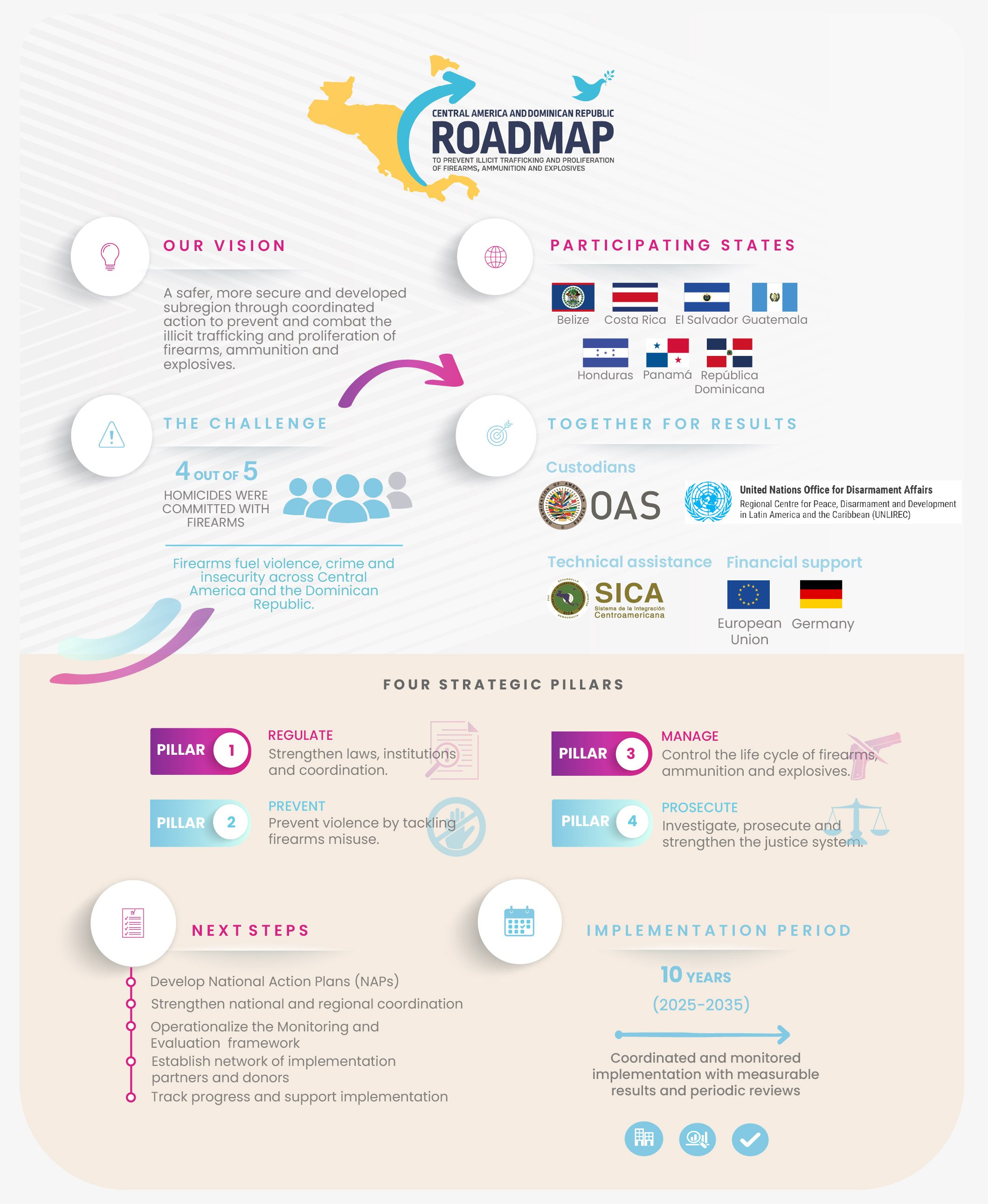
The United Nations Regional Centre for Peace, Disarmament and Development in Latin America and the Caribbean, based in Lima, continued to advance regional cooperation frameworks aimed at preventing illicit firearms trafficking and armed violence. The Centre supported implementation of the Caribbean Firearms Roadmap and facilitated the adoption, in February, of the Central America and Dominican Republic Roadmap to Prevent the Illicit Trafficking and Proliferation of Firearms, Ammunition and Explosives, strengthening subregional coordination. Through technical assistance, specialized training and policy support, it helped States enhance investigative capacities, improve stockpile management and strengthen regional firearms-control mechanisms. The Centre also promoted gender-responsive approaches and youth engagement, including through the first Caribbean edition of the Fellowship Training Programme on Small Arms and Light Weapons Control.
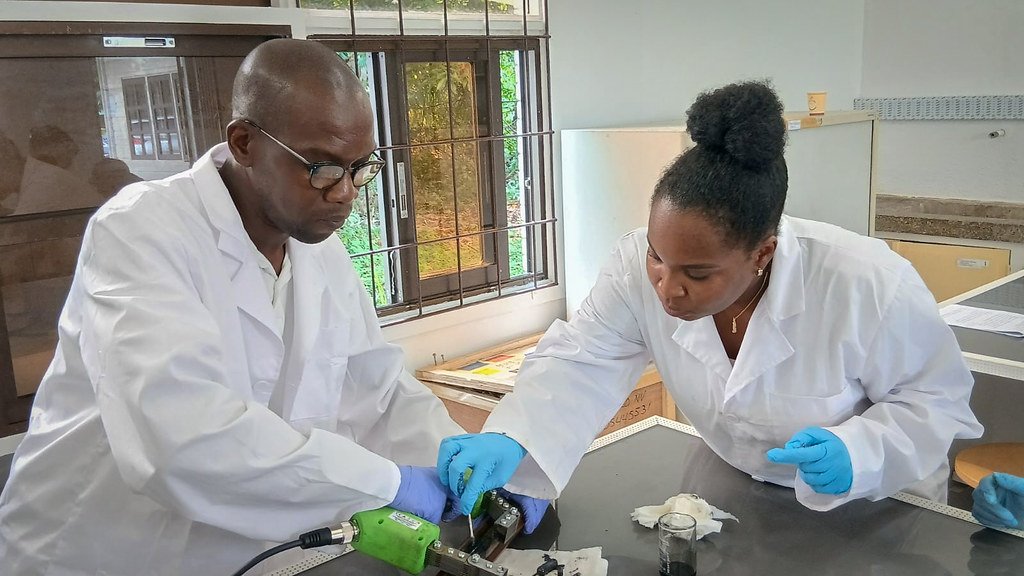
Officials from Suriname participate in a serial number restoration course from 25 to 29 August, strengthening their ability to recover obliterated firearm serial numbers and enhance national firearm tracing efforts to combat illicit arms trafficking and organized crime.
Figure 4. The Central America and Dominican Republic Roadmap in brief
The United Nations Regional Centre for Peace and Disarmament in Asia and the Pacific, based in Kathmandu, supported Member States in advancing disarmament, non-proliferation and arms control through capacity-building, policy dialogue and education. The Centre strengthened national and regional efforts to address the illicit trafficking and diversion of small arms and light weapons and their ammunition, including by supporting implementation of the Programme of Action on Small Arms and Light Weapons, the Global Framework for Through-life Conventional Ammunition Management and the Arms Trade Treaty. It also promoted implementation and universalization of key instruments concerning weapons of mass destruction through dialogue on the Comprehensive Nuclear-Test-Ban Treaty, preparations for the 2026 Review Conference of the Parties to the Treaty on the Non-Proliferation of Nuclear Weapons (NPT) and engagement on the Biological Weapons Convention. The Centre further facilitated regional discussions on outer space security, cybersecurity and artificial intelligence in the military domain, while expanding disarmament education and youth outreach across Asia and the Pacific.
Across the three regions, the United Nations regional centres also strengthened links between disarmament and sustainable development. Through a pilot initiative,[3] the centres worked with resident coordinator offices and United Nations country teams to integrate arms control and armed violence prevention into common country analyses and United Nations Sustainable Development Cooperation Frameworks, thereby embedding disarmament priorities more systematically in national development planning and peacebuilding strategies.
Nuclear-weapon-free zones
Nuclear-weapon-free zones continued to provide a regional approach to strengthening global nuclear non-proliferation and disarmament norms while contributing to peace and security at the regional and international levels. Their legal foundation rests in the provisions of the Charter of the United Nations concerning “regional arrangements or agencies” for the maintenance of international peace and security. Article VII of the NPT preserves “the right of any group of States to conclude regional treaties in order to assure the total absence of nuclear weapons in their respective territories”. The Treaty on the Prohibition of Nuclear Weapons recognizes nuclear-weapon-free zones as measures that enhance global and regional peace and security, strengthen the nuclear non-proliferation regime and contribute towards realizing the objective of nuclear disarmament.
In 2025, more than 100 States were parties or signatories to nuclear-weapon-free zone treaties, representing nearly 60 per cent of United Nations Member States. Five regional zones had been established under: (a) the Treaty for the Prohibition of Nuclear Weapons in Latin America and the Caribbean (Treaty of Tlatelolco, 1969); (b) the South Pacific Nuclear Free Zone Treaty (Rarotonga Treaty, 1986); (c) the Treaty on the Southeast Asia Nuclear Weapon-Free Zone (Bangkok Treaty, 1997); (d) the African Nuclear-Weapon-Free Zone Treaty (Pelindaba Treaty, 2009); and (e) the Treaty on a Nuclear-Weapon-Free Zone in Central Asia (2009). The General Assembly also continued to recognize Mongolia’s self-declared nuclear-weapon-free status, having reaffirmed that position for the thirteenth time since 1998 in resolution 79/30 of 2 December 2024.
During its eightieth session, the General Assembly adopted two resolutions concerning specific zones: “African Nuclear-Weapon-Free Zone Treaty” (80/14) and “Treaty on the South-East Asia Nuclear-Weapon-Free Zone (Bangkok Treaty)” (80/47).
In 2025, the five NPT nuclear-weapon States maintained varying positions on the relevant protocols to the five nuclear-weapon-free zone treaties. Under those protocols, the nuclear-weapon States commit to respecting the nuclear-weapon-free status of the corresponding regions and undertake not to use or threaten to use nuclear weapons against States parties to the treaties. All five nuclear-weapon States adhered to Additional Protocol II to the Treaty of Tlatelolco. Four of the five States had ratified Protocols 1, 2 and 3 to the Rarotonga Treaty, Protocols I and II to the Pelindaba Treaty, and the Protocol to the Treaty on a Nuclear-Weapon-Free Zone in Central Asia; the United States had signed but not ratified those protocols. None of the five had signed the Protocol to the Bangkok Treaty by the end of 2025.
The following table presents the status of adherence to the protocols.
Status of ratification of the protocols to the treaties establishing nuclear-weapon-free zones, as at 31 December 2025
| Protocol | Status | China | France | Russian Federation | United Kingdom | United States |
|---|---|---|---|---|---|---|
|
Additional Protocol II to the Treaty of Tlatelolco |
Signed Ratified |
21 Aug. 1973 2 June 1974 |
18 July 1973 22 Mar. 1974 |
18 May 1978 8 Jan. 1979 |
20 Dec. 1967 11 Dec. 1969 |
1 Apr. 1968 12 May 1971 |
|
Protocol 2 to the Rarotonga Treaty |
Signed Ratified |
10 Feb.1987 21 Oct. 1988 |
25 Mar. 1996 20 Sept. 1996 |
15 Dec. 1986 21 Apr. 1988 |
25 Mar. 1996 19 Sept. 1997 |
25 Mar. 1996 --[a] |
|
Protocol to the Bangkok Treaty |
Signed Ratified |
-- -- |
-- -- |
-- -- |
-- -- |
-- -- |
|
Protocol I to the Pelindaba Treaty |
Signed Ratified |
11 Apr. 1996 10 Oct. 1997 |
11 Apr. 1996 20 Sept. 1996 |
5 Nov. 1996 5 Apr. 2011 |
11 Apr. 1996 12 Mar. 2001 |
11 Apr. 1996 --[b] |
|
Protocol to the Treaty on a Nuclear-Weapon-Free Zone in Central Asia |
Signed Ratified |
6 May 2014 17 Aug. 2015 |
6 May 2014 21 Nov. 2014 |
6 May 2014 22 Jun. 2015 |
6 May 2014 30 Jan. 2015 |
6 May 2014 --[c] |
Qualified Group of Experts to prepare a comprehensive study of the question of nuclear-weapon-free zones in all its aspects
Pursuant to General Assembly resolution 79/241, entitled “Comprehensive study of the question of nuclear-weapon-free zones in all its aspects”, which called for an update to the 1974–1975 study, the Qualified Group of Experts held its first session at United Nations Headquarters in New York from 1 to 5 December.
The Group was established following a wide call by the Office for Disarmament Affairs for nominations from Member States. Based on equitable geographical distribution and with due regard to gender balance, the Secretary‑General invited qualified experts from 15 States[4] to serve in the Group.
At its opening meeting, the Group elected Maria Cecilia Barcelos Cavalcante Vieira, Head of the Disarmament and Sensitive Technologies Division of the Ministry of Foreign Affairs of Brazil, as Chair. At the same meeting, the Group adopted its agenda and programme of work (A/AC.302/2025/1, annexes I and II). During the subsequent meetings, the Group held a general exchange of views, considered the structure and methodology of the comprehensive study, and discussed relevant substantive elements, including views compiled in the report of the Secretary‑General (A/79/950).[5] The Group also considered possible approaches to incorporating written submissions from Member States and discussed an indicative timeline and next steps for preparing the study. Pursuant to operative paragraph 4 of the resolution, India and the Philippines notified the Secretariat of their intention to attend the first session.
Following the session, informal consultative meetings open to all Member States were held on 8 and 9 December, providing delegations with an opportunity to engage with the Chair and share their views.
The Group was scheduled to hold its second and third sessions the following year, from 9 to 13 March and from 13 to 17 July 2026.
Treaty for the Prohibition of Nuclear Weapons in Latin America and the Caribbean (Treaty of Tlatelolco)
The Agency for the Prohibition of Nuclear Weapons in Latin America and the Caribbean (OPANAL) was established by article 7 of the Treaty for the Prohibition of Nuclear Weapons in Latin America and the Caribbean (Treaty of Tlatelolco). On 14 February, its member States issued a communiqué (Inf.01/2025Rev.2) to commemorate the fifty-eighth anniversary of the Treaty. The Antônio Augusto Cançado Trindade Award for Nuclear Disarmament and Non-Proliferation was also presented to several authors in recognition of academic contributions to nuclear disarmament and non-proliferation.
On 26 September, OPANAL issued a declaration (Inf.52/2025/Rev.3) to mark the International Day for the Total Elimination of Nuclear Weapons.
On 13 November, the Agency opened the twenty-ninth session of its General Conference, which resumed on 19 December and was followed by a special session. The General Conference elected Juan Carlos Ojeda (Uruguay) as Secretary-General of the Agency for the 2026–2029 term.
OPANAL also engaged in international forums throughout the year. In March, it participated in the third Meeting of States Parties to the Treaty on the Prohibition of Nuclear Weapons and submitted a working paper. It also attended the third session of the Preparatory Committee for the 2026 NPT Review Conference in May, having submitted a working paper. In September, OPANAL delivered remarks at the sixty-ninth session of the General Conference of the International Atomic Energy Agency (IAEA). It also issued a statement during the general debate of the First Committee of the General Assembly and participated in an exchange with the High Representative for Disarmament Affairs and other senior officials.
Continuing its educational initiatives, OPANAL co-organized the eleventh edition of the Summer School on Nuclear Disarmament and Non-Proliferation for Diplomats from Latin America and the Caribbean, held in Mexico City from 14 to 18 July. It also conducted courses on nuclear disarmament and non-proliferation in Mexico from 16 to 24 January and in Uruguay from 7 to 9 April.
On 14 November, OPANAL signed a memorandum of understanding with Mongolia, in its capacity as a nuclear-weapon-free State, to strengthen cooperation and information exchange.
Treaty on the Southeast Asia Nuclear Weapon-Free Zone (Bangkok Treaty)
The Treaty on the Southeast Asia Nuclear Weapon-Free Zone (Bangkok Treaty), signed on 15 December 1995, remained the key instrument of the Association of Southeast Asian Nations (ASEAN) on nuclear disarmament and non-proliferation.
At the forty-seventh ASEAN Summit, held in Kuala Lumpur on 26 October, ASEAN leaders reiterated their commitment to preserving South-East Asia as a zone free of nuclear weapons and all other weapons of mass destruction, as enshrined in the Bangkok Treaty and the ASEAN Charter. They reaffirmed their commitment to continued engagement with the nuclear-weapon States and to intensifying efforts to resolve all outstanding issues concerning accession to the Protocol to the Bangkok Treaty in accordance with its objectives and principles. ASEAN continued to explore the possibility of allowing individual nuclear-weapon States willing to sign and ratify the Protocol without reservations, and to provide prior formal written assurance of that commitment, to proceed with signature.
At the fifty-eighth ASEAN Foreign Ministers’ Meeting, held in Kuala Lumpur on 25 July, the ministers stressed the importance of the Treaty’s full and effective implementation, including through the Plan of Action to Strengthen the Implementation of the Treaty on the Southeast Asia Nuclear Weapon-Free Zone (2023–2027).
Implementation of the Bangkok Treaty under the Plan of Action continued in 2025. ASEAN promoted nuclear safety, security and safeguards through relevant sectoral bodies, including the ASEAN Network of Regulatory Bodies on Atomic Energy and the ASEAN Nuclear Energy Cooperation Sub-Sector Network. Timor-Leste acceded to the Bangkok Treaty in October, extending participation in the Treaty to ASEAN’s newest member State.
Nuclear safety, security and safeguards remained an important area of cooperation between ASEAN and the IAEA. The Practical Arrangements between ASEAN and the Agency, which promote cooperation in nuclear science, technology and applications and in nuclear safety, security and safeguards, were renewed for five years, from 2024 to 2029. Work continued to enable ASEAN and its sectoral bodies to benefit further from the arrangements, particularly through capacity-building, education, training and the exchange of information and good practices.
ASEAN continued to raise the global profile of the Bangkok Treaty, including through the adoption in 2025 of the biennial General Assembly resolution on the Treaty (80/47). It also strengthened cooperation with other nuclear-weapon-free zones, notably through engagement with OPANAL, towards the goal of complete disarmament. ASEAN planned to submit a memorandum on activities under the Bangkok Treaty to the 2026 NPT Review Conference.
South Pacific Nuclear Free Zone Treaty (Rarotonga Treaty)
The South Pacific Nuclear Free Zone Treaty (Rarotonga Treaty) established a nuclear-weapon-free zone in the South Pacific, contributing to regional nuclear non-proliferation and disarmament and reinforcing legally binding commitments under the NPT. Baron Waqa, Secretary General of the Pacific Islands Forum, acting as depositary, is required under the Rarotonga Treaty to report annually to Forum leaders on its implementation.
In a historic milestone, the Marshall Islands signed the Rarotonga Treaty in Majuro on 3 March, on the occasion of its Nuclear Victims Remembrance Day (1 March). Ratification by the Marshall Islands would extend the zone established under the Rarotonga Treaty into the North Pacific. The Marshall Islands and Kiribati had experienced nuclear-weapon testing on their territories, leaving a legacy that included the Runit Dome.
Pursuant to the 2019 mandate of Forum leaders to operationalize the Treaty, its Consultative Committee convened its third meeting on 23 May. The Committee endorsed a declaration of understanding modernizing outdated references in the Treaty and agreed to endorse its rules of procedure.
At their fifty-fourth annual meeting in Honiara, Forum leaders issued a joint statement commemorating the fortieth anniversary of the adoption of the Treaty text and encouraged non-party Forum members and the United States to sign and ratify the Treaty and its Protocols. In the statement, the Leaders reaffirmed their commitment to a nuclear-free Pacific, as enshrined in the Rarotonga Treaty, and called for global cooperation, including ratification of the Comprehensive Nuclear-Test-Ban Treaty, signature and ratification of the NPT, and continued dialogue under the Treaty on the Prohibition of Nuclear Weapons. Leaders also adopted the Blue Pacific Ocean of Peace Declaration, in which they recalled the region’s shared commitment to a Pacific free from nuclear weapons, nuclear-weapon testing and the dumping of radioactive waste, as well as to the elimination of nuclear weapons, while recognizing the Treaty’s enduring role in promoting peace and security. They declared the Blue Pacific Continent an Ocean of Peace, committed to preserving the region from acts that undermine peace, and undertook to address the Pacific’s nuclear legacy and safeguard against the potential threat of nuclear contamination.
Those regional efforts unfolded amid renewed global attention to nuclear weapons, including proposals to resume nuclear testing, underscoring calls for universal adherence to disarmament treaties and continued Pacific advocacy for a nuclear-free region. In April, the States parties to the Rarotonga Treaty issued a joint statement at the third session of the Preparatory Committee for the 2026 NPT Review Conference. On 28 and 29 October, the Forum secretariat attended a regional consultation for NPT States parties in Viet Nam, held as part of a series of regional meetings in preparation for the 2026 Review Conference.
The Secretary General of the Pacific Islands Forum engaged throughout the year on nuclear disarmament and non-proliferation issues. In early March, he participated in Nuclear Victims Remembrance Day events held in Majuro, Marshall Islands, and Suva, Fiji. On 6 May, the Secretary General met with the Executive Secretary of the Preparatory Commission for the Comprehensive Nuclear-Test-Ban Treaty Organization, Robert Floyd, and reaffirmed the region’s commitment to a nuclear-free and self-determined Pacific under the Implementation Plan for the 2050 Strategy for the Blue Pacific Continent. On 26 September, the Secretary General delivered remarks at the high-level plenary meeting of the General Assembly to commemorate and promote the International Day for the Total Elimination of Nuclear Weapons.
Additionally, on 29 August, the Forum secretariat delivered a statement at a hybrid dialogue convened by Kazakhstan on reinforcing negative security assurances and the global non-proliferation regime.
African Nuclear-Weapon-Free Zone Treaty (Pelindaba Treaty)
In 2025, the African Commission on Nuclear Energy (AFCONE) continued to strengthen implementation of the Pelindaba Treaty, prioritizing outreach, capacity-building and engagement with African States parties across the Treaty’s three pillars: nuclear disarmament, nuclear non-proliferation and the peaceful uses of nuclear energy.
On 15 July, AFCONE and the African Union Commissioner launched a fellowship programme on disarmament and non-proliferation to help develop a new generation of African specialists in peacemaking, negotiation and nuclear disarmament.
In August, AFCONE and the IAEA renewed their memorandum of understanding to strengthen cooperation on nuclear science and technology for socioeconomic development in Africa, with a focus on safety, safeguards and peaceful applications. Cooperation under the memorandum included the development of specialized African expertise in nuclear energy planning, safeguards implementation and regulatory compliance.
On 15 October, AFCONE and the World Nuclear Transport Institute signed a memorandum of understanding to advance the safe, secure and sustainable transport of nuclear and other radioactive materials in Africa. The partnership provided for technical cooperation, capacity-building and the implementation of international good practices in line with the Pelindaba Treaty.
In addition to its institutional work, AFCONE carried out outreach and engagement activities aimed at building expertise, recognizing achievement and promoting peaceful nuclear applications across Africa.
On 30 July, in Pretoria, the Commission inaugurated its Outstanding Performance Awards, recognizing contributions by individuals and institutions to peaceful nuclear development, security and governance in Africa. Awards were presented in four categories: nuclear energy, women in nuclear, young nuclear professionals and nuclear advocacy.
The Commission also participated in an event entitled “Nuclear Re-Imagined: A youth perspective”, held at the University of the Witwatersrand in South Africa on 26 August. Speakers encouraged young professionals to consider careers in nuclear science and technology and highlighted the field’s multidisciplinary opportunities.
On 18 September, AFCONE hosted a high-level side event entitled “Promoting Nuclear Energy and Applications in Africa” during the sixty-ninth session of the IAEA General Conference in Vienna. The event addressed the role of nuclear power in advancing the African Union’s Agenda 2063, including through industrialization and the provision of clean and reliable energy.
From 17 to 19 November, AFCONE and the Nuclear Threat Initiative hosted a virtual Africa Nuclear Security Dialogue aimed at strengthening nuclear security in Africa while supporting safe and secure peaceful nuclear applications consistent with the African Union’s Agenda 2063.
Treaty on a Nuclear-Weapon-Free Zone in Central Asia
In February, Uzbekistan assumed the rotating chairpersonship of the States parties to the Treaty on a Nuclear-Weapon-Free Zone in Central Asia.
On 29 August, Kazakhstan convened a meeting in Astana, coinciding with the International Day against Nuclear Tests, to discuss the global prohibition of nuclear testing, as well as nuclear disarmament and the provision of security assurances for nuclear-weapon-free States. Held at Kazakhstan’s Ministry of Foreign Affairs, the gathering brought together representatives of States serving as secretariats of nuclear-weapon-free zones, ambassadors of States parties to such zones accredited in Astana and officials from international organizations. Observers from the embassies of the five nuclear-weapon States also participated.
Participants heard a video message from the High Representative for Disarmament Affairs and an address by Flávio Bonzanini, Secretary-General of OPANAL. The First Deputy Minister for Foreign Affairs of Kazakhstan, Akan Rakhmetullin, called for the prompt completion of procedures under nuclear-weapon-free zone treaties for the entry into force of protocols on negative security assurances not yet fully ratified by all nuclear-weapon States, including the Treaty on a Nuclear-Weapon-Free Zone in Central Asia. In addition, participants exchanged views on strengthening nuclear-weapon-free zones as a means of advancing a nuclear-weapon-free world and global security.
Mongolia’s nuclear-weapon-free status
In September 1992, Mongolia, as a State committed to non-proliferation of nuclear weapons in all its aspects and to achieving nuclear disarmament, declared its territory a nuclear-weapon-free zone and proposed that the status be internationally guaranteed. The initiative was welcomed by nuclear-weapon and non-nuclear-weapon States and formed the basis for General Assembly resolution 53/77 D, entitled “Mongolia’s international security and nuclear-weapon-free status”, adopted without a vote in 1998.
Throughout 2025, Mongolia continued its efforts to strengthen the international standing of its nuclear-weapon-free status and contribute to global peace and security. It recalled the biennial General Assembly resolution on Mongolia’s international security and nuclear-weapon-free status (79/30), adopted in 2024, and continued to engage with relevant partners and nuclear-weapon-free zones in support of a world free of nuclear weapons.
Mongolia also strengthened cooperation with existing nuclear-weapon-free zones and participated as an observer in the twenty‑ninth session of the General Conference of OPANAL, held in Mexico City on 13 November. On the margins of the session, Mongolia signed a memorandum of understanding with OPANAL to reinforce institutional dialogue and cooperation on nuclear disarmament and non-proliferation.
Establishment of a Middle East zone free of nuclear weapons and other weapons of mass destruction
The sixth session of the Conference on the Establishment of a Middle East Zone Free of Nuclear Weapons and Other Weapons of Mass Destruction convened in New York from 17 to 21 November under the presidency of Morocco. The session was attended by 21 of the Conference’s 24 members, four of its five observer States and two of the three invited international organizations (for the list of participants, see A/CONF.236/2025/INF/3). It concluded with the adoption of a substantive report (A/CONF.236/2025/3).
During the session, delegations held substantive discussions on negative security assurances; cooperation, consultation and clarification; dispute settlement; and the promotion of cooperation between existing nuclear-weapon-free zones and the Conference.
Participating States recognized that constructive approaches had proved effective in achieving incremental and systematic substantive progress towards elaborating a draft legally binding instrument for the Middle East zone.
The Conference incorporated into its substantive report (A/CONF.236/2025/3) an annex summarizing the working committee’s substantive activities in 2025. Pursuant to the decision adopted at its fifth session (A/CONF.236/2024/DEC.3), the Conference endorsed Omar Al Kathiri (Oman) as President of the seventh session, scheduled for November 2026.
Office for Disarmament Affairs regional centres
United Nations Regional Centre for Peace and Disarmament in Africa
Throughout 2025, the United Nations Regional Centre for Peace and Disarmament in Africa promoted disarmament and arms control across the continent. In addressing the illicit proliferation of small arms and light weapons and new and emerging challenges, the Centre worked with governments, regional stakeholders and civil society partners to advance collective responses to complex security challenges.
Programme of Action implementation support
The Centre continued to support implementation across Africa of the Programme of Action to Prevent, Combat and Eradicate the Illicit Trade in Small Arms and Light Weapons in All Its Aspects and the International Tracing Instrument. As follow-up to the fourth Review Conference on the Programme of Action, it organized webinars and regional strategic workshops on the gender and youth dimensions of small-arms control. Consistent with the women, peace and security agenda and the gender commitments in the Conference outcome document, the activities promoted gender-responsive policies and the participation of women and young people in disarmament initiatives. Workshops for Eastern, Western and Southern Africa enabled Member States, regional organizations and civil society to exchange experience and strengthen inclusive approaches.
The Centre also expanded its engagement with civil society. In August, it convened a high-level round-table discussion with civil society actors in Abuja during a mission led by the Director and Deputy to the High Representative for Disarmament Affairs. Participants highlighted the role of civil society in linking policymakers and communities through advocacy and awareness-raising. In October, the Centre hosted a regional virtual dialogue with civil society on disarmament and non-proliferation in Africa, drawing more than 200 participants.
The Centre continued to provide technical assistance at the request of Member States for strengthening national implementation of the Programme of Action and the International Tracing Instrument. In January, it conducted a MOSAIC assessment and technical assistance mission to the Gambia to support development of a national action plan on illicit small arms and light weapons. A similar mission to the Democratic Republic of the Congo in May focused on weapons tracing and coordination among national stakeholders and the United Nations country team. The Centre built on earlier assistance to Burundi by supporting the development and validation in November of the country’s national action plan on small arms and light weapons.
The Centre also strengthened cooperation with the African Union, the Southern African Development Community and the Economic Community of West African States (ECOWAS) to advance coordinated regional responses to the illicit proliferation of small arms and light weapons.
Linking arms control and sustainable development
The Centre continued to support regional implementation of a global initiative of the Office for Disarmament Affairs to integrate arms control and armed violence prevention into development planning.[6] The initiative strengthened the capacity of resident coordinator offices, peace and development advisers and United Nations country teams. The Centre supported implementation in Africa through advocacy and engagement with resident coordinators, United Nations country teams and regional organizations. Sahel resident coordinators referred in a communiqué to the initiative, which was also presented to foreign and security ministers at a ministerial meeting of the Regional Centre on Small Arms in the Great Lakes Region, the Horn of Africa and Bordering States (RECSA). The Centre worked with ECOWAS, the Economic Community of Central African States (ECCAS), the Southern African Development Community, RECSA, the East African Community, and the African Development Bank to create pathways to integrate arms control into common country analyses and United Nations sustainable development cooperation frameworks.
The project also produced national and subregional outcomes. In Mali, it helped mobilize support through the Saving Lives Entity for implementation of the national action plan on small arms and light weapons (2026–2030), including measures concerning artisanal weapons manufacture and community-level violence prevention. In the Central African Republic, it supported resource mobilization for the national action plan and informed the design of a forthcoming multinational initiative of the West African Economic and Monetary Union on arms proliferation and border insecurity.
Weapons and ammunition management and the prevention of violent extremism
Building on a 2023 regional seminar on preventing violent extremism and managing weapons and ammunition in West Africa, the Centre continued its partnership with the Swiss Federal Department of Foreign Affairs and the United Nations Institute for Disarmament Research (UNIDIR) on an empirical study of integrated responses to violent extremism and illicit weapons proliferation in the region.
The research combined desk analysis with field missions conducted from February to May in Burkina Faso, Côte d’Ivoire, Ghana, Mali, Nigeria and Togo. It examined links between the prevention of violent extremism and weapons and ammunition management in policy frameworks, institutional arrangements and operational practices. A co-drafting workshop with regional experts was held in July, followed in November by a consultation with representatives of States, regional organizations, United Nations entities, civil society and research institutions.
Capacity-building and technical assistance
The Centre contributed to the African iteration of the Fellowship Training Programme on Small Arms and Light Weapons Control of the Office for Disarmament Affairs, implemented in Benin and Togo. The programme brought together 19 practitioners from 16 African countries and strengthened peer exchange among national small arms commissions and security institutions.
In May, under the Prevention Facility for the Gulf of Guinea, the Centre supported the United Nations Development Programme in training personnel in Dapaong, Togo, on the safe and secure management of weapons and ammunition, contributing to national prevention and border-security efforts.
Youth, disarmament education and outreach
The Centre supported the Youth Leader Fund for a World without Nuclear Weapons programme by organizing regional affinity-group discussions for interested participants in Africa. The exchanges covered intergenerational peacebuilding, disarmament and environmental security, as well as opportunities for continued engagement after the programme.
United Nations Standing Advisory Committee on Security Questions in Central Africa
The United Nations Standing Advisory Committee on Security Questions in Central Africa held two ministerial meetings in 2025. Members considered evolving regional security challenges, collective responses to persistent and emerging threats, and ways to strengthen arms control.
At its fifty-ninth session, held in N’Djamena from 26 to 30 May under the theme “The impact of the humanitarian situation in Central Africa”, the Committee considered the socioeconomic, humanitarian and security challenges arising from conflicts and crises, including those induced by climate change. Members also examined how the proliferation, diversion and misuse of small arms and light weapons fuelled armed violence, criminality and violent extremism in the subregion.
The sixtieth session, held in Malabo from 1 to 5 December, focused on “Promoting democratic governance: an essential lever for sustainable political stability, conflict prevention and peacebuilding in Central Africa”. The Committee marked the fifteenth anniversary of the Central African Convention for the Control of Small Arms and Light Weapons, Their Ammunition and All Parts and Components That Can Be Used for Their Manufacture, Repair and Assembly (Kinshasa Convention) with a briefing on efforts to counter the proliferation of small arms and light weapons in Central Africa. Members reviewed national arms-control measures and persistent security challenges arising from the diversion and misuse of such weapons. The ECCAS Commission reported on technical assistance provided since 2018, notably to harmonize legislation and establish focal points and national commissions.
The Cameroon Youths and Students Forum for Peace, a civil society organization, presented a model joint reporting mechanism for the Programme of Action and the Kinshasa Convention. The model was intended to simplify and harmonize reporting by member States in response to infrequent reporting, the absence of a reporting mechanism for the Convention, duplication of effort and limited trained personnel.
To improve reporting under both instruments, the Committee recommended adopting the common template developed by Cameroon as a standardized tool for coherent, timely and comprehensive reports by ECCAS member States. The Committee also recommended accelerating the establishment of the Kinshasa Convention’s secretariat and invited the Democratic Republic of the Congo, which had expressed willingness to host the headquarters of the Executive Secretariat, to work towards that objective.
United Nations Regional Centre for Peace, Disarmament and Development in Latin America and the Caribbean
In 2025, the United Nations Regional Centre for Peace, Disarmament and Development in Latin America and the Caribbean continued to support States in implementing international commitments on disarmament, non-proliferation and arms control, while strengthening regional cooperation and preventive approaches to armed violence. During the year, the Centre conducted 90 activities, including technical assistance, capacity-building, policy support and outreach, for national authorities across Latin America and the Caribbean. Its specialized training was complemented by sustained, multistage cooperation with countries.
At the regional level, the Centre continued to advance road maps as frameworks for coordinated action. In the Caribbean, the fifth Annual Meeting of States reviewed the findings of the midterm review of the Caribbean Firearms Roadmap and identified progress, challenges and priorities through 2030. In Central America, States adopted the Central America and Dominican Republic Roadmap to Prevent the Illicit Trafficking and Proliferation of Firearms, Ammunition and Explosives in February. Building on that process, States mandated preparatory work towards an Andean road map, to begin in 2026. Together, those initiatives strengthened regional ownership and inter-institutional coordination and aligned national and regional efforts with the Sustainable Development Goals and violence-prevention agendas.
The Centre expanded its regional engagement through several initiatives. In the Caribbean, it launched the first regional edition of the Fellowship Training Programme on Small Arms and Light Weapons Control to develop specialized practitioners capable of supporting national and regional implementation. The Centre also advanced gender-responsive arms control through dedicated training courses for women participants; investigative courses for prosecutors, judges and forensic experts; and the regional Women, Forces of Change Symposium, which brought together 50 women leaders from across Latin America and the Caribbean. In parallel, it continued to implement GenerAcción Paz, a regional programme that supported young leaders in translating project proposals into community-based initiatives and promoting a culture of peace.
Under the Saving Lives Entity initiative, the Centre sustained engagement in priority countries. In Jamaica, it supported the development and presentation of a national protocol to prevent, manage and respond to firearm-related incidents in schools. In Honduras, the initiative contributed to improved security at judicial depots, stronger coordination mechanisms and national policy discussions on preventing firearms-related incidents in educational settings.
Beyond those initiatives, the Centre provided technical, legal and operational assistance reflecting diverse State needs. It conducted training on physical security and stockpile management across the Caribbean; delivered multipart courses for firearm examiners in Antigua and Barbuda, Barbados, Saint Kitts and Nevis, Saint Vincent and the Grenadines and Suriname; and organized specialized courses on preventing illicit trafficking and strengthening investigations. Ahead of the eightieth session of the First Committee of the General Assembly, the Centre held its first regional briefing on security and new technologies. It also contributed to regional knowledge products, including the Caribbean Policy Framework for sustainably disposing of destroyed firearms and ammunition components and technical guidance on laser marking, while expanding outreach through social media campaigns, newsletters and virtual briefings.
The Centre deepened collaboration within the United Nations system and with regional organizations. Joint work with the United Nations Office on Drugs and Crime (UNODC), particularly in Haiti, supported assessments and capacity-building for police, customs and border institutions. Cooperation with the United Nations Entity for Gender Equality and the Empowerment of Women expanded gender-responsive programming, including a subregional course in Central America on the women, peace and security agenda that engaged more than 90 participants. Collaboration with the United Nations Children’s Fund in Peru advanced multisectoral approaches to preventing firearms-related incidents in schools. Engagement with resident coordinator offices promoted the integration of arms control and armed violence prevention into common country analyses and United Nations sustainable development cooperation frameworks. The Centre also maintained partnerships with the Caribbean Community Implementation Agency for Crime and Security, the Organization of American States (OAS), and the secretariats of the Central American Integration System and the Andean Community, notably through joint road map processes and technical coordination. Consultations and briefings with civil society organizations promoted dialogue and the inclusion of non-governmental expertise in arms control and security policy discussions.
United Nations Regional Centre for Peace and Disarmament in Asia and the Pacific
In 2025, the United Nations Regional Centre for Peace and Disarmament in Asia and the Pacific continued to support Member States in strengthening disarmament, non-proliferation and arms control. Amid evolving security dynamics, rapid technological change and persistent risks associated with illicit weapons flows, the Centre worked with Governments, regional organizations, civil society and academic institutions to promote dialogue, capacity-building and regional cooperation. Through policy engagement, technical assistance, education and multilateral outreach, it supported implementation of international instruments, facilitated the participation of Asia-Pacific States in global disarmament processes and promoted public awareness and youth engagement.
Conventional arms and ammunition control
The Centre supported States in strengthening controls on small arms and light weapons and their ammunition in response to continued risks from illicit trafficking, diversion and armed violence. Through regional dialogues, technical training and national workshops, it advanced implementation of the Programme of Action on Small Arms and Light Weapons, the Global Framework for Through-life Conventional Ammunition Management and the Arms Trade Treaty. Activities focused on national capacity, regional cooperation, gender-responsive approaches and the exchange of good practices.
In January, the Centre and the Small Arms Survey organized a webinar entitled “10 Years of the Arms Trade Treaty: Advancing universalization in the Asia-Pacific”. Participants reviewed progress and challenges concerning adherence to the Treaty in the region, including export controls, inter-agency coordination and measures to prevent diversion. They also discussed the role of dialogue, technical assistance and international cooperation in promoting wider adherence.
Support to States continued under the European Union-funded global project on the Programme of Action and the Saving Lives Entity initiative. In March and April, the Centre supported ASEAN member States through a regional workshop in Phnom Penh on implementation of the Programme of Action. It also participated in the ASEAN Senior Officials’ Meeting on Transnational Crime, which advances implementation of the ASEAN Declaration on Combating Arms Smuggling. Building on that engagement, the Centre supported ASEAN in developing a regional action plan to strengthen cooperation against illicit arms trafficking.
In April, the Centre worked with the Conventional Arms Branch of the Office for Disarmament Affairs and the United Nations Regional Centre for Peace and Disarmament in Africa to convene in Geneva an informal regional preparatory meeting for the Middle East and North Africa on the Global Framework for Through-life Conventional Ammunition Management. Participants exchanged national and regional priorities and considered challenges and opportunities in translating the Framework’s political commitments into action.
At the national level, the Centre and the Ministry of Defence and Veteran Affairs of Fiji conducted a training and assessment mission in Suva in May. The mission supported institutional capacities for small arms and light weapons control, including through use of the Modular Small-arms-control Implementation Compendium self-assessment tool.
In June and August, the Centre supported two national workshops in Papua New Guinea in cooperation with the Government, the United Nations Development Programme and the United Nations Population Fund. Government officials, parliamentarians, civil society representatives and international partners reviewed progress in strengthening national arms-control frameworks and identified priorities for weapons and ammunition management, stockpile security and the development of a national action plan on small arms and light weapons.
In December, the Centre conducted a scoping mission in Lebanon under the Saving Lives Entity initiative to support the Government in reviewing implementation of the Programme of Action and the Global Framework for Through-life Conventional Ammunition Management. The mission also promoted a coordinated “One UN” approach to small arms and light weapons control and highlighted available support mechanisms, including the United Nations Trust Facility Supporting Cooperation on Arms Regulation (UNSCAR), the Fellowship Training Programme on Small Arms and Light Weapons Control of the Office for Disarmament Affairs and training under the UN SaferGuard programme.
The Centre also promoted gender mainstreaming in arms control during the year, which marked the thirtieth anniversary of the Beijing Declaration and Platform for Action and the twenty-fifth anniversary of Security Council resolution 1325 (2000). In April, it convened an informal regional meeting in Kathmandu at which more than 80 participants from 19 States, regional organizations, civil society and United Nations entities discussed links between small arms control and the women, peace and security agenda.
Weapons of mass destruction
The Centre supported States in addressing risks related to weapons of mass destruction and implementing relevant international instruments. Its work focused on dialogue, awareness-raising and capacity-building concerning nuclear disarmament and non-proliferation and the prohibition of biological weapons.
In March, the Centre and the Preparatory Commission for the Comprehensive Nuclear-Test-Ban Treaty Organization organized a national dialogue in Nepal to raise awareness of the Comprehensive Nuclear-Test-Ban Treaty and promote its universalization. The Centre also supported preparations for the 2026 NPT Review Conference. In October, it supported Asia-Pacific regional consultations convened in Hanoi by the Weapons of Mass Destruction Branch of the Office for Disarmament Affairs, enabling States from the region to exchange views ahead of the Review Conference.
The year also marked the fiftieth anniversary of the Biological Weapons Convention. The Centre supported national implementation and regional cooperation on biological risk management. In November, it assisted with a regional workshop in Guangzhou, China, on biosafety, biosecurity and implementation of the Convention, organized with the Convention’s Implementation Support Unit and co-hosted by China and Malaysia. Officials and experts from Southeast Asian States and international organizations exchanged experience and identified capacity-building priorities.
Emerging technologies and new domains of security
Against the backdrop of rapid advances in science and technology, the Centre supported Asia-Pacific States in addressing emerging security challenges relating to outer space, cyberspace and artificial intelligence in the military domain.
In February and March, the Centre organized regional online workshops in preparation for meetings of the Open-ended Working Group on the Prevention of an Arms Race in Outer Space in All Its Aspects. The workshops enabled Asia-Pacific delegations to review the history and context of space arms-control discussions and prepare national positions.
Ahead of the First Committee of the General Assembly, the Centre and the Science and Technology Unit of the Office for Disarmament Affairs also organized two regional briefings in September. Representatives of Asia-Pacific States received updates on information and communications technologies, artificial intelligence in the military domain and international efforts to strengthen norms and cooperation on information and communications technologies security.
In December, the twenty-fourth Republic of Korea–United Nations Joint Conference on Disarmament and Non-Proliferation Issues convened in New York under the theme of outer space security. Participants reaffirmed the relevance of the Treaty on Principles Governing the Activities of States in the Exploration and Use of Outer Space, including the Moon and Other Celestial Bodies, and highlighted the need for stronger international cooperation to ensure the peaceful and sustainable use of outer space.
Disarmament education and youth outreach
The Centre expanded disarmament and non-proliferation education and youth engagement across Asia and the Pacific. Guided by the United Nations study on disarmament and non-proliferation education and relevant General Assembly resolutions, it focused on equipping young people and educators with knowledge and tools to engage in disarmament processes.
A key initiative was the fourth edition of the Disarmament Toolkit online course, organized with Prajnya, a civil society organization. Delivered through six interactive sessions in September, the course covered weapons of mass destruction, conventional arms control, gender and peace, emerging technologies, and links between disarmament and the Sustainable Development Goals. It attracted more than 1,650 registrants from 136 countries.
The Centre also coordinated the Asia-Pacific Regional Affinity Group under the Youth Leader Fund for a World without Nuclear Weapons. Through online exchanges, young leaders from across the region discussed nuclear disarmament, implementation of Security Council resolution 1540 (2004), gender and disarmament and the relationship between climate change and disarmament.
In December, the Centre and the Ministry of Foreign Affairs of Thailand organized a three-day programme in Bangkok commemorating the thirtieth anniversary of the Treaty on the Southeast Asia Nuclear Weapon-Free Zone. The programme included the Youth Multimedia Arts Competition and Exhibition, entitled “Envisioning a World Without Nuclear Weapons”, which provided young creators from ASEAN member States with a platform to reflect on nuclear disarmament and engage with policymakers and experts.
Throughout the year, the Centre also strengthened outreach to academic institutions through lectures and dialogue sessions with universities and training programmes. Those activities expanded disarmament education networks, increased access to learning resources and encouraged young people to participate in international security discussions across Asia and the Pacific.
Disarmament and arms regulation at the regional level
Africa
Regional Centre on Small Arms in the Great Lakes Region, the Horn of Africa and Bordering States
The Regional Centre on Small Arms and Light Weapons (RECSA) commemorated the twentieth anniversary of the signing of the Nairobi Protocol for the Prevention, Control and Reduction of Small Arms and Light Weapons on the margins of the eleventh RECSA Council of Ministers meeting in Nairobi. The event highlighted two decades of regional cooperation and the Protocol’s continuing role in efforts to combat illicit arms proliferation. It was aligned with the African Union’s Silencing the Guns initiative and concluded with the public destruction by Kenya of more than 6,000 illicit and obsolete firearms.
In support of Africa Amnesty Month 2025, the African Union and the Office for Disarmament Affairs designated RECSA as the implementing partner for activities in Mali and Uganda. Those activities comprised awareness-raising campaigns on the dangers and risks of illicit firearm ownership, capacity-building workshops on stockpile management and community-based policing, the collection of surrendered weapons and the public destruction of weapons voluntarily surrendered by civilians. Following the campaigns, Uganda publicly destroyed 100 obsolete firearms, while Mali collected 144 firearms and 7,592 rounds of ammunition and destroyed 69 firearms at designated collection sites.
The long-standing regional physical security and stockpile management training programme concluded its cycle for anglophone RECSA member States in March.[7] Since 2012, the programme had trained more than 1,000 personnel in skills based on the International Ammunition Technical Guidelines, with an emphasis on risk reduction and accountability. Building on that work, a new training programme was launched in October for the francophone countries of Burundi, Cameroon, the Central African Republic, the Comoros, Djibouti, Madagascar and Rwanda, promoting inclusive knowledge transfer and common standards across the region.
RECSA also advanced the integration of gender perspectives into arms control. In March and April, the secretariat supported the first regional training for women experts in ammunition management, aimed at increasing women’s technical participation and leadership in that field.
At the policy and regulatory level, RECSA implemented a project to strengthen national capacities for arms marking, record-keeping and diversion prevention.[8] The project strengthened inter-agency cooperation, supported legal and institutional assessments, and provided practical tools to improve traceability and compliance with Arms Trade Treaty obligations.
RECSA also began a comprehensive review of the Nairobi Protocol in partnership with UNIDIR.[9] The project involved a regional assessment of the Protocol’s implementation two decades after it entered into force, with a view to updating the instrument and developing a forward-looking five-year roadmap. Together, those efforts contributed to the African Union’s Silencing the Guns by 2030 initiative and strengthened the regional disarmament architecture.
Americas
Central American Integration System
In 2025, the member States of the Central American Integration System (SICA) continued to advance non-proliferation objectives relating to weapons of mass destruction through legislative and regulatory action, capacity-building and regional and international cooperation, including in support of Security Council resolution 1540 (2004). Those efforts strengthened regional security and contributed to international peace and stability.
Its work reflected the shared vision that, although Central America neither produces nor possesses weapons of mass destruction, its geostrategic location and status as a commercial and logistics hub require robust and coordinated preventive measures.
Throughout the year, member States participated in workshops, seminars and training exercises organized jointly with the Office for Disarmament Affairs, the Security Council Committee established pursuant to resolution 1540 (2004) (1540 Committee), the OAS and other partners, exchanging good practices, identifying legislative and operational gaps, and building capacity in detection, border security, biosafety and chemical, biological, radiological and nuclear risk management.
Activities related to conventional arms
Member States of the Central American Integration System have long prioritized combating illicit trafficking in small arms and light weapons through post-conflict disarmament and the Regional Agenda on Risks and Threats, which identifies illicit trafficking in firearms, ammunition, explosives and related components as a serious regional security threat.
In that context, SICA instruments, including the Central American Security Strategy and the Regional Intersectoral Plan against Organized Crime, recognize the uneven impact of illicit firearms across member States while establishing shared objectives and regional teams of police, prosecutorial and intelligence officials. Those teams coordinate operations against illicit firearms trafficking with partners such as the International Criminal Police Organization (INTERPOL) Regional Bureau in El Salvador, the Commission of Police Chiefs and Directors of Central America, Mexico, the Caribbean and Colombia, and the Caribbean Community Implementation Agency for Crime and Security.
In 2025, at the request of member States, the SICA General Secretariat provided technical assistance for the drafting and adoption of the Central America and Dominican Republic Firearms Roadmap. Technical personnel joined national teams in preparing the national plans envisaged under the Roadmap. Those inter-institutional plans aimed to strengthen prevention, regulatory frameworks and the prosecution of firearms offences, while incorporating regional initiatives into coordinated action by member States against international illicit arms trafficking.
Activities related to peace, security and disarmament in general
The Central American Integration System operated under its legal framework, comprising the Tegucigalpa Protocol to the Charter of the Organization of Central American States (1991), the Framework Treaty on Democratic Security in Central America (1995), the Central American Security Strategy (2007 and 2011) and the Permanent Central American Programme of Confidence- and Security-Building Measures (2019). It also aligned its efforts with the 2030 Agenda for Sustainable Development, particularly Sustainable Development Goal 16 on peace, justice and strong institutions.
Disarmament activities were integrated with violence prevention, citizen security and peacebuilding strategies through a comprehensive, human-security-centred approach, complementing social, educational and community-development policies.
From that preventive perspective and in line with the democratic security model, initiatives were strengthened in human security, integrated border control and combating illicit trafficking, as was technical and operational cooperation among security forces and customs and judicial authorities, with assistance from regional and international organizations.
In 2025, the Strategic Framework for the Prevention of Violence was updated to include a dedicated section on preventing firearms violence at the community level through institutional intervention and restorative tertiary prevention.
Several member States reported substantial progress in destroying firearms subject to judicial orders and obsolete State-owned firearms and in developing technical guidelines to regulate and institutionalize destruction procedures and enhance transparency at the end of a firearm’s life cycle.
Other relevant activities or institutional developments
In the area of disarmament and arms control, member States of the Central American Integration System continued to advance implementation of and participation in multilateral instruments, including the Arms Trade Treaty, the Programme of Action to Prevent, Combat and Eradicate the Illicit Trade in Small Arms and Light Weapons in All Its Aspects and the United Nations Register of Conventional Arms, integrating related commitments into national citizen-security strategies. Measures included strengthening regulatory frameworks, improving record-keeping and tracing systems, ensuring safe stockpile management and promoting campaigns to recover and destroy illicit firearms.
Organization of American States
Activities related to weapons of mass destruction, including the implementation of Security Council resolution 1540 (2004)
In 2025, the Secretariat of the Inter-American Committee against Terrorism continued to play a leading role in supporting the implementation of Security Council resolution 1540 (2004) across the Americas. Its national capacity-building efforts assisted Costa Rica, Ecuador and Panama in developing or finalizing their voluntary national action plans.
Through technical cooperation in 11 countries, the Committee advanced biosafety and biosecurity, countered proliferation financing and strengthened strategic trade controls. Its activities included legislative assistance to align national frameworks with international standards, specialized training on laboratory biosafety and dual-use research security, and the promotion of regional cooperation under the Biological Weapons Convention.[10]
The Committee supported the development of export control systems by assisting with the drafting of regulations in Panama, raising awareness in Costa Rica and organizing a subregional conference on strategic trade, border and maritime security. The conference was organized with partners including Germany’s Federal Office for Economic Affairs and Export Control. The Committee also held a subregional workshop in Panama on trade-finance linkages to address proliferation financing.
Activities related to conventional arms
In 2025, the Program of Assistance on Control of Firearms, Ammunition and Explosives of the OAS Department of Public Security strengthened institutional capacity in weapons and ammunition management, enhanced regional coordination and supported armed violence prevention across the Americas.[11] The programme trained 1,142 members of armed forces, police officers and other officials from 13 countries. It also supported the safe destruction of 2,857 small arms and light weapons and 15.29 tons of ammunition in Belize, Costa Rica, Panama and Saint Vincent and the Grenadines. To enhance traceability, the programme donated firearms-marking machines to four countries and launched two digital tools: the Firearms Knowledge Platform and the National Licensing System. It also conducted a baseline assessment in Costa Rica with UNIDIR, which produced recommendations for further action.
At the regional level, the Central America and Dominican Republic Firearms Roadmap was adopted with support from the OAS Department of Public Security, the United Nations Regional Centre for Peace, Disarmament and Development in Latin America and the Caribbean, and SICA. The Department of Public Security also contributed to the midterm review of the Caribbean Firearms Roadmap and initiated a similar process for the Andean Community. Regional cooperation was further reinforced through confidence-building measures, training and the Operation Orca XI Seminar, organized with INTERPOL and involving participants from 18 countries.
Activities related to peace, security and disarmament in general
In 2025, the Comprehensive Mine Action Program of the OAS Department of Public Security continued to assist Colombia in implementing the Anti-Personnel Mine Ban Convention, despite a temporary reduction in quality-management and technical-assistance activities following the suspension of international cooperation funds. Activities resumed in the second half of the year.[12] The programme monitored humanitarian demining operations and provided technical assistance for Colombia’s successful request to extend its deadline under the Convention. It verified the clearance of more than 437,000 m² of land and the handover of 11 hazardous areas to communities, while more than 629 people received mine-risk education. The programme also continued to monitor regional implementation of the Convention and maintained dialogue with Ecuador and Peru to support their compliance efforts.
Asia and the Pacific
Association of Southeast Asian Nations
Non-proliferation and disarmament continued to be discussed in the ASEAN Regional Forum through its Inter-Sessional Meeting on Non-Proliferation and Disarmament. The Forum, an ASEAN-led mechanism, provides a platform for its 27 participating member countries to exchange views and share information. During the sixteenth Inter-Sessional Meeting, held in Manila in March 2025, Forum participants exchanged views on growing challenges to nuclear disarmament and non-proliferation and discussed efforts to strengthen nuclear disarmament, including enhancing verification mechanisms and fostering international cooperation. The Meeting noted youth perspectives on non-proliferation, which underscored the vital role of youth engagement in non-proliferation efforts. The Meeting was also briefed on the historical context and significance of the Comprehensive Nuclear-Test-Ban Treaty and discussed the need for inclusive and pragmatic approaches to ensure space security.
Under the ASEAN Ministerial Meeting on Transnational Crime, discussion and practical cooperation on arms smuggling continued to be guided by the ASEAN plans of action in combating transnational crime and deliberated through the annual convening of the ASEAN Senior Officials’ Meeting on Transnational Crime Working Group on Arms Smuggling. Since its establishment in 2018, the Working Group has served as a platform for ASEAN member States to exchange information and collaborate on capacity-building and training to counter arms smuggling. With the ASEAN Plan of Action in Combating Transnational Crime (2016–2025) nearing expiration, the nineteenth ASEAN Ministerial Meeting on Transnational Crime adopted the new ASEAN Plan of Action in Combating Transnational Crime (2026–2035) on 10 September as the regional guiding document for the following decade. In view of the conclusion of the Senior Officials’ Meeting on Transnational Crime Work Programme 2022–2025 and the adoption of the new Plan of Action, a new work programme, including its arms-smuggling component, was under development to maintain and enhance ASEAN’s coordinated efforts to address arms smuggling in the region.
Pacific Islands Forum
Nuclear legacy and related matters
In 2025, the Pacific Islands Forum continued to prioritize efforts to address the long-standing effects of nuclear testing.
In March 2025, the Secretary-General of the Pacific Islands Forum participated in Nuclear Victims Remembrance Day events in Majuro, Marshall Islands, and Suva, Fiji.
On 18 November, the Council of Regional Organisations of the Pacific Taskforce on Nuclear Legacy Issues convened to discuss the next steps in a preliminary independent review of nuclear contamination in the Pacific, including at the Runit nuclear test site, and called for progress on that work.
Throughout 2025, the Pacific Islands Forum continued its engagement concerning the discharge of water treated by the Advanced Liquid Processing System from the Fukushima Daiichi nuclear power plant and the importance of protecting the health and security of the Blue Pacific.
Europe
European Union
The European Union’s non-proliferation and disarmament activities remained anchored in its Strategy against Proliferation of Weapons of Mass Destruction (15708/03) and its strategy entitled “Securing arms, protecting citizens” (13581/18), concerning illicit firearms, small arms and light weapons and their ammunition. In “A strategic compass for security and defence” (7371/22), adopted in 2022, the European Union and its member States committed to upholding, supporting and further advancing the disarmament, non-proliferation and arms control architecture in coordination with international partners.
Activities related to weapons of mass destruction, including the implementation of Security Council resolution 1540 (2004)
The European Union and its member States participated actively in multilateral disarmament forums throughout 2025.
At the third session of the Preparatory Committee for the 2026 NPT Review Conference, the European Union submitted three working papers: one on enhancing transparency and accountability in the implementation of NPT obligations and commitments (NPT/CONF.2026/PC.III/WP.1); one on the Comprehensive Nuclear-Test-Ban Treaty (NPT/CONF.2026/PC.III/WP.3), endorsed by 16 other NPT States parties; and a third on a prospective fissile material cut-off treaty (NPT/CONF.2026/PC.III/WP.6/Rev.1), endorsed by 23 other NPT States parties. The European Union also organized three side events and joined its member States in endorsing a joint statement entitled “Addressing the North Korean nuclear challenge”. In addition, it adopted Council Decision (CFSP) 2025/646 to support a series of regional consultations organized by the Office for Disarmament Affairs for the President-designate of the Review Conference to gain a better understanding of States parties’ priorities and concerns. On 15 December, the Council of the European Union adopted conclusions setting out its political priorities for the Review Conference.
The European Union continued to support the IAEA across multiple areas. It advocated universal adherence to IAEA comprehensive safeguards agreements and additional protocols, which together constitute the standard for verifying that declared nuclear material or technology is used only for peaceful purposes. Under Council Decision (CFSP) 2024/656, the European Union allocated €7.2 million for 2024–2027 to support the Agency’s nuclear security work, including the universalization of relevant legal instruments, international cooperation and public awareness.
The European Union and its member States continued to rank among the largest contributors to the IAEA technical cooperation programme, recognizing its vital role in enabling safe, secure and peaceful applications of nuclear technology in support of the 2030 Agenda for Sustainable Development. They made substantial contributions to the IAEA Technical Cooperation Fund and the IAEA Peaceful Uses Initiative. Together, the European Union and its member States also remained the second-largest donor to the IAEA Nuclear Security Fund.
The entry into force and universalization of the Comprehensive Nuclear-Test-Ban Treaty remained important objectives for the European Union. It participated in the eleventh ministerial meeting of the Friends of the Treaty and, through Council Decision (CFSP) 2023/2064, continued to support the monitoring and verification capabilities of the Preparatory Commission for the Comprehensive Nuclear-Test-Ban Treaty Organization. The European Union and its member States also provided technical support and advice to the Preparatory Commission’s Working Group B on verification issues and to participants in various training programmes, further reinforcing their commitment to maintaining and strengthening the Treaty’s verification regime.
The European Union continued its efforts to combat nuclear terrorism by supporting UNODC and the Office of Counter-Terrorism in promoting the International Convention for the Suppression of Acts of Nuclear Terrorism under Council Decision (CFSP) 2023/1187. Following the reimposition of sanctions and nuclear restrictions, the European Union maintained that a sustainable solution to the Iranian nuclear issue could be achieved only through negotiation and diplomacy. The High Representative of the European Union for Foreign Affairs and Security Policy remained engaged with all relevant parties, including the Islamic Republic of Iran, in support of efforts to find a negotiated solution consistent with the reinstated Security Council resolutions.[13] The European Union also urged the Islamic Republic of Iran to resume full cooperation with the IAEA without delay, in accordance with its legal obligations under the NPT and its binding Comprehensive Safeguards Agreement.
Implementation of Security Council resolution 1540 (2004) continued to receive support through Council Decision (CFSP) 2023/654, covering 2023–2026, which aimed to strengthen national and regional efforts and capabilities through training, capacity-building and coordinated assistance.
Support for The Hague Code of Conduct against Ballistic Missile Proliferation continued under Council Decision (CFSP) 2023/124. The Fondation pour la recherche stratégique implemented targeted outreach and other activities to promote the Code’s universalization and full implementation.
The European Union remained strongly committed to global biosafety and biosecurity initiatives. It continued to support the full and effective implementation of the Biological Weapons Convention, as well as its universalization and confidence-building measures, through Council Decision (CFSP) 2024/349. Council Decision (CFSP) 2024/645 provided additional funding to strengthen biological safety and security in Latin America, in line with Security Council resolution 1540 (2004). Council Decision (CFSP) 2025/494 continued funding for the Convention, its intersessional programme and preparations for its tenth Review Conference, scheduled for 2027. The European Union also sustained its support for the Secretary-General’s Mechanism for Investigation of Alleged Use of Chemical and Biological Weapons.
The European Union supported the Organisation for the Prohibition of Chemical Weapons (OPCW) in several areas. Council Decision (CFSP) 2021/2073 enhanced operational effectiveness through satellite imagery, while Council Decision (CFSP) 2023/1344 strengthened the Technical Secretariat’s capacity to implement its mandate. An additional €1.6 million under Council Decision (CFSP) 2024/1984 supported the integration into permanent Technical Secretariat capacities of expertise from non-routine investigations, including those of the Investigation and Identification Team, in support of the attribution mechanism mandated by the fourth Special Session of the Conference of the States Parties (C-SS-4/DEC.3). Council Decision (CFSP) 2025/2354 supported OPCW mission activities relating to the Syrian Arab Republic and Ukraine and enhanced operational effectiveness through satellite imagery.
Activities related to conventional weapons
Throughout 2025, the European Union continued its long-standing support for conventional weapons control through multi-year programmes, with particular emphasis on small arms and light weapons. Regional initiatives included support for the Programme of Action on Small Arms and Light Weapons under Council Decision (CFSP) 2022/1965, benefiting Africa, Latin America and the Caribbean, and the Asia-Pacific region through activities undertaken by the three United Nations regional centres for disarmament. In Latin America and the Caribbean, cooperation with the OAS continued under Council Decisions (CFSP) 2022/847 and 2025/1451. Under Council Decision (CFSP) 2025/2565, implemented by the Office for Disarmament Affairs, the European Union renewed its support for the Programme of Action and the Global Framework for Through-life Conventional Ammunition Management.
South-East Europe received substantial attention. Council Decision (CFSP) 2024/3006 supported activities by the South Eastern and Eastern Europe Clearinghouse for the Control of Small Arms and Light Weapons (SEESAC) in the Western Balkans, the Republic of Moldova and Ukraine. Council Decision (CFSP) 2024/3097 enabled the Organization for Security and Co-operation in Europe (OSCE) to prevent and combat illicit trafficking in small arms, light weapons and conventional ammunition. Under Council Decision (CFSP) 2022/2321, the European Union supported SEESAC efforts to assist in implementing the Roadmap for a Sustainable Solution to the Illegal Possession, Misuse and Trafficking of Small Arms and Light Weapons (SALW) and Their Ammunition in the Western Balkans by 2024. In December, taking into account the Roadmap’s extension to 2030, the European Union renewed its support through SEESAC under Council Decision (CFSP) 2025/2587. The OSCE supported Ukraine under Council Decision (CFSP) 2024/3003, while Council Decision (CFSP) 2024/2500 benefited the member States and secretariat of the League of Arab States.
In 2025, the European Union concluded a periodic review of Common Position 2008/944, which defines common rules governing the control of exports of military technology and equipment. The reviewed and amended text, together with political guidance contained in the Council Conclusions on Arms Export Control of 14 April 2025, formed the basis of member States’ policies on conventional arms exports. The next review was expected in 2030.
The European Union continued to support the internationally recognized arms and ammunition management validation system under Council Decision (CFSP) 2022/2275 through the Ammunition Management Advisory Team. The self-assessment tool was made available to all interested States through the website of the Geneva International Centre for Humanitarian Demining and the Ammunition Management Advisory Team. The fifth phase of iTrace continued under Council Decision (CFSP) 2023/387. Implemented by Conflict Armament Research, iTrace provided a global reporting mechanism on illicit small arms and light weapons and other illicit conventional weapons and ammunition in conflict-affected areas.
Promoting the Arms Trade Treaty remained a priority for the European Union, which offered technical assistance to countries in Africa, Latin America, Central and South-East Asia, Eastern Europe and the Caucasus in support of the Treaty’s universalization and effective implementation. Council Decision (CFSP) 2025/442 continued support for the Treaty’s implementation support programme for 2025–2028, implemented by Expertise France and Germany’s Federal Office for Economic Affairs and Export Control. Council Decisions (CFSP) 2023/2296 and 2025/2367 maintained support for the Arms Trade Treaty secretariat through late 2027. Council Decisions (CFSP) 2023/2539 and 2025/208 financed specialized assistance by Germany’s Federal Office for Economic Affairs and Export Control to promote effective arms export controls across Southern and Eastern Europe, the Caucasus, the Middle East and North Africa, and Central Asia, with particular attention to European Union candidate States.
The European Union remained strongly engaged in support of the Anti-Personnel Mine Ban Convention and the Siem Reap-Angkor Action Plan 2025–2029 under Council Decision (CFSP) 2025/781. In 2025, it continued to be among the world’s largest donors for mine clearance, mine-risk education, capacity-building and victim assistance, allocating more than €120 million globally.
Activities in the area of emerging technologies and arms control
The European Union continued to address the security implications of new and emerging technologies, notably artificial intelligence, through targeted capacity-building and knowledge-sharing initiatives. Projects included “Promoting responsible innovation in artificial intelligence for peace and security”, implemented by the Office for Disarmament Affairs and
the Stockholm International Peace Research Institute (SIPRI) under Council Decision (CFSP) 2022/2269, and “Unlocking innovation: enabling technologies and international security”, implemented by UNIDIR under Council Decision (CFSP) 2022/2320. Following the latter project’s conclusion, the European Union launched the Institute’s “Science and Technology Watchtower: Monitoring Innovation for Disarmament” under Council Decision (CFSP) 2025/529. It also supported work on emerging technologies within the Convention on Certain Conventional Weapons through an Office for Disarmament Affairs project entitled “Strengthening state capacities to enhance the protection of civilians and mitigate the impact of conventional and emerging weapons technologies”, under Council Decision (CFSP) 2025/2322.
Other relevant activities or institutional developments
The European Union Non-Proliferation and Disarmament Consortium of think tanks received renewed support for 2025–2028 under Council Decision (CFSP) 2025/889. The fourteenth European Union Non-Proliferation and Disarmament Conference was held in Brussels on 10 and 11 November 2025.
North Atlantic Treaty Organization
The North Atlantic Treaty Organization (NATO) recognizes that strategic stability — supported by deterrence and defence, arms control and disarmament, and meaningful political dialogue — is essential to Allied security.
In 2025, NATO continued to face profound security challenges, particularly the long-term threat posed by the Russian Federation to Euro-Atlantic security and the persistent threat of terrorism. At the NATO Summit in The Hague in June, Allies pledged to invest annually, by 2035, 5 per cent of gross domestic product in core defence requirements and defence- and security-related spending.
Recognizing that long-term stability depends on effective arms control and non-proliferation efforts, the Alliance also continued to provide a platform for in-depth discussion and close consultation on those issues. Allies regarded the NPT as the essential bulwark against the spread of nuclear weapons and remained strongly committed to its full implementation, including article VI.
Accordingly, Allies remained engaged in upholding the arms control, disarmament and non-proliferation architecture concerning weapons of mass destruction, their means of delivery and other domains. They participated actively in international consultations, notably within the frameworks of the NPT, the Chemical Weapons Convention and the Biological Weapons Convention.
NATO continued to work with partners to enhance understanding of regional and global chemical, biological, radiological and nuclear risks and threats and to identify opportunities for practical cooperation, including information-sharing, exchanges on policies and standards, and joint training and exercises. In 2025, NATO’s Euro-Atlantic Disaster Response Coordination Centre organized an exercise in Bulgaria that brought together more than 1,000 participants from 28 Allies, 18 partners and various organizations to test responses to simulated earthquakes, chemical contamination and hybrid threats. The Science for Peace and Security Programme also continued to promote dialogue and practical cooperation between NATO member States and partner countries through scientific research, technological innovation and knowledge exchange, including on hazards involving chemical, biological, radiological, nuclear and explosive materials.
The NATO Science and Technology Organization published its Science and Technology Macro Trends Report 2025–2045, which examined links between emerging and disruptive science and technology and macroeconomic, geopolitical and societal developments, including ongoing work on standards and norms.
In the area of conventional weapons, the Russian Federation’s war of aggression against Ukraine continued to undermine Euro-Atlantic security and further erode the conventional arms control architecture in Europe. Throughout 2025, Allies pursued efforts to implement their conventional arms control obligations and commitments in the Euro-Atlantic area, despite the Russian Federation’s withdrawal from the Treaty on Open Skies in December 2021 and from the Treaty on Conventional Armed Forces in Europe in November 2023.
NATO continued to support implementation of the Programme of Action on Small Arms and Light Weapons. In 2025, it established an initiative with partners from its southern neighbourhood to enhance cooperation on small arms and light weapons and mine action. At a workshop in December, experts from partner countries considered avenues for cooperation with NATO through information exchange, collaboration on standards, capacity-building projects and training. NATO also continued to assist States, including Bosnia and Herzegovina, Jordan and the Republic of Moldova, in managing weapons and ammunition stockpiles, destroying surplus material and building capacity to combat illicit trafficking in small arms and light weapons and their ammunition.
NATO continued to serve as a forum for Allies and partners to exchange information on mine action, focusing on contamination by mines and unexploded remnants of war in Ukraine resulting from the Russian Federation’s war of aggression and on implementing the new small arms, light weapons and mine action initiative with partners from NATO’s southern neighbourhood. The Alliance also continued work on a €130 million multi-year project to support Ukraine’s humanitarian demining capacity and participated in the 2025 Ukraine Mine Action Conference in Japan.
Organization for Security and Co-operation in Europe
Weapons of mass destruction non-proliferation
In 2025, the OSCE maintained its assistance to participating States in implementing Security Council resolution 1540 (2004). The Organization initiated phase 2 of a biological safety and security project in Ukraine and continued to provide technical assistance and raise awareness of the resolution’s requirements across the OSCE region.[14] The OSCE conducted that work in cooperation with the 1540 Committee.
Small arms, light weapons and conventional ammunition
OSCE participating States continued to advance their commitments to strengthening controls on small arms and light weapons while enhancing the safety and security of conventional ammunition stockpiles. Information exchange remained central to those efforts. Approximately 75 per cent of participating States shared data on small arms and light weapons, conventional ammunition stockpiles and the implementation of relevant OSCE commitments. In 2025, 43 of the 57 participating States reported on the export, import and destruction of more than 309,000 small arms and light weapons. In addition, 31 participating States provided updates on their implementation of the OSCE Document on Small Arms and Light Weapons and its supplementary decisions, while 42 States submitted information on conventional arms transfers and 46 responded to the Anti-Personnel Landmines Questionnaire.
As at the end of 2025, the OSCE Secretariat and field operations were implementing 18 assistance projects, valued at €68 million, across Eastern Europe, South-East Europe and Central Asia. The assistance involved disposing of rocket fuel components and hazardous waste; upgrading physical infrastructure and safety and security practices for managing small arms, light weapons and conventional ammunition stockpiles; building mine-action capacity to clear explosive hazards; and combating illicit trafficking in small arms, light weapons, ammunition and explosives in all its aspects. Those activities addressed risks relating to arms control and disarmament, terrorism and organized crime, border security and management, and disaster-risk reduction, while strengthening cooperation across OSCE structures.
Regional security dynamics and institutional responses
In 2025, the OSCE continued to operate amid profound geopolitical tensions and an unprecedented regional security environment. The ongoing war in Ukraine significantly affected the security architecture across Europe and beyond, underscoring the importance of the Forum for Security Co-operation as a platform for participating States to exchange information and views on political-military security matters. The Forum remained particularly important for discussions concerning the war in Ukraine and other regional disputes. In those challenging circumstances, the OSCE continued to support the Forum’s mandates through a broad range of programmatic activities.
Capacity-building initiatives
The Organization’s Conflict Prevention Centre made further progress in developing the OSCE Information Management and Reporting System. The platform added value to military information exchange and supported the implementation of agreed confidence- and security-building measures and related transparency instruments. Available to all participating States through the OSCE secure communications network, the system was also adopted by the States parties to the General Framework Agreement for Peace in Bosnia and Herzegovina (Dayton Peace Agreement) as their primary information-management and analysis tool for implementing the Agreement on Sub-Regional Arms Control.
In 2025, the Conflict Prevention Centre received a record number of applications for its Scholarship for Peace and Security training programme on conflict prevention and resolution through arms control, disarmament and non-proliferation in the OSCE area. Designed to promote the participation of women and young people in related policymaking, planning and implementation, the programme drew substantial interest. Its e-learning component, held in the first half of the year, brought together 151 young professionals — 85 per cent of them women — from more than 60 countries. The follow-up in-person training took place in the second half of the year and involved 50 participants from 36 OSCE participating States and four partners for co-operation.
The Scholarship continued to equip young people, especially women, with knowledge of arms control, disarmament and non-proliferation, as well as mediation, negotiation and leadership skills. Feedback from the 2025 cohort indicated that the programme contributed to participants’ professional and personal development.
South Eastern and Eastern Europe Clearinghouse for the Control of Small Arms and Light Weapons
In 2025, the South Eastern and Eastern Europe Clearinghouse for the Control of Small Arms and Light Weapons (SEESAC) of the United Nations Development Programme (UNDP) continued to assist authorities in strengthening inclusive and accountable security-sector institutions through targeted support, practical expertise and regional cooperation, with results extending beyond the region.
Through its work on small arms and light weapons control and gender equality, SEESAC supported the destruction of more than 4,100 small arms and light weapons, facilitated 11 regional processes, organized events involving more than 1,400 participants, and trained more than 500 police officers, prosecutors, journalists and civil society representatives through over 40 training sessions and workshops. It also engaged with 18 women’s organizations, published approximately 20 knowledge products, supported the delivery of specialized equipment valued at more than $2 million and worked closely with eight jurisdictions across South-East and Eastern Europe.
Activities related to conventional arms
Regional cooperation at the policy and operational levels in South-East Europe was strengthened through two long-standing platforms: the small arms and light weapons commissions process and the South-East Europe Firearms Experts Network. The platforms convened regular meetings and facilitated continuing exchanges among representatives of the Western Balkans, the Republic of Moldova and Ukraine.
Through expert assistance, targeted gap assessments and a regional workshop in Brussels, SEESAC assisted authorities in Bosnia and Herzegovina, Montenegro and North Macedonia in advancing legislation on small arms and light weapons and explosives for civilian use in line with the European Union acquis. In parallel, several jurisdictions made progress in developing their small arms and light weapons strategies, including Albania, Bosnia and Herzegovina, North Macedonia, the Republic of Moldova, Serbia and Ukraine.
SEESAC strengthened the capacities of key institutions to counter arms trafficking and investigate firearms-related crimes by: (a) improving standard operating procedures relating to small arms and light weapons for customs administrations across the Western Balkans, complemented by targeted training for customs and border police services; (b) enhancing criminal police capacities through specialized training and regular regional meetings; (c) improving the operationalization of firearms focal points by providing equipment and targeted capacity-building, including training on force-field analysis, strengthening inter-agency coordination and exchanges, and facilitating the annual workshop for firearms focal points and a regional workshop on pyrotechnics and explosives for civilian use; (d) upgrading crime-scene investigation and forensic capacities, intelligence analysis and cross-border cooperation through training aligned with European Union standards, the delivery of specialized crime-scene investigation, ballistics and information technology equipment, and advanced training on electronic and digital evidence; and (e) strengthening operational cooperation with European Union law-enforcement agencies.
In 2025, SEESAC assisted authorities in destroying 2,177 small arms and light weapons in the Republic of Moldova, 381 in Kosovo[15] and 1,563 in Bosnia and Herzegovina. Work on security upgrades also continued at six evidence-room locations of the General Police Inspectorate in the Republic of Moldova.
The integration of gender perspectives into small arms and light weapons control across the Western Balkans advanced through strengthened institutional capacity at the policy and operational levels. Activities included jurisdiction-level training on gender-responsive firearms licensing and risk assessment in domestic violence cases, policy support through gender training, a gender coach programme for the small arms and light weapons commission in Montenegro and a regional workshop for women’s civil society organizations on gender and small arms and light weapons. In cooperation with institutions in the Western Balkans, SEESAC also published two regional studies: Regional Analysis on Institutional Response to Firearms Misuse in Domestic Violence and Regional Analysis on Women in SALW Control; and the primer 12 Steps towards Sustainable Gender Mainstreaming in SALW Control: Lessons Learned from the Western Balkans.
Regional awareness-raising efforts were strengthened through the Regional Awareness-Raising Task Force, which facilitated peer learning, and through local training in Montenegro and Bosnia and Herzegovina on campaign planning and design, crisis communication during firearms-related incidents, public speaking and the effective use of social media. Regional communication tools were expanded through the publication of the Guidelines for Communication in Crisis Situations Linked to Firearms and the Guidelines for Effective Utilization of Social Media in Awareness-Raising Efforts. SEESAC also supported the “Celebrate with your heart, not your gun” campaign in Kosovo throughout 2024 and 2025.
SEESAC’s Armed Violence Monitoring Platform continued to provide timely data and analysis to inform evidence-based policies and interventions. It published four Regional Quarterly Armed Violence Monitors on trends in firearm incidents across South-East Europe. It also issued three In Focus thematic reports on weapons seizures, firearm incidents in domestic settings and criminal contexts in the Western Balkans during 2019–2024, together with a corresponding series covering South-East Europe.
The Western Balkans Small Arms and Light Weapons Control Roadmap remained a central pillar of SEESAC’s work in 2025 and a framework for advancing sustainable arms control and alignment with European Union and international standards.
In 2025, SEESAC continued to facilitate the Roadmap’s coordination, monitoring and implementation, while fostering regional cooperation towards its goals. Activities included regional and local coordination meetings and biannual progress reports, enabling a comprehensive review of progress, challenges and future plans.[16]
As secretariat of the Western Balkans Roadmap Multi-Partner Trust Fund, SEESAC coordinated and monitored the Fund’s work. The Trust Fund received $1.86 million in new contributions in 2025, bringing its overall value to $31 million, and its duration was extended to 31 December 2028. In 2025, the Fund supported nine projects that worked with regional authorities on legislative alignment with the Firearms Protocol, infrastructure upgrades, gender-responsive operations, crime-scene investigations and community outreach on firearm misuse. The Trust Fund published its 2024 annual report in May 2025.
The regional approach of the Western Balkans Roadmap inspired action in other regions, including the Caribbean and Central America and the Dominican Republic, with SEESAC sharing lessons learned in both processes. In addition, the development of the Andean Community Roadmap to Prevent and Combat Illicit Trafficking in Firearms, Ammunition and Explosives was approved in October 2025.
Building on good practices established through the Western Balkans Roadmap, SEESAC further promoted interregional cooperation in 2025 by facilitating peer learning and the transfer of small arms and light weapons control practices. Activities included a technical mission to Honduras, a reciprocal study visit to Bosnia and Herzegovina and expert support for developing strategic approaches to small arms and light weapons in the ASEAN region.
Regional Arms Control Verification and Implementation Assistance Centre – Centre for Security Cooperation
In 2025, the Regional Arms Control Verification and Implementation Assistance Centre – Centre for Security Cooperation (RACVIAC) marked its twenty-fifth anniversary. Established in 2000 as an initiative of the Stability Pact for South-East Europe, RACVIAC initially served as a verification and training centre focused on arms control and confidence-building. It has since evolved into a regional platform addressing a broad range of security challenges, including terrorism, cybersecurity, artificial intelligence, border security, critical infrastructure protection and the prevention of the proliferation of weapons of mass destruction.[17]
In 2025, the Centre organized six activities related to arms control and two related to countering weapons of mass destruction. The activities combined lectures and presentations, discussions, practical exercises, exchanges of experience and tabletop exercises, and involved more than 243 experts and participants.
Activities related to weapons of mass destruction
From 11 to 13 June, RACVIAC and the United States Defense Threat Reduction Agency, in partnership with Romania, held the Countering Weapons of Mass Destruction Capability Enhancement Workshop in Bucharest. The workshop marked the launch of the RACVIAC–Defense Threat Reduction Agency Regional Weapons of Mass Destruction Counterproliferation Training Initiative, which sought to identify training needs and strengthen regional capabilities to counter the proliferation of weapons of mass destruction, dual-use items and related precursors.
The workshop brought together 49 participants from ministries responsible for defence, interior and foreign affairs, as well as customs, intelligence, nuclear-safety and emergency-management institutions in 11 countries. Through presentations, expert briefings, group discussions and tabletop exercises using threat scenarios, participants assessed regional challenges and identified national training priorities. The meeting highlighted the need to tailor capacity-building to national contexts, promote cross-sectoral participation, expand scenario-based exercises and strengthen trust, follow-up mechanisms and regional cooperation.
From 23 to 27 June, RACVIAC and the OPCW held the Chemical Weapons Convention Basic Course in Assistance and Protection at RACVIAC headquarters in Rakitje, Croatia, continuing cooperation that began in 2004. Supported by the Nuclear-Biological-Chemical Battalion of the Croatian Armed Forces, the course addressed chemical warfare agents and toxic industrial chemicals, including accidental releases and potential misuse by non-State actors. It also covered chemical safety and security, measures to counter chemical terrorism, international cooperation, emergency preparedness, personal protective equipment, decontamination, detection methods and emergency protocols. The course brought together 27 participants and lecturers from military, civil-protection and government institutions across the region, as well as experts from partner institutions, including the OPCW.
Activities related to conventional arms control
From 6 to 9 October, RACVIAC held the Vienna Document 2011 Compliance and Verification Course in Budapest, in cooperation with Hungary.[18] The course combined theoretical instruction in Budapest with practical activities at several Hungarian Defence Forces locations. It covered information exchange, risk reduction, prior notification, observation of military activities, and compliance and verification mechanisms under the Vienna Document 2011. Observation visits conducted in accordance with chapter VI included observation of the Adaptive Hussars 2025 military exercise. The programme also addressed the future of arms control and confidence- and security-building measures in pre- and post-conflict environments. In total, 21 participants and lecturers from military, civilian and government institutions attended.
From 17 to 21 March, RACVIAC held the Agreement on Sub-Regional Arms Control (Dayton Article IV) Orientation Course in Croatia.[19] The theoretical component took place at RACVIAC, while practical activities were conducted at military units in Gospić and Knin. The course was delivered in the official languages of the parties, with simultaneous interpretation into English. It prepared participants to perform their duties as inspectors and escorts under the Agreement and promoted a common understanding of inspection procedures. The course combined theoretical instruction with practical exercises and involved lecturers and speakers from signatory countries and the OSCE. It brought together 34 participants, lecturers and speakers from military and civilian institutions.
Activities related to peace, security and disarmament
On 9 and 10 April, the University of Split hosted the workshop entitled “Securing Our Future: An Introduction to Arms Control, Non-Proliferation and Disarmament”, organized with RACVIAC in cooperation with the Vienna Center for Disarmament and Non-Proliferation. The workshop introduced the political, legal and technical aspects of arms control, non-proliferation and disarmament through lectures, interactive discussions and scenario-based exercises. It covered key treaties, verification methods, institutional frameworks and challenges arising from emerging technologies. Experts, diplomats, military officers, young professionals and students from South-East Europe and beyond were among the 55 participants.
From 19 to 22 May, RACVIAC hosted the workshop entitled “Building Capacity in International Information and Communications Technologies and Cybersecurity”, in partnership with the Office for Disarmament Affairs and in cooperation with UNIDIR. The workshop presented the United Nations framework for responsible State behaviour in cyberspace, focusing on voluntary norms, confidence-building measures and the application of international law. It provided a platform for regional dialogue among 26 professionals from relevant ministries and institutions across South-East Europe.
On 11 November, RACVIAC kicked off its annual Arms Control Symposium at its headquarters in Rakitje, Croatia.[20] The symposium provided a platform for dialogue on conventional arms control and the security implications of emerging technologies, with a focus on South-East Europe. Five thematic panels addressed established and emerging arms-control issues, including artificial intelligence, autonomous systems, cybercapabilities and space developments, and their implications for verification, accountability, escalation dynamics and the resilience of existing regimes. The four-day event brought together 35 experts from Governments, international organizations, industry and academia.
Middle East
League of Arab States
The League of Arab States continued to coordinate and develop unified regional and international positions among its 22 member States on disarmament and arms control.
Activities related to weapons of mass destruction
On the recommendation of the Arab Senior Officials Committee in Charge of Nuclear Weapons and Other Weapons of Mass Destruction Issues, the League’s Ministerial Council adopted resolutions 9108 of 23 April and 9192 of 4 September, entitled “Establishing a zone free of nuclear weapons and other weapons of mass destruction in the Middle East”. The resolutions addressed preparations for the eleventh NPT Review Conference and the third session of its Preparatory Committee, Arab coordination during the sixty-ninth IAEA General Conference, and preparations for the sixth session of the Conference on the Establishment of a Middle East Zone Free of Nuclear Weapons and Other Weapons of Mass Destruction.
The League participated in the third session of the Preparatory Committee for the eleventh NPT Review Conference, the sixty-ninth IAEA General Conference and the sixth session of the Conference on the Establishment of a Middle East Zone Free of Nuclear Weapons and Other Weapons of Mass Destruction.
Activities related to conventional arms
The League and the European Union launched the third phase of their joint project entitled “Combating the Illicit Trade in and Proliferation of Small Arms and Light Weapons in the Member States of the League of Arab States”, covering 2025–2027 and implemented in cooperation with INTERPOL, the World Customs Organization and Small Arms Survey. The partners convened national training courses in Jordan, Lebanon, Mauritania, Oman, Qatar, Somalia, Tunisia and the United Arab Emirates.
During the third phase, the World Customs Organization convened a webinar on voluntary guidelines for the Global Framework for Through-life Conventional Ammunition Management. Experts from Arab States participated, together with representatives of INTERPOL and Small Arms Survey.
Emerging technologies
In December, the League and the International Committee of the Red Cross held the second regional conference on “New Technologies and International Humanitarian Law: Military Operations and Humanitarian Implications” at the League’s headquarters. Experts from 14 Arab States attended. Arab States also continued to participate in international meetings and deliberations concerning the use of modern technologies in the military domain.
Other relevant activities or institutional developments
In April, the League participated in the informal regional meeting on the Global Framework for Through-life Conventional Ammunition Management for the Middle East and North Africa, organized by the Office for Disarmament Affairs in Geneva.
In October, the League also participated in the regional workshop on the Political Declaration on Strengthening the Protection of Civilians from the Humanitarian Consequences Arising from the Use of Explosive Weapons in Populated Areas, organized by the Office for Disarmament Affairs and held in Rabat, Morocco.
United Nations Development Programme
In response to the deteriorating security situation, the growing risk of violent extremism spilling over from the Sahel, transnational crime and community-level tensions in the Gulf of Guinea, UNDP intensified its preventive efforts in the region through the Prevention Facility for the Gulf of Guinea.[21] In 2025, the Facility promoted a coordinated, multilevel and comprehensive conflict-prevention agenda across Benin, Burkina Faso, Côte d’Ivoire, Ghana and Togo, including activities to address the proliferation of small arms and light weapons in those countries.
Training and material assistance strengthened the capacities of national security institutions and bodies responsible for weapons and ammunition management and control.
In Benin, 40 participants from various government entities, 30 per cent of them women, received training on arms and ammunition collection and control. Two gender- and conflict-sensitive local security plans were developed and implemented, including components on small arms and light weapons control.
In Burkina Faso, five training courses were delivered to 150 defence, security and arms-control personnel. In addition, 25 trainers from the Commission nationale de contrôle des armes received training on risk education and weapons and ammunition management techniques, and the Commission received computers.
In Côte d’Ivoire, regional consultations involving 361 people, 17 per cent of whom were women, were held across six regions. The consultations improved communication between local authorities and communities on weapons tracking and contributed to a gradual reduction in the number of weapons in circulation.
In Ghana, 56 officers from the National Commission on Small Arms and Light Weapons, 23 per cent of them women, received advanced training in technical and operational weapons and ammunition management. Border-management officials, women traders and peace institutions also received training on conflict prevention, including the proliferation of small arms and light weapons.
In Togo, 50 defence and security trainers received training on arms and ammunition control and physical security at border crossings, and detection equipment was provided to border posts.
South Sudan
UNDP South Sudan conducted a voluntary mental-disarmament campaign in 10 communities in Warrap and Eastern Equatoria States to shift attitudes away from violence and arms possession through education and awareness-raising. A total of 5,050 people were sensitized on mental disarmament using the South Sudan Voluntary Civilian Disarmament Strategy. Those efforts complemented physical disarmament by addressing underlying factors such as fear, revenge and cultural norms surrounding weapons. In April, security forces launched an intensive house-to-house disarmament campaign in Malakal, Upper Nile State, to curb rising violence and insecurity, reportedly seizing hundreds of illegal firearms, including AK-47 rifles and PKM machine guns. The State government also reported that joint security forces had collected 121 illegally owned firearms, including PKM machine guns, in Bentiu and surrounding towns. In Warrap State, more than 4,000 illegal firearms were voluntarily surrendered in Tonj East County following intense inter-clan conflict and the declaration of a state of emergency by the Government of South Sudan. Overall, 4,621 illegal weapons, including AK-47 rifles and PKM light machine guns, and ammunition were reportedly collected from civilians in 2025. The efforts were perceived to have reduced retaliatory killings while addressing unresolved trauma.
In 2023 and 2024, UNDP and the South Sudan Bureau for Community Security and Small Arms Control piloted the Voluntary Civilian Disarmament Project in Lakes State. The project provided life-skills training to 200 formerly armed young people who had voluntarily surrendered their weapons to the State authorities. It also encouraged additional youth and women’s groups from cattle camps in eight counties to surrender 500 weapons to the Government and receive skills training and equipment to support entrepreneurship.
In addition, UNDP and the Disarmament, Demobilization and Reintegration Commission implemented a community violence reduction programme targeting 250 ex-combatants, including 76 women associated with armed forces and groups as well as armed youth, youth at risk and community members. The beneficiaries were organized into six cooperative and producer groups to engage in income-generating activities, including farming, grinding mills, restaurants, small enterprises and animal rearing. Each group received training in cooperative management and a microgrant to launch those activities.
United Nations Office on Drugs and Crime
As part of its global initiative to monitor illicit arms flows, UNODC continued to collect national firearms-seizure data through its illicit arms flows questionnaire. In 2025, UNODC updated the questionnaire and began piloting it with Member States to increase response rates ahead of its planned launch as the new annual reporting tool in the first half of 2026. UNODC also launched its Strategic Approach against Illicit Firearms 2025–2030, “DISARM Organized Crime”, designed to facilitate an inclusive, organization-wide approach that links its work on firearms with complementary and interconnected areas of its mandates and activities.
In addition, UNODC’s Crime Prevention and Criminal Justice Section launched a comparative analysis of legislative responses to firearms and gender-based violence against women. The findings, which were presented in a conference room paper of the Commission on Crime Prevention and Criminal Justice, indicated that more than half of the 76 reviewed jurisdictions allowed firearm restrictions to be imposed through gender-based violence protection orders and that approximately one third recognized gender-based violence as grounds for refusing a firearm licence. Only a minority, however, had fully integrated such provisions into their firearms regulatory frameworks, enabling authorities to refuse, suspend, revoke or cancel licences.
The Firearms Trafficking Section of UNODC continued to support Member States in addressing the illicit manufacture of and trafficking in firearms and their links to organized crime and terrorism through the full and effective implementation of the Firearms Protocol. UNODC cooperated closely with relevant United Nations entities to ensure coherent, complementary and effective assistance. It continued to provide technical assistance to countries in West Africa, Latin America and the Caribbean, Central Asia, and Eastern and South-East Europe, contributing to the achievement of Sustainable Development Goal target 16.4 on reducing illicit arms flows. Since its establishment in 2022, the Section had collaborated with authorities from 67 jurisdictions to raise awareness, provide legislative assistance, strengthen national capacities and foster international cooperation in support of the Protocol’s implementation. In 2025, UNODC trained 1,560 national criminal justice practitioners across 30 jurisdictions[22] in the detection, investigation, prosecution and adjudication of firearms-trafficking cases.
As part of its legal and policy work, UNODC supported countries seeking to accede to the Firearms Protocol and provided legislative advice and drafting assistance to requesting countries reviewing and strengthening firearms-control regimes and criminal offences involving firearms. It also promoted cooperation and synergies with related international frameworks, including the Arms Trade Treaty and the Programme of Action on Small Arms and Light Weapons. In 2025, UNODC organized five national-level workshops[23] to support legal gap analyses, strengthen expertise in firearms investigation and prosecution, and promote the use of training materials and a structured methodology for analysing firearms-related judgments.
UNODC also continued to support cross-border operations aimed at disrupting illicit arms flows. In West Africa, it supported international cooperation initiatives and joint operations, including its established cross-border law-enforcement Operation KAFO, which mobilized more than 400 criminal justice practitioners across six West and Central African countries[24] to disrupt firearms trafficking.
In Latin America, UNODC supported the launch of Operation PUMA under the Quadrilateral Initiative, involving Argentina, Brazil, Colombia and Mexico. The operation resulted in the seizure of 2,388 firearms and 26,828 rounds of ammunition. In the Caribbean, under Project ENFORCE, which supports implementation of the arms embargo on Haiti, UNODC facilitated a regional meeting of key stakeholders, including Haitian authorities, neighbouring States and international organizations. Participants analysed the current context, sought to strengthen regional cooperation and formulated recommendations to enhance implementation of the applicable United Nations arms embargo resolutions.
In the Western Balkans, UNODC produced six publications on case law concerning firearms offences and the use of special investigative measures across six jurisdictions.[25] It also conducted 20 training courses on the development of training materials and other topics, including X-ray analysis for customs and postal officials, as well as legislative workshops on firearms-related provisions. In Ukraine, UNODC delivered seven training courses, including on detecting illicit arms trafficking and screening hand luggage and baggage with X-ray systems to identify the illicit circulation of firearms and ammunition. In 2025, UNODC also assisted Ukrainian national authorities in developing software to track seized weapons during criminal justice proceedings.
In Central Asia, UNODC conducted four equipment handovers in four countries,[26] providing information technology equipment, digital forensic comparison microscopes and specialized ballistic binocular microscopes. It also conducted three training courses in three countries[27] on the collection and use of specific evidence and material in cases involving illicit trafficking in small arms and light weapons and terrorism. The courses sought to strengthen operational capacities through the use of related intelligence, raise awareness of the nexus between such trafficking and terrorism, and enhance institutional capacity to detect, investigate and prosecute illicit trafficking cases. They also aimed to foster inter-agency and international cooperation, improve investigative methods, and facilitate networking and knowledge exchange among practitioners in the region. In Afghanistan, as part of a joint project with INTERPOL, UNODC deployed a regional adviser in Kabul. Other UNODC activities included developing a baseline assessment of the risks of firearms proliferation, diversion and trafficking in Afghanistan and the region, engaging with the Afghan de facto authorities and discussing the potential establishment of a national weapons commission.
Footnotes
-
[1]
Programme of Action to Prevent, Combat and Eradicate the Illicit Trade in Small Arms and Light Weapons in All Its Aspects.
↩ -
[2]
International Instrument to Enable States to Identify and Trace, in a Timely and Reliable Manner, Illicit Small Arms and Light Weapons.
↩ -
[3]
The pilot initiative was implemented with the support of the United Nations Trust Facility Supporting Cooperation on Arms Regulation (UNSCAR).
↩ -
[4]
Australia, Brazil, China, Egypt, France, Indonesia, Kazakhstan, Kenya, Mexico, Mongolia, New Zealand, the Russian Federation, South Africa, Thailand and the United Kingdom. Participation was limited to 15 experts due to the financial constraints at the United Nations.
↩ -
[5]
The full submissions received for the report of the Secretary‑General are available in their original languages on the website of the Office for Disarmament Affairs.
↩ -
[6]
The global project was implemented with UNSCAR support in cooperation with the Office for Disarmament Affairs regional centres in Lima and Kathmandu and the Office for Disarmament Affairs liaison office in Vienna.
↩ -
[7]
The Regional Physical Security and Stockpile Management training programme was implemented with the support of Austria.
↩ -
[8]
The project to strengthen national capacities for arms-marking, record-keeping and diversion prevention was implemented with the support of the Arms Trade Treaty Voluntary Trust Fund.
↩ -
[9]
The comprehensive review of the Nairobi Protocol was implemented with the support of the United Kingdom Foreign, Commonwealth and Development Office.
↩ -
[10]
The Committee’s technical cooperation activities on biosafety and biosecurity, proliferation financing and strategic trade controls were implemented with the support of the European Union.
↩ -
[11]
The Program of Assistance on Control of Firearms, Ammunition and Explosives was implemented with the support of the European Union and Italy.
↩ -
[12]
The resumed activities of the Comprehensive Mine Action Program in Colombia were implemented with the support of Norway, Switzerland and the United States.
↩ -
[13]
See S/RES/1803 (2008) para. 16, and S/RES/1929 (2010), para. 33.
↩ -
[14]
Phase 2 of the biological safety and security project in Ukraine was implemented with the support of France.
↩ -
[15]
For UNDP, references to Kosovo shall be understood to be in the context of Security Council resolution 1244 (1999). For the European Union, this designation is without prejudice to positions on status and is in line with Security Council resolution 1244 (1999) and the International Court of Justice opinion on the Kosovo declaration of independence.
↩ -
[16]
Implementation of the Western Balkans Small Arms and Light Weapons Control Roadmap was supported by France, Germany and the European Union.
↩ -
[17]
RACVIAC operated with the support of Croatia and Germany. At the end of 2025, it had nine members: Albania, Bosnia and Herzegovina, Croatia, Greece, Montenegro, North Macedonia, Romania, Serbia and Türkiye. It also had 14 associate members and six observers.
↩ -
[18]
The Vienna Document 2011 Compliance and Verification Course was implemented with the support of Germany.
↩ -
[19]
The Agreement on Sub-Regional Arms Control (Dayton Article IV) Orientation Course was implemented with the support of Austria and Croatia.
↩ -
[20]
The Arms Control Symposium was implemented with the support of Germany.
↩ -
[21]
The Prevention Facility for the Gulf of Guinea was implemented with the support of Denmark, Japan, Luxembourg and the Republic of Korea.
↩ -
[22]
Albania, Barbados, Belize, Benin, Bosnia and Herzegovina, Brazil, Burkina Faso, Cuba, Dominican Republic, Ghana, Guinea, Jamaica, Kosovo (in the context of Security Council resolution 1244 (1999)), Kyrgyzstan, Mali, Moldova, Montenegro, Niger, North Macedonia, Pakistan, Panama, Paraguay, Romania, Saudi Arabia, Serbia, Tajikistan, Togo, Trinidad and Tobago, Turkmenistan and Ukraine.
↩ -
[23]
Albania, Bosnia and Herzegovina, Montenegro, North Macedonia and Suriname.
↩ -
[24]
Benin, Burkina Faso, Ghana, Mali, Niger and Togo.
↩ -
[25]
Albania, Bosnia and Herzegovina, Croatia, Montenegro and Serbia, as well as Kosovo (in the context of Security Council resolution 1244 (1999)).
↩ -
[26]
Kyrgyzstan, Tajikistan, Turkmenistan and Uzbekistan.
↩ -
[27]
Kyrgyzstan, Tajikistan and Turkmenistan.
↩