We speak of inclusion, yet far too frequently women remain absent from negotiating tables. We speak of protection, yet sexual violence persists with impunity. We speak of leadership, yet women peacebuilders are underfunded, under threat, and underrecognized. And we all lose — women and men, girls and boys. … We know that progress is possible.
Developments and trends, 2025
Global military expenditure continued to rise sharply in 2025, reshaping political priorities and diverting resources away from inclusive, prevention-focused and gender-sensitive disarmament programming. In his 2025 annual report to the Security Council on women, peace and security (S/2025/556), the Secretary-General noted that 100 countries had increased their military spending and that world military expenditure had exceeded $2.7 trillion the previous year. That figure represented a 9.4 per cent increase in real terms from 2023, the steepest year-on-year rise since at least the end of the cold war.
Throughout the year, discussions and reports consistently highlighted the use of small arms and light weapons in conflict-related sexual violence, as well as the preventive role of disarmament. The Secretary-General highlighted the link between conflict-related sexual violence and disarmament efforts in his reports on conflict-related sexual violence (S/2025/389) and small arms and light weapons (S/2025/670), while the Office for Disarmament Affairs maintained its coordination with the wider United Nations system to further integrate gender-responsive arms control into prevention frameworks.
On 19 August, the Security Council held its annual open debate on conflict-related sexual violence, chaired by Panama (S/PV.9981 and S/PV.9981 (Resumption 1)). In her briefing to the Council, the Special Representative of the Secretary-General on Sexual Violence in Conflict underscored the proliferation of small arms and light weapons as a driver of conflict-related sexual violence. During the debate, several Council members and civil society briefers identified the availability and misuse of weapons as a critical enabling factor in the commission of sexual violence by armed groups and called for stronger arms control and embargoes.
Gender considerations were also reflected in outcomes related to science and technology. In his annual report to the General Assembly on current developments in science and technology and their potential impact on international security (A/80/237), the Secretary-General emphasized the need for inclusive innovation in science and technology, including the active participation of women. He also stressed the importance of gender-balanced engagement in multilateral processes related to science and technology, including by academia, industry and other private sector actors.
In the First Committee, 35 per cent of disarmament resolutions adopted during the General Assembly’s eightieth session contained references to gender, including several resolutions introduced for the first time.
Figure 6. Women in disarmament: participation vs. leadership
Women's participation and leadership in selected multilateral disarmament forums, 2025
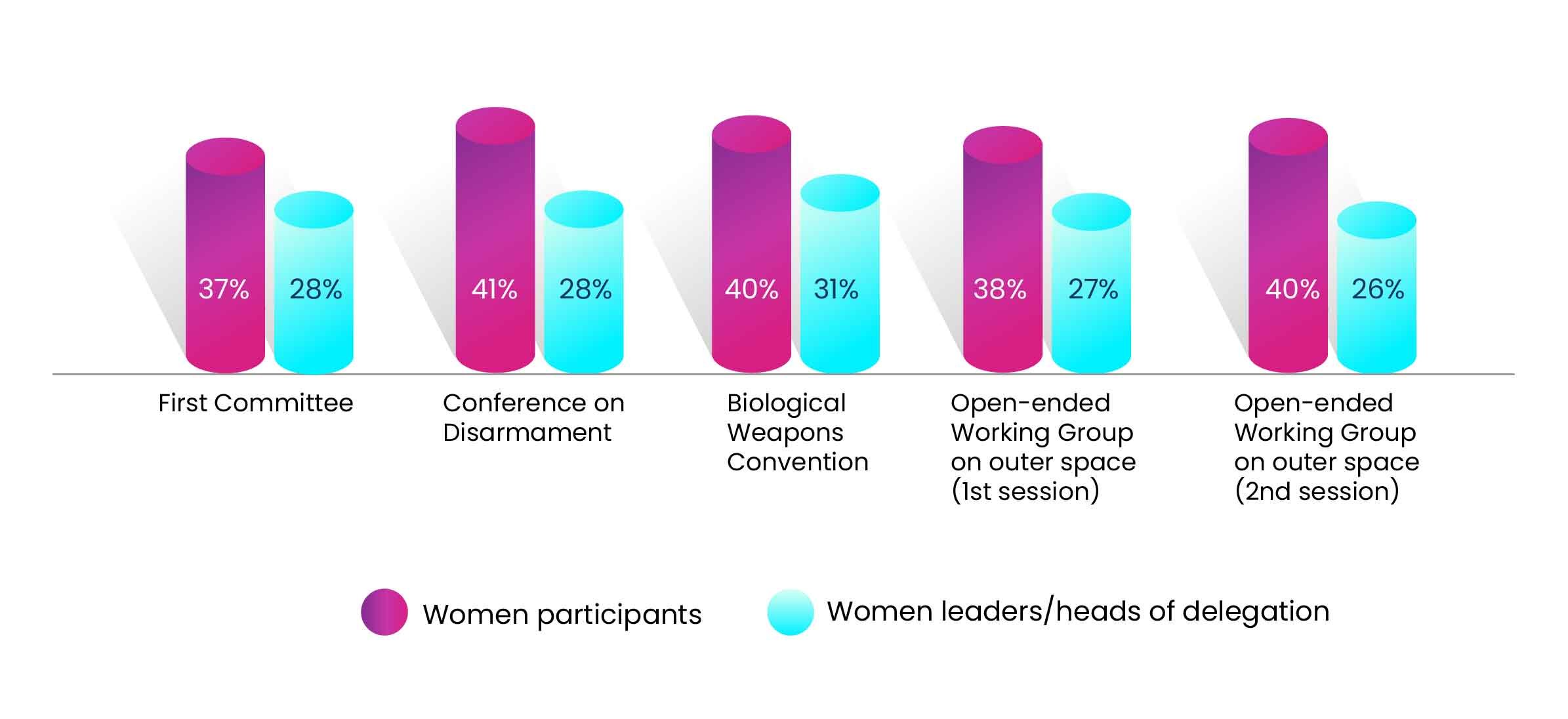
Women represented between 37 and 41 per cent of participants across selected forums but only 26 to 31 per cent of heads of delegation, reflecting a persistent gap between participation and leadership in disarmament processes.
Gender dimensions in multilateral forums
General Assembly
In the General Assembly First Committee, States delivered a joint statement on gender in which they highlighted key developments and initiatives for integrating gender perspectives into disarmament work.
The statement, delivered by South Africa on behalf of 86 countries, reaffirmed the importance of the women, peace and security agenda while underscoring the need to advance women’s full, equal and meaningful participation in conflict and post-conflict situations, as well as in peacebuilding. The States emphasized that gender perspectives provide key insights into how women, men, girls and boys can be differentially impacted by armed conflict and weapons, and that such insights should inform the implementation of arms control and disarmament agreements.
The signatories highlighted that available data continued to reflect women’s continued underrepresentation in disarmament forums, particularly in leadership roles. They strongly encouraged specific, targeted action to ensure that women and men were equally and meaningfully represented in disarmament work. They further reaffirmed the pivotal role of civil society in raising awareness on gender perspectives in disarmament and noted that incorporating gender perspectives in disarmament, arms control and non-proliferation could improve the functioning of the disarmament machinery and strengthen peace and security for all. The statement received six more signatories than the First Committee’s 2024 joint statement on gender.
Many First Committee delegations delivered statements underscoring the importance of gender perspectives in disarmament and supporting the full and meaningful participation of women in all disarmament discussions. Delegations also emphasized the relevance of the women, peace and security agenda to disarmament issues and noted the gender-differentiated impacts of weapons.
Of the 60 resolutions proposed by the First Committee and adopted by the Assembly, 21 referenced gender considerations in arms control, non-proliferation and disarmament or emphasized the importance of women’s equal and meaningful participation in disarmament processes. In keeping with recent General Assembly trends towards incorporating gender-related language into disarmament resolutions, that figure represented a slight proportional increase compared to 2024.
The General Assembly adopted its annual resolution on “The illicit trade in small arms and light weapons” (80/38) without a vote. During the First Committee’s consideration, a vote was requested on a preambular paragraph recognizing “the need for the strengthened participation of women in decision‑making and implementation processes relating to the Programme of Action on Small Arms and Light Weapons[1] and the International Tracing Instrument and reaffirming the need for States to mainstream a gender perspective into their implementation efforts”. One State voted against the paragraph for the first time.
Earlier, in October, several civil society organizations addressed gender-related issues in statements delivered during the First Committee session. Speaking on behalf of 23 non-governmental entities, the Women’s International League for Peace and Freedom underscored the need for an intersectional, non-binary approach to gender and disarmament. The International Action Network on Small Arms, a global coordinator of more than 280 civil society organizations, urged Member States to strengthen implementation of the Programme of Action to Prevent, Combat and Eradicate the Illicit Trade in Small Arms and Light Weapons in All Its Aspects, as well as the Global Framework for Through-life Conventional Ammunition Management. In that regard, it emphasized the importance of civil society engagement, gender inclusivity, community safety and the need to anticipate technological shifts in arms manufacturing.
Small arms and light weapons
On 17 March, the General Assembly and the Economic and Social Council held their first joint meeting on small arms and sustainable development and later issued a summary of the proceedings. In a panel discussion devoted to gender and small arms, speakers emphasized that effective control of small arms and light weapons was closely linked to efforts to advance gender equality and prevent gender‑based violence. The discussion highlighted how gender norms fuelled armed violence, how the proliferation of small arms facilitates sexual violence and heightened risks for women and girls, and how women’s meaningful participation and engagement of men and boys were essential to the lasting prevention of armed violence.
In his 2025 report on small arms and light weapons (S/2025/670), submitted pursuant to Security Council resolution 2220 (2015), the Secretary-General noted that small arms facilitated environments in which gender‑based and conflict‑related sexual violence occurred while highlighting that firearms had been involved in 88 per cent of the documented incidents of conflict-related sexual violence from 2022 to 2024. He issued comprehensive recommendations on gender‑responsive arms control, including systematic collection of sex‑ and age‑disaggregated data, enhanced integration of gender perspectives in arms control policy and women’s equal participation in weapons and ammunition management. For the first time, the Secretary‑General urged States to address “cultural and social conceptions of masculinity which contribute to the perpetuation of armed violence” and called for the engagement of men and boys in transforming harmful norms. At a dedicated meeting of the Security Council held on 10 November, two members of the Council expressed disagreement with the consideration of gender and development dimensions in the text, arguing those issues extended beyond the mandate of the agenda item.
That Security Council open debate on small arms, held on 10 November under the presidency of Sierra Leone, brought together the 15 Council members, 44 additional Member States and the European Union. Some delegations highlighted the gendered impacts of small-arms proliferation and underscored the strong links between illicit weapons and gender‑based violence. A broad group of speakers called for strengthened gender‑responsive approaches aligned with both the women, peace and security agenda and the youth, peace and security agenda. They also called for increased participation of women in arms control decision‑making; disarmament, demobilization and reintegration processes; peace operations; and weapons and ammunition management. Several interventions also connected gender considerations to socioeconomic drivers of armed violence, drawing attention to poverty and marginalization.
Landmines, cluster munitions and improvised explosive devices
States continued to consider gender and age diversity needs in implementing the Anti-Personnel Mine Ban Convention,[2] in line with Action 3 of the Siem Reap-Angkor Action Plan, which calls for mine action programmes to consider the different needs and perspectives of women, girls, boys and men. At the twenty-second Meeting of States Parties to the Convention, held in Geneva from 1 to 5 December, gender focal points reported on the substantive Committees’ activities and priorities for implementation in 2025 and 2026 (APLC/MSP.22/2025/10, APLC/MSP.22/2025/11, APLC/MSP.22/2025/12 and APLC/MSP.22/2025/13.
Similar commitments were advanced under the Convention on Cluster Munitions, whose article 5 requires States parties to “adequately provide [cluster munition victims with] age- and gender-sensitive assistance, including medical care, rehabilitation and psychological support, as well as provide for their social and economic inclusion”. Those obligations are reinforced by Action 4 and Action 5 of the Lausanne Action Plan, which promotes inclusive, gender-responsive implementation of the Convention and the meaningful participation of affected communities, victims and survivors. The thirteenth Meeting of States Parties to the Convention, held in Geneva from 15 to 18 September, reviewed efforts to integrate gender considerations into implementation, with delegations emphasizing the importance of age- and gender-sensitive assistance for victims and addressing the specific needs of vulnerable groups. Germany, as co-coordinator of the Working Group on the General Status and Operation of the Convention and as gender focal point for the implementation of the Lausanne Action Plan, reported on activities undertaken to advance those commitments in cooperation with the other thematic coordinators.
Arms Trade Treaty
The eleventh Conference of States Parties to the Arms Trade Treaty, held in Geneva from 25 to 29 August, decided to establish gender focal points under the Treaty. In the context of the report of the Chair on the Working Group on Effective Treaty Implementation (ATT/CSP11.WGETI/2025/CHAIR/826/Conf.Rep), States parties decided to approve the focal points for two-year terms to promote the systematic integration of gender perspectives across all the Treaty’s processes to support its effective implementation.
The role of the focal points includes advancing a human rights-based approach that addresses the differentiated impacts of armed violence on women and men, in line with commitments and decisions taken by successive Conferences of States Parties. To that end, the focal points may provide advice and support to States parties in fulfilling their obligations under articles 6 and 7 of the Treaty, including by promoting discussions on article 7 (4) of the Treaty and disseminating existing tools, voluntary guidance and good practices for conducting risk assessments on gender-based violence.
The focal points may also contribute to relevant working group discussions, facilitate inclusive dialogue on the implementation of gender-related Arms Trade Treaty provisions and assist the work of the Voluntary Trust Fund in incorporating gender and gender-based violence considerations. In supporting efforts to achieve gender balance and the full, equal, meaningful and effective participation of women in delegations, panels and meetings, the focal points would also support States parties and the Arms Trade Treaty secretariat in reviewing and reporting progress on gender and gender-based violence provisions, convene meetings with interested stakeholders, and contribute to the annual Conference of States Parties cycle by establishing a standing agenda item on their work.
Information and communications technologies
In 2025, the Open-ended Working Group on Security of and in the Use of Information and Communications Technologies (ICTs) continued to address gender-related issues during its tenth and eleventh substantive sessions held in February and July. In the final report of the Working Group marking the completion of its mandate (A/80/257), States built on previous efforts to tackle gender-related aspects of ICT security. They welcomed both the increasing participation of women delegates and the prominence of gender perspectives in the discussions. States also underscored the importance of continuing to narrow the “gender digital divide” and drew attention to the need for a gender perspective in addressing ICT threats. In discussions on ICT security capacity-building, States continued to encourage gender-responsive capacity-building, including through the integration of a gender perspective into national policies and the development of checklists or questionnaires to identify needs and gaps.
Throughout the Working Group discussions, many States and non-governmental stakeholders referred to the importance of gender perspectives and noted the positive contribution of initiatives aimed at enhancing women’s participation in intergovernmental discussions. Those initiatives included the Women in Cyber Fellowship, a sponsorship programme co-funded by several Member States that also provides capacity-building activities aimed at building a network of women cyber diplomats and experts. Many participants in the Working Group expressed hope that such efforts would continue, including within the framework of the Global Mechanism on Developments in the Field of ICTs in the Context of International Security and Advancing Responsible State Behaviour in the Use of ICTs, which was expected to begin meeting in 2026.
In partnership with Singapore, the Office co-convened a session of the United Nations–Singapore Cyber Fellowship in May. The Fellowship was open to State-nominated senior officials working in ICT security, with its selection process considering gender parity. Similarly, to support broad and inclusive participation in the eleventh substantive session of the Open-ended Working Group in July, the Office organized a sponsorship programme for delegates representing least developed countries, landlocked least developed countries and small island developing States, with careful attention to supporting women’s participation. A cross-regional and gender-balanced group of delegates attended the Working Group session and participated in capacity-building activities alongside the formal meetings.
Artificial intelligence in the military domain
In 2025, States accelerated their consideration of artificial intelligence (AI) in the military domain and its implications for international security. In the General Assembly resolution entitled “Artificial intelligence in the military domain and its implications for international peace and security” (80/58), States noted the possible consequences of such AI, including concerning gender, racial, age and social aspects that could be caused by bias in datasets or other algorithmic biases of AI.
Similarly, the Secretary-General issued a report on AI in the military domain and its implications for international peace and security (A/80/78) pursuant to the request of the General Assembly from the prior year’s resolution on the topic. In the report, the Secretary-General addressed gender-related considerations as part of broader concerns about algorithmic and data-related biases. Submissions by Member States and other stakeholders noted that AI systems can amplify biases, including those related to gender, race, age and socioeconomic factors, creating concerns about potential harms to civilians. Some submissions reflected that social biases, including those related to gender, required risk assessment and mitigation measures to prevent bias and discrimination in algorithms.
Lethal autonomous weapons systems
The Group of Governmental Experts on Emerging Technologies in the Area of Lethal Autonomous Weapons Systems continued its work to further consider and formulate, by consensus, a set of elements of an instrument without prejudging its nature. In those discussions, several delegations called for stronger language on the need to prevent and mitigate biases, particularly gender and racial biases.
Nuclear weapons
Mexico served as the gender focal point of the Treaty on the Prohibition of Nuclear Weapons for the intersessional period between its second Meeting of States Parties, held in 2023, and the third Meeting of States Parties, convened from 3 to 7 March 2025. Malta was appointed to the role of gender focal point for the period between the third Meeting of States Parties and the first Review Conference of the Treaty, scheduled to be held from 30 November to 4 December 2026 (TPNW/MSP/2025/11/Rev.1, annex II).
In its report on related intersessional activities (TPNW/MSP/2025/5), Mexico emphasized that ensuring full, equal and meaningful participation with respect to gender extended beyond achieving simple numerical parity in the Treaty’s activities. It also stressed that the Treaty could provide a key forum for advancing gender perspectives in security, peace and disarmament.
Expert exchanges and proposals indicated a need to further explore a gender-related risk category as a contribution to fulfilling the Treaty’s gender provisions. States highlighted a range of issues, including the disproportionate impact of radiation on women and girls, the underrepresentation of women in disarmament negotiations and the importance of gender-disaggregated data and research. Those efforts were aligned with the women, peace and security agenda and broader United Nations objectives. Discussions also showed that continued engagement by States, civil society and international organizations would be essential to ensuring that gender perspectives are integrated into victim assistance, environmental remediation and inclusive participation under the Treaty.
During the third session of the Preparatory Committee for the 2026 Review Conference of the Parties to the Treaty on the Non-Proliferation of Nuclear Weapons, held from 28 April to 9 May, five working papers[3] addressed or referenced gender issues. Most of the papers were co-sponsored by numerous States and included calls for integrating the women, peace and security agenda into nuclear disarmament, non-proliferation and the peaceful uses of nuclear energy, while promoting women’s full, equal and meaningful participation in the Treaty’s review process. At the same time, participants expressed additional views emphasizing the centrality of competence of the participant.
Biological weapons
During the sixth and seventh sessions of the Working Group on the Strengthening of the Biological Weapons Convention,[4] held in Geneva from 11 to 22 August and from 8 to 12 December respectively, States parties considered the draft final report submitted by the Chair, Frederico S. Duque Estrada Meyer (Brazil). The draft text (BWC/WG/7/CRP.1/Rev.1) included a recommendation on establishing a science and technology advisory mechanism, as well as language highlighting the importance of geographical balance and the equal participation of women and men. In addition, the draft recommendation to establish an open-ended working group on compliance and verification included language on “full, equal, and meaningful participation of women in the Open-Ended Working Group”.
Women’s participation in disarmament processes
Participation in intergovernmental processes
The year 2025 saw a degree of progress towards women’s equal, full and effective participation and leadership in some multilateral forums.
In the General Assembly First Committee, women represented 37 per cent of registered delegates and 30 per cent of speakers, levels broadly on par with those in 2024.6 Six women constituted 28 per cent of heads of delegation.
In the 2025 session of the Conference on Disarmament, held from 20 January to 12 September, women represented 98 of 237 registered delegates, or approximately 41 per cent. Women remained less represented in delegation leadership, comprising 24 of 87 heads of delegation, or 28 per cent.
The Group of Governmental Experts on the Continuing Operation of the United Nations Register of Conventional Arms and its further development was chaired by a woman.[5] During the Group’s second session, held in February, 9 of the 19 experts were women; that number decreased to 8 for the third session following a change in membership.
During the Preparatory Meeting of States on the Global Framework for Through-life Conventional Ammunition Management, held from 23 to 27 June in New York, women accounted for 101 of the 239 participants. In addition, women comprised 7 of the 12 delegates that the Office for Disarmament Affairs sponsored to participate in the meeting to enrich technical discussions and strengthen geographical representation.
In its final year, the Open-ended Working Group on Security of and in the Use of Information and Communications Technologies (2021–2025) continued to demonstrate strong progress towards gender parity, with women representing approximately 54 per cent of speakers during the two sessions held in 2025.
In the 2025 meetings of the Biological Weapons Convention, women constituted 40 per cent of participants and 31 per cent of delegation heads. The Convention’s sponsorship programme, intended to broaden representation at intersessional meetings, supported 39 national experts in 2025, of whom 12 were women (31 per cent) and 27 were men (69 per cent).
At the first session of the Open-ended Working Group on the Prevention of an Arms Race in Outer Space in All Its Aspects, held from 7 to 11 April, women accounted for 115 of 306 registered participants, or approximately 38 per cent, and 20 of 73 heads of delegation, or 27 per cent. Women also represented 12 of the 36 representatives recorded as having taken the floor, or one third. At the second session, held from 21 to 25 July, women constituted 116 of 293 registered participants, or approximately 40 per cent, and 19 of 72 heads of delegation, or 26 per cent. Women accounted for 11 of the 34 representatives recorded as having taken the floor, or 32 per cent.
Participation in activities supported by the Office for Disarmament Affairs
The Office for Disarmament Affairs contributed to advancing women’s participation and empowerment in disarmament through fellowship programmes, scholarships, training activities and workshops.
In 2025, women represented 50 per cent of participants in the United Nations Programme of Fellowships on Disarmament, comprising 12 of 24 Fellows. The Programme included focused seminars on the gender dimensions of disarmament, including linkages with the women, peace and security agenda.
Gender parity was achieved in the third edition of the Youth for Biosecurity Fellowship programme, conducted from March to August, with 10 women and 10 men selected. Topics discussed in the online webinars and in-person study trip included efforts to integrate gender perspectives and increase women’s participation. The five webinars involved 24 speakers, with 13 women and 11 men. The in-person component included briefings with experts and high-level exchanges with 21 experts, including 13 women and 9 men.
In the technical training on pathogen detection and biosecurity, held from 1 to 5 December in Cape Town, South Africa, in support of article X of the Biological Weapons Convention, women constituted 53 per cent of the 15 participants. In 2025, women represented 70 per cent of the 10 participants selected for the inaugural Biological Weapons Convention Fellowship for Scientists in the Peaceful Use of Biology and Biosecurity. Held in China, India, Italy and South Africa at facilities of the International Centre for Genetic Engineering and Biotechnology, the two-month Fellowship provided hands-on training in life sciences and biological threat detection and response to early-career scientists from development assistance recipient countries listed by the Organisation for Economic Co-operation and Development.[6] In addition, women constituted 4 of 10 persons selected to attend the first iteration of a training course on microbial genomics and bioforensics. The programme took place on 16 and 17 November in Munich, Germany, at the Institute of Microbiology of the German Armed Forces.
In the context of the first African Conference on the Biological Weapons Convention, held in Nairobi from 26 to 28 November, the Office organized a panel on the role of women and youth in non-proliferation, disarmament, biosafety and biosecurity. The event focused on specific challenges faced by women and youth in those fields across Africa, as well as the benefits of broader participation and engagement. Panellists highlighted the key role of the United Nations in promoting women’s participation in intergovernmental forums, stressing that overcoming related challenges would require further understanding them and taking advantage of existing initiatives.
The Office integrated gender perspectives into the drafting and dissemination of the Secretary-General’s report The Security We Need: Rebalancing Military Spending for a Sustainable and Peaceful Future, mandated by Action 13(c) of the Pact for the Future (79/1). As part of that process, a call for papers resulted in four submissions specifically examining the gendered dimensions of rising military expenditure. The Office also conducted targeted consultations with organizations and networks of experience in gender equality to ensure gender perspectives were reflected in the report’s development. At a validation workshop held in April, 8 of 17 participating security, development and human rights experts were women. In October, the Office further advanced the discussion by co-hosting an event entitled “Financing the Women, Peace and Security Agenda in an Age of Rising Military Expenditure” in partnership with the United Nations Entity for Gender Equality and the Empowerment of Women (UN-Women).
Gender mainstreaming
Global initiatives
In addition to promoting gender-balanced participation in disarmament processes, the Office for Disarmament Affairs continued helping to operationalize policies aimed at integrating gender perspectives into disarmament and arms control activities, alongside related efforts carried out by its regional centres and partner organizations, as well as other relevant entities. Of the 79 meetings, conferences, training courses, workshops and events organized or co-organized by the Office in 2025 for which data were collected, 58 per cent integrated a gender perspective to some extent, while 14 per cent had gender equality as a principal focus.
The United Nations Saving Lives Entity (SALIENT) — a funding facility jointly managed by the Office for Disarmament Affairs and the United Nations Development Programme, in partnership with the Peacebuilding Fund and relevant United Nations country teams — supported national and community-based armed violence reduction efforts with a strong gender focus in Cameroon, Chad, Ghana, Honduras, Jamaica, Kyrgyzstan, Lebanon, Panama, Papua New Guinea and South Sudan. SALIENT commits at least 30 per cent of its programme funds to activities that directly advance gender equality and women’s empowerment.
The United Nations Trust Facility Supporting Cooperation on Arms Regulation (UNSCAR), another key funding mechanism on conventional arms administered by the Office, continued to strengthen gender-responsive approaches in the formulation, programming and implementation of projects and activities funded under the mechanism. During the 2025 annual call for proposals, advancing the women, peace and security agenda remained one of the thematic priorities of UNSCAR. All 103 applicants were required to ensure the meaningful participation and representation of women in UNSCAR-funded activities. In addition, 72 applications, or 70 per cent, indicated that their proposed projects would contribute to advancing the women, peace and security agenda. UNSCAR also supported projects specifically addressing the disproportionate and negative impacts of illicit small arms and light weapons on women. In 2024–2025, those efforts included a project implemented by the Women’s Institute for Alternative Development, which supported community dialogues on women’s security in Jamaica and Trinidad and Tobago.
The Office continued to strengthen the integration of gender-responsive approaches across its small-arms-control programming in 2025, recognizing that the impacts of small arms and light weapons proliferation were deeply gendered and that effective responses required inclusive policy and operational frameworks. In December, the Office concluded implementation of a three-year global project in support of the Programme of Action on Small Arms and Light Weapons, with a core objective of strengthening gender-responsive arms control. The project assisted Member States in integrating gender perspectives into national, regional and global arms control frameworks and supported civil society in advancing community-level advocacy on preventing gender-based violence through small-arms control. Under the project, more than 150 national small-arms practitioners participated in regional workshops on gender-responsive arms control in Africa and Asia and the Pacific. In Africa, those engagements led to the decision to develop an operational guidance note on gender and small arms and light weapons in partnership with the African Union. In Asia and the Pacific, discussions resulted in a regional set of measures designed to strengthen linkages between the women, peace and security agenda and small-arms control.
In both the Caribbean and African iterations of the Office’s Fellowship Training Programme on Small Arms and Light Weapons Control, dedicated sessions addressed the nexus between gender, human security and armed violence. Those sessions highlighted how women, men, boys and girls experience risks differently and how such disparities shape national and regional priorities. Fellows examined the drivers and amplifiers of gender-based violence linked to firearms, the gendered dynamics of civilian access and misuse, and the importance of intersectional analysis in designing prevention and response strategies. These discussions reinforced global commitments under the Programme of Action and the International Tracing Instrument, while equipping practitioners from diverse security, law-enforcement and policy backgrounds with practical tools to integrate gender considerations into legislation, stockpile management, tracing efforts and community-level violence reduction initiatives.
The Fellowship programmes further emphasized that gender-responsive small arms and light weapons control was not limited to analysis but also required active participation, representation and leadership from individuals of all genders within national control systems. Throughout the three-week in-person training cycles in Trinidad and Tobago, Lomé and Ouidah, gender perspectives were embedded not only in policy modules but also in practical exercises, including tracing, marking, collection and destruction activities. Inclusive monitoring and evaluation frameworks developed during the Caribbean Fellowship underscored the need for disaggregated data to strengthen the evidence base for programming. Discussions with civil society organizations, including the International Action Network on Small Arms and the West Africa Network for Peacebuilding, highlighted the critical role of women’s peacebuilding networks in advancing accountable and community-centred governance of small arms and light weapons.
The Office continued to manage the Informal Coordination Mechanism on Gender and Small Arms and Light Weapons, which met quarterly to share research, programme planning and guidance across United Nations entities, research institutes and civil society. The mechanism brought together the United Nations Institute for Disarmament Research (UNIDIR), the Small Arms Survey, the Mines Advisory Group, the Women’s International League for Peace and Freedom, the United Nations Development Programme’s South Eastern and Eastern Europe Clearinghouse for the Control of Small Arms and Light Weapons (SEESAC), and the three United Nations regional centres for disarmament.[7]
Complementing those efforts, partner organizations and other relevant entities developed practical tools, research and guidance to support gender-responsive small-arms-control policy and practice.
With support from the Office, the International Action Network on Small Arms undertook numerous activities at the global and local levels. Through financial grants, community civil society organizations in Burundi, Lebanon, Nigeria, Pakistan, South Africa and Trinidad and Tobago conducted initiatives on gender mainstreaming and strengthening women, peace and security priorities in small-arms control. Such grants also contributed to community-level advocacy during global campaigns including the 16 Days of Activism against Gender-Based Violence and the Global Week of Action against Gun Violence. Additionally, the International Action Network on Small Arms launched a Toolkit on Small Arms and Light Weapons and the Women, Peace and Security Agenda, highlighting synergies between the two areas and strategies to address the gendered impacts of small-arms misuse. In the Civil Society Training Manual, it offered practical tools for its member organizations to integrate gender perspectives into their work.
The year also saw the Gender Equality Network for Small Arms Control continue its work as a key global platform advancing gender-responsive small-arms control. Its practical guide on inclusive ammunition management, launched in June during the Preparatory Meeting of States on the Global Framework for Through-life Conventional Ammunition Management, represented a milestone in efforts to translate global commitments on inclusive arms control into operational tools. Separately, the United Nations Office on Drugs and Crime produced a comparative legal analysis of measures to prevent and address firearms-related violence against women, accompanied by a compendium of good practices (E/CN.15/2025/CRP.6). SEESAC continued strengthening gender-responsive small-arms control in the Western Balkans in 2025 through the release of targeted publications, including analyses of effective approaches to sustainable gender mainstreaming in small arms and light weapons control, assessments of armed-violence victim support, detailed studies on the misuse of firearms in domestic violence, and examinations of firearm-related domestic-violence incidents.
The Office for Disarmament Affairs also advanced gender-responsive approaches in weapons and ammunition management, including through training courses, technical guidance and activities supporting Objective 14 of the Global Framework for Through-life Conventional Ammunition Management (A/78/111, annex).
In December, the Office collaborated with the Department of Peace Operations to conduct the annual training course on “Effective Weapons and Ammunition Management in a Changing Disarmament, Demobilization and Reintegration Context” in Accra. The course featured a strengthened focus on gender equality, with gender perspectives integrated into all modules and a dedicated session on gender. That approach highlighted women’s critical roles in both weapons and ammunition management and in disarmament, demobilization and reintegration processes. The session also emphasized how gender-responsive approaches contributed to community trust-building, programme effectiveness and sustainable outcomes. By incorporating gender-sensitive practices in technical and operational aspects, the course underscored how inclusive approaches could better address the human impact of weapons and ammunition proliferation throughout the entire peace process, from conflict to lasting stability.
As part of a series of regional and subregional outreach meetings on the Global Framework for Through-life Conventional Ammunition Management that the Office organized for States in North Africa and the Middle East in April, the Small Arms Survey led dedicated substantive sessions on integrating gender perspectives into conventional ammunition management practice. Participants from Member States, United Nations entities and international, regional and non-governmental organizations discussed two priority areas: the need for improved data and analysis on the gendered impact of ammunition diversion and unplanned explosions at munition sites; and strategies to address structural, social and cultural barriers to women’s meaningful participation in ammunition management.
On the margins of the Preparatory Meeting, the Office launched the WoMA+ Initiative, a new activity under its Women Managing Ammunition Network (WoMA-Network), established in 2022 to provide mentorship and increase women’s participation in multilateral processes related to conventional ammunition management. In cooperation with the Permanent Mission of Austria to the United Nations in New York, UNIDIR, the Ammunition Management Advisory Team of the Geneva International Centre for Humanitarian Demining and the Small Arms Survey, the Office organized a side event under the WoMA+ Initiative on the margins of the Preparatory Meeting. The event provided a dedicated platform to discuss the challenges women face in conventional ammunition management and to explore how States can advance the implementation of Objective 14 of the Global Framework by promoting women’s meaningful participation. It featured four alumni of the WoMA-Network, who shared their professional experiences in ammunition management and engaged with women leaders from other fields at United Nations Headquarters as part of the mentorship programme.
Within the framework of the WoMA-Network, the Office collaborated with the Austrian Ministry of Defence, the Ammunition Management Advisory Team and the Small Arms Survey to organize the third global iteration of the training on the International Ammunition Technical Guidelines for women specialists. The two-week session in Wiener Neustadt, Austria, convened 15 women participants and 4 women trainers, all working in specialized ammunition management roles either for their national military and security forces or for expert organizations. The programme enhanced participants’ capacity and knowledge across a range of ammunition safety and management topics, deepening their understanding of the International Ammunition Technical Guidelines. The session also addressed gender equality considerations, both broadly and specifically within the ammunition sector. Its participants became part of WoMA-Network.
As part of the mandates under the Global Framework, UNODA convened two working groups under the United Nations SaferGuard Technical Review Board to review and further expand the International Ammunition Technical Guidelines. Traditionally male-dominated, the Technical Review Board has become significantly more gender-balanced through the inclusion of qualified women experts, including WoMA-Network alumni. The Working Group on Through-life Security of Conventional Ammunition achieved full gender parity, with eight women and eight men, while the Working Group on Stockpile Management comprised nine women and six men.
Gender-responsive approaches were also reflected in national and community-level weapons collection and destruction activities. In 2025, under the joint African Union–Office for Disarmament Affairs Africa Amnesty Month project, the Office supported Mali and Uganda in implementing national-level activities to observe Africa Amnesty Month. The project encompassed awareness-raising activities, capacity-building workshops, and weapons collection and destruction initiatives, while ensuring the meaningful participation and engagement of women across all activities. In Uganda, capacity-building workshops conducted in the Northern Uganda and Rwenzori districts — areas with limited prior inclusion of women in public and community engagement initiatives — included 14 women among 72 participants across the two districts. In Mali, the official launch of Africa Amnesty Month included representatives of women’s groups, schoolgirls and women from youth and activist organizations, ensuring inclusive and meaningful participation.
Gender mainstreaming efforts also extended to biological disarmament and biosecurity. In 2025, a special edition of the Youth for Biosecurity Initiative, entitled the Young Women for Biosecurity Fellowship, was launched to facilitate tailored training opportunities for young women scientists. From October to December, the programme engaged 10 women experts from 9 States in the Global South on issues related to the Biological Weapons Convention through a gender lens. The four online workshops included substantive presentations and career-oriented interventions from 20 speakers, with 15 women and 5 men. The in-person study trip included technical briefings and high-level exchanges with 26 experts, including 15 women and 11 men.
In November, the Vienna Office of the Office for Disarmament Affairs partnered with other members of the Vienna- and Europe-based United Nations family in organizing a joint exhibition and high-level breakfast marking 25 years since the adoption of Security Council resolution 1325 (2000). Held under the title “Women, Peace and Security at 25: From Global Commitment to Lasting Change”, the events resulted from close cooperation between the Office and numerous other Vienna-based entities, including the Preparatory Commission for the Comprehensive Nuclear-Test-Ban Treaty Organization, the United Nations Industrial Development Organization, the United Nations Office on Drugs and Crime, the United Nations Office for Outer Space Affairs and the Organisation for the Prohibition of Chemical Weapons. They aimed to take stock of progress and analyse how to further advance the women, peace and security agenda.
The Office for Disarmament Affairs also continued to offer diverse training courses through the Disarmament Education Dashboard, including the newly revised course “Gender Perspectives on Disarmament”, developed in collaboration with UNIDIR. Between the launch of the revised educational resource in March and the end of 2025, more than 900 individuals enrolled in the course. At the end of 2025, the Disarmament Education Dashboard had more than 52,300 registered users, with women comprising 51.9 per cent.
Regional activities in Africa
The United Nations Regional Centre for Peace and Disarmament in Africa, based in Lomé, carried out disarmament and arms-control initiatives across the African continent strongly informed by gender perspectives.
The Centre convened a series of regional strategic workshops on gender mainstreaming in small-arms control, together with the African Union, regional economic communities and regional mechanisms. The first workshop, convened with the African Union, took place in Addis Ababa in April and focused on Eastern African member States. It brought together 32 participants, including 18 women. Participants discussed international, continental and regional policy frameworks and initiatives that foster gender-responsive approaches to countering the illicit proliferation of small arms and light weapons. They also considered challenges such as porous borders, limited availability of sex-disaggregated data and increased military expenditure, as well as opportunities associated with gender-responsive arms control, and developed recommendations for further cooperation.
The second regional workshop, on gender and small-arms control for West Africa, was held from 5 to 7 August and co-organized with the Economic Community of West African States (ECOWAS) Commission. The workshop brought together more than 35 participants, including representatives from 10 member States of ECOWAS and the Alliance of Sahel States, as well as experts from national small arms and light weapons commissions, the United Nations Mine Action Service, the United Nations Office on Drugs and Crime, UN-Women, and regional and international non-governmental organizations such as Mines Advisory Group International, the Small Arms Survey and the HALO Trust. The United Nations Humanitarian and Resident Coordinator for Nigeria and the Peace and Development Advisor also participated. Discussions focused on international, continental and regional frameworks addressing the illicit proliferation of small arms and light weapons and the integration of gender perspectives into arms control. Participants received training on incorporating gender considerations across all stages of arms control, including planning, implementation, monitoring, evaluation and budgeting. The workshop also provided a platform to share national experiences, challenges, best practices and lessons learned.
The third and final regional strategic workshop on gender mainstreaming in small-arms control, organized for Central Africa, was held in cooperation with the Southern African Development Community (SADC) secretariat on 3 and 4 September in Johannesburg. The gathering brought together 29 participants, including 15 women, representing SADC member States, the International Criminal Police Organization (INTERPOL), United Nations entities and civil society organisations such as the Bonn International Centre for Conflict Studies, Gun Free South Africa, the HALO Trust and the Institute for Disarmament and Arms Control. Participants shared perspectives on challenges and opportunities for fostering greater regional coordination to align the women, peace and security agenda with the small arms and light weapons agenda. States also shared in-depth reflections on their national efforts towards effective gender-responsive arms control. In addition, participants received training on gender-responsive budgeting, reporting, monitoring and evaluation of arms control policies and programmes using the Modular Small-arms-control Implementation Compendium (MOSAIC) and the Gender Mainstreaming Small Arms and Light Weapons Control manual.
The Centre hosted a webinar entitled “Gender, Fight Against Illicit Small Arms and Light Weapons, Preventing Violent Extremism and Countering Terrorism“ in April. Speakers examined the illicit proliferation of small arms and light weapons as a driver of terrorism and violent extremism, with a focus on gender dimensions. The 128 participants, including 80 women, discussed the latest dynamics and trends related to terrorism and violent extremism in Africa, particularly in the Sahel region; highlighted the interlinkages between terrorism and the illicit proliferation of small arms and light weapons; and generated recommendations for implementing gender-responsive arms control.
In October, the Regional Centre and UNIDIR organized a webinar to disseminate findings from the UNIDIR report entitled Deploying the Arms Control and Disarmament Toolbox: Strengthening the Role of United Nations Peace Operations to Prevent Sexual Violence. The report examines how United Nations peace operations can leverage arms control and disarmament tools — including disarmament, demobilization and reintegration, weapons and ammunition management, community violence reduction and arms embargoes — to support both long-term structural prevention and shorter-term operational prevention on the ground. Participants discussed the report’s findings and shared insights from their national contexts on effective arms control policies and practices that addressed gender-based violence and conflict-related sexual violence.
Regional activities in Latin America and the Caribbean
The United Nations Regional Centre for Peace, Disarmament and Development in Latin America and the Caribbean, based in Lima, implemented a range of regional initiatives to promote gender-responsive approaches to arms control and strengthen capacities to prevent and respond to firearms-related violence.
Building on continued efforts to strengthen implementation of global commitments on small-arms control, the Centre delivered its course on gender-responsive small-arms control to national authorities in Costa Rica in mid-2025. The course enhanced participants’ understanding of key concepts related to gender and small arms; policy frameworks and convergence of agendas; data collection and gender analysis; and the integration of gender perspectives into arms-control initiatives.
Addressing firearms-related gender-based violence remained a pressing regional concern in 2025, as the use of firearms in femicides and other forms of gender-based violence continued to pose significant challenges. The Centre supported national institutions through specialized training on “Firearms Investigations from a Gender Perspective”, delivered in multiple tailored iterations for law enforcement officials and forensic experts, prosecutors and members of the judiciary in Colombia, Panama and Peru. Those activities aimed to strengthen coordination across the criminal justice chain and enhance technical capacities to investigate and analyse firearms-related crimes against women, thereby contributing to efforts to reduce impunity.
In response to the need to further advance convergence between the women, peace and security agenda and disarmament agendas, the Centre developed the course “Introduction to Small Arms Control and its Linkages with the Women, Peace and Security Agenda” in collaboration with the UN-Women Regional Office for Latin America and the Caribbean. Delivered virtually to 91 government and civil society representatives from Central America, the course strengthened the technical and institutional capacities to integrate arms-control and armed-violence-prevention perspectives into the action plans for Security Council resolution 1325 (2000). It also stressed the importance of incorporating gender perspectives into national action plans under the Central America and Dominican Republic Roadmap to Prevent Illicit Trafficking and Proliferation of Firearms, Ammunition and Explosives, adopted in February.
To further strengthen women’s participation in disarmament-related fields, the Centre organized its first “Introductory Course on Ballistic Intelligence and Combating the Illicit Trafficking of Firearms” for recent women graduates of the Peruvian National Police. Through those efforts, 55 women officials engaged in both theoretical and practical modules covering ballistic intelligence; the identification of firearms, ammunition, parts, and components; marking and recovery of serial numbers; forensic ballistics and evidence handling; illicit manufacturing; international cooperation in tracing; and special investigative techniques on firearms trafficking.
The Centre hosted the 2025 Women, Forces of Change Regional Symposium in Lima in December, bringing together 47 women from diverse sectors to highlight their contributions to strengthening peace and security through disarmament, non-proliferation and arms control. The Symposium used diverse methodologies — including panel discussions, peace circles and storytelling-style presentations — to foster dialogue and exchange on issues such as the impact of small arms and light weapons and the role of women in armed-violence prevention initiatives; the relevance of subregional firearms road maps; the role and contributions of women in weapons of mass destruction disarmament and non-proliferation; convergence between the women, peace and security and disarmament agendas; and the role of youth and civil society in disarmament and armed-violence prevention. The Symposium fostered collaborative exchanges and strengthened partnerships among participants.
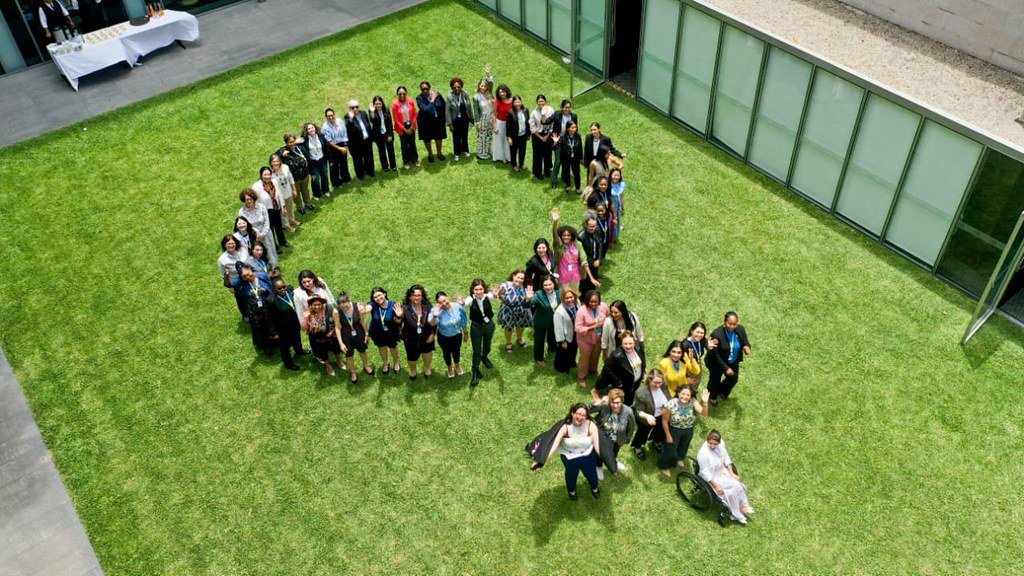
Participants gather for the Women, Forces of Change Symposium, convened in December by the Regional Centre in Lima.
Regional activities in Asia and the Pacific
The United Nations Regional Centre for Peace and Disarmament in Asia and the Pacific, based in Kathmandu, actively championed women’s leadership in disarmament throughout 2025. In addition to embedding gender considerations across its programming, the Centre organized and facilitated activities to strengthen gender mainstreaming across its pillars of work.
On the occasion of two important anniversaries — 30 years since the adoption of the Beijing Declaration and 25 years since the passage of Security Council resolution 1325 (2000) — the Centre, in collaboration with Nepal, convened an informal regional meeting entitled “Separate Agendas, Common Objectives: Lessons Learned and Opportunities from the Progressive Harmonization of Small Arms Control and Women, Peace and Security” in April in Nepal. Participants engaged in multi-stakeholder dialogues to explore the integration of the women, peace and security agenda and arms control frameworks, with a focus on practical, gender-responsive approaches to reducing armed violence. The meeting brought together 80 participants, including representatives from 19 countries, international organizations, United Nations entities and civil society organizations from across the region, who shared experiences, identified common challenges and considered concrete paths forward.
From 3 to 12 September, the Centre hosted the fourth annual iteration of the “Disarmament Toolkit” online course, which featured a dedicated webinar on gender and disarmament, including presentations on gender, power and peace and the critical role of gender equality in advancing peacebuilding and disarmament. The 2025 curriculum embedded a critical gender lens across disarmament portfolios, including conventional arms control, weapons of mass destruction and emerging technologies. The course attracted more than 1,600 participants from over 136 countries, nearly 60 per cent of whom were women under the age of 30.
The Centre consistently embedded a gender lens across national training and capacity-building initiatives. Those efforts included integrating gender analysis into legislative assessments in Fiji and Papua New Guinea and incorporating guidance from the MOSAIC modules on gender and small arms and light weapons into the development of Papua New Guinea’s national action plan on small arms and light weapons.
Footnotes
-
[1]
Programme of Action to Prevent, Combat and Eradicate the Illicit Trade in Small Arms and Light Weapons in All Its Aspects.
↩ -
[2]
Convention on the Prohibition of the Use, Stockpiling, Production and Transfer of Anti-Personnel Mines and on Their Destruction.
↩ -
[3]
NPT/CONF.2026/PC.III/WP.4, NPT/CONF.2026/PC.III/WP.21, NPT/CONF.2026/PC.I/WP.25, NPT/CONF.2026/PC.III/WP.32 and NPT/CONF.2026/PC.III/WP.37.
↩ -
[4]
Convention on the Prohibition of the Development, Production and Stockpiling of Bacteriological (Biological) and Toxin Weapons and on Their Destruction.
↩ -
[5]
María Jimena Schiaffino (Argentina).
↩ -
[6]
The programme was implemented with the support of Norway and the International Centre for Genetic Engineering and Biotechnology.
↩ -
[7]
The United Nations Regional Centre for Peace, Disarmament and Development in Latin America and the Caribbean, the United Nations Regional Centre for Peace and Disarmament in Africa, and the United Nations Regional Centre for Peace and Disarmament in Asia and the Pacific.
↩