We have welcomed the adoption of new treaties, normative frameworks and consensus outcome documents. Many of these successful initiatives have emanated from this very room. At the same time, there is an increasing and urgent need to confront the sobering realities of our times.
Developments and trends, 2025
The year 2025 saw modest progress across the United Nations disarmament machinery. The First Committee of the General Assembly completed its work within a compressed timeframe imposed by liquidity measures, the United Nations Disarmament Commission concluded the penultimate year of its three-year cycle, and the Advisory Board on Disarmament Matters finalized a strategic foresight exercise reflected in its final report. In Geneva, the Conference on Disarmament adopted a decision on its programme of work in January, marking the first time since 1996 that the Conference had agreed to a decision on its work in January.
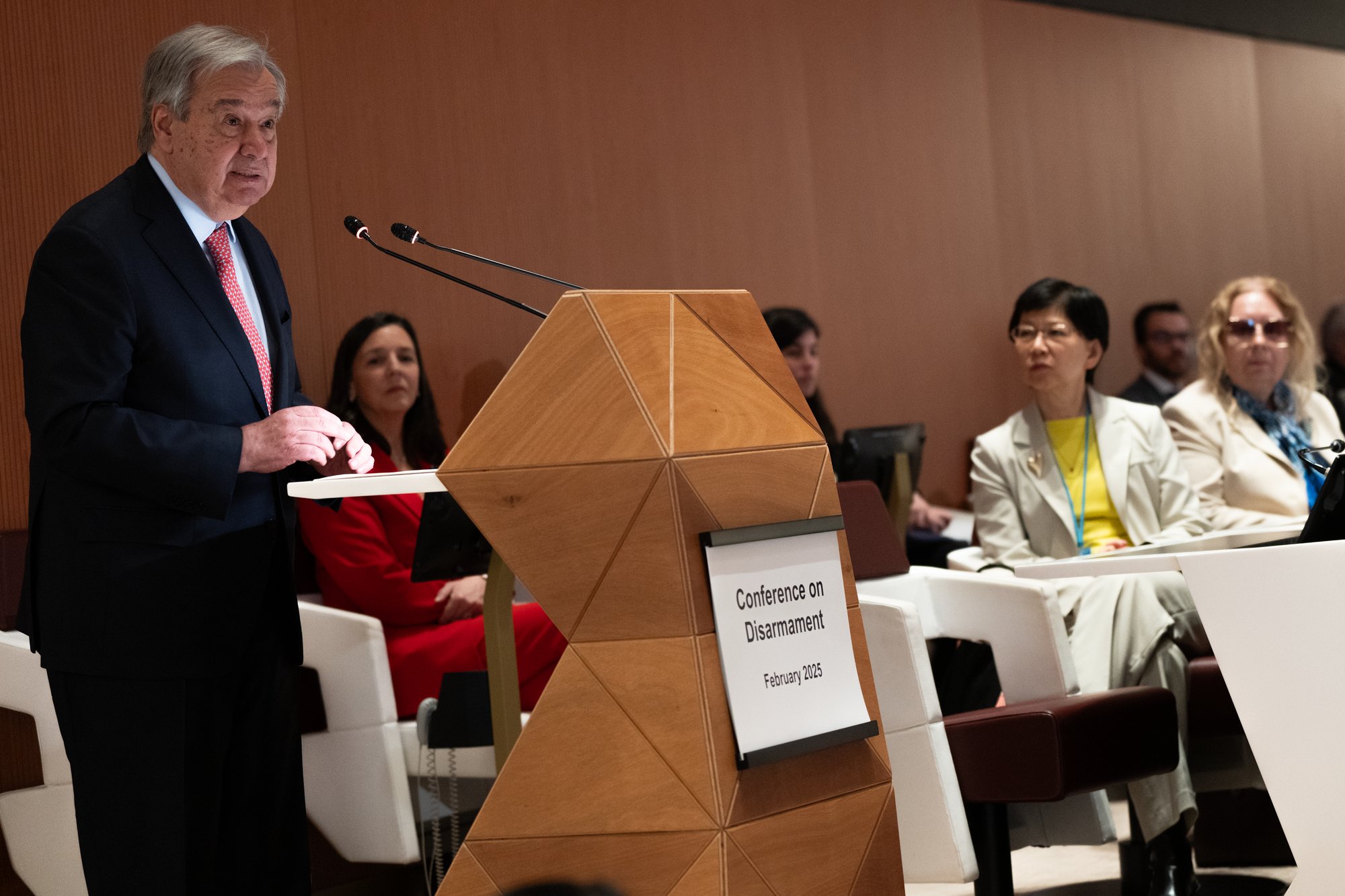
Secretary-General António Guterres addresses a high-level segment on Conference on Disarmament in Geneva in February. (UN Photo/Jean Marc Ferré)
Participation in the First Committee remained high, particularly on issues related to conventional weapons and nuclear weapons. Against the backdrop of ongoing discussions concerning the UN80 Initiative, as well as continuing liquidity and budget constraints, the Committee considered fewer draft proposals than the previous year, adopting 63 as compared with 77 in 2024. Only one new proposal was tabled, submitted by Mexico under the title “Possible risks of integration of artificial intelligence in command, control and communication systems of nuclear weapons” (General Assembly resolution 80/23). Despite the overall decrease in the number of proposals, States remained actively engaged, including discussions on improving the Committee’s working methods. For the fourth consecutive year, the Committee held a dedicated debate on working methods and programme planning, during which many delegations addressed issues including the frequency of resolutions, the overall length of the Committee’s session and the role of civil society.
Figure 7.1. First Committee at a glance: number of delegations delivering statements, 2023–2025
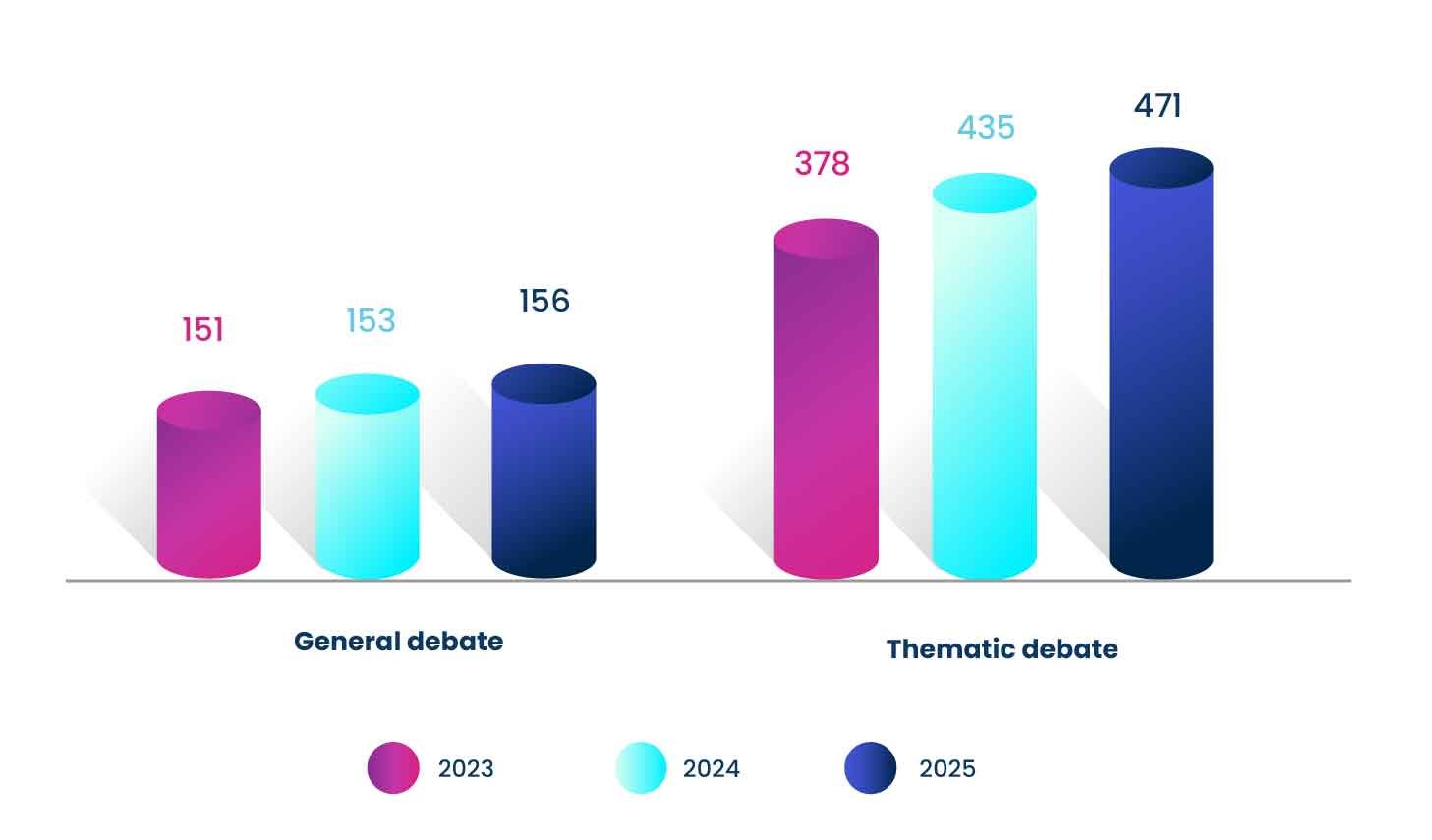
The rise in delegations delivering statements at the First Committee in 2025 demonstrated the importance assigned to disarmament and international security issues.
The United Nations Disarmament Commission convened its 2025 substantive session from 7 to 25 April under the chairmanship of Jose Pereira (Paraguay). In the second year of its cycle, the Commission continued its consideration of two substantive agenda items: “Recommendations for achieving the objective of nuclear disarmament and non-proliferation of nuclear weapons” and “Recommendations on common understandings related to emerging technologies in the context of international security”. In accordance with past practice, the Commission held a general exchange of views over four plenary meetings before the two working groups commenced their work on the respective agenda items. As 2025 marked the penultimate year of the cycle, no agreement on substantive recommendations was expected, and the Commission adopted only a procedural report. In 2025, the Advisory Board on Disarmament Matters completed a strategic foresight exercise examining how advances in science and technology could shape the international security environment by 2045. In its final report (A/80/240), the Board set out guiding principles intended to ensure that emerging technologies advance peace, human rights and global equity. Drawing upon those principles, the Board identified five pathways for action, encompassing both informal and formal mechanisms to address risks associated with military applications of emerging technologies. Under those pathways, the Board proposed 17 forward‑looking measures for Member States and the United Nations system. A central theme of the Board’s discussions was the imperative that scientific and technological developments remain firmly anchored in the Charter of the United Nations and international law, and that any governance approach must safeguard human agency, transparency and accountability throughout the life cycle of new technologies.
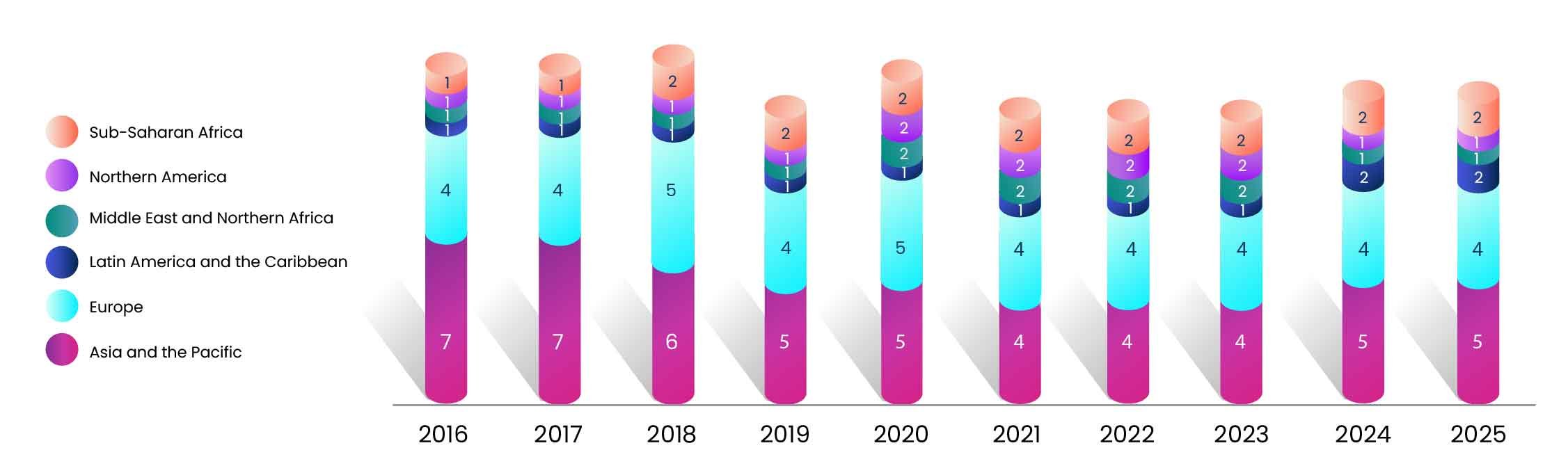
Figure 7.2. A varied body of experts: Regional and gender representation on the Secretary-General’s Advisory Board on Disarmament Matters, 2016–2025
Regional distribution
Gender distribution
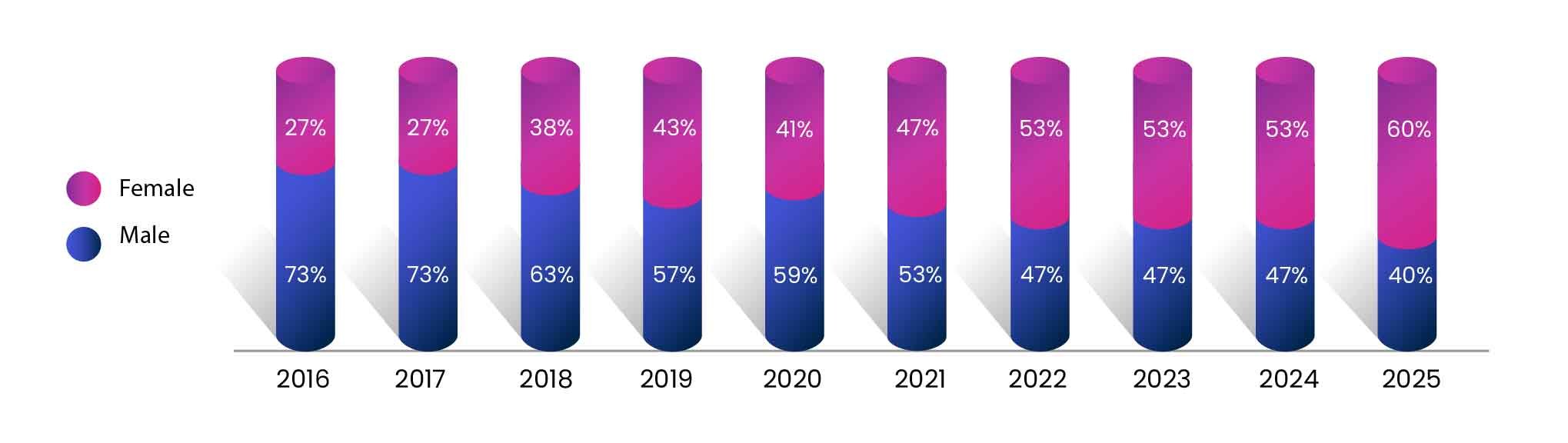
The Board maintained broad regional representation throughout the period, with members from Asia and the Pacific and Europe constituting the largest groups. Meanwhile, female representation increased steadily over the decade, rising from 27 per cent in 2016 to 60 per cent in 2025, reflecting a progressive shift toward greater gender parity.
In the Geneva-based Conference on Disarmament, a decision on the programme of work was successfully adopted in January following consultations conducted under the Presidency of Italy. The decision provided for the re-establishment of the five subsidiary bodies convened in 2024. Each subsidiary body held six formal meetings, in addition to several rounds of informal consultations, to negotiate their respective reports. However, consensus was not reached, and none of the reports was adopted by the Conference. The issue of participation by States not members of the Conference remained deeply divisive. Of 32 requests for participation in the work of the Conference, 16 were not approved. Many States sought to have that development reflected in the First Committee resolution concerning the annual report of the Conference on Disarmament (80/65). Consequently, a vote was called on the specific paragraphs of the resolution addressing the participation of States not members of the Conference.
First Committee of the General Assembly
Organization of work
The General Assembly First Committee (Disarmament and International Security) held its eightieth substantive session from 8 October to 7 November. Maurizio Massari (Italy) chaired the Committee, following his election alongside the rest of the session’s Bureau, comprising Rapporteur Ana Ávila (Costa Rica) and Vice-Chairs Amr Essam (Egypt), Pawinrat Mahaguna (Thailand) and Jakub Jaros (Poland).
At an organizational meeting on 3 October, the Committee approved its programme of work as contained in documents A/C.1/80/CRP.1 and A/C.1/80/CRP.2. Following that meeting, the Committee convened for 25 meetings, 8 fewer than in the previous year. Owing to liquidity constraints, all Main Committees were required to reduce the number of their meetings by 10 per cent, resulting in 3 fewer meetings allocated to the First Committee. The Committee achieved time savings primarily by shortening time limits for statements during the general debate and thematic cluster discussions.
For the fourth consecutive year, the Committee held a dedicated meeting on working methods and programme planning. During that meeting, several delegations referred to General Assembly decision 79/516, entitled “Information on requests for votes”, which required the Chair of the First Committee to provide, upon request by a Member State, the identity of the Member State or States requesting a vote on specific paragraphs or on draft resolutions as a whole.[1] Singapore, which had been the primary proponent of the new practice, made a formal request for information on all requests for votes in the Committee. To comply, the Chair circulated updated non-papers containing the names of States requesting votes on each proposal.[2] Delegations also exchanged views on ways to improve the effectiveness and efficiency of the Committee, including by reflecting on the frequency of draft resolutions, the existing thematic cluster structure and statement length.
Participation in the Committee remained high, particularly on issues related to nuclear and conventional weapons.[3] In total, the First Committee adopted 63 draft proposals, a marked decrease from the previous year. Only 14 of the approved texts were adopted without a recorded vote, while 160 separate paragraph votes were requested overall. Several resolutions were subject to more than 10 separate paragraph votes, including draft resolutions on lethal autonomous weapons systems and artificial intelligence (AI) in the military domain, as well as the annual Japan-led resolution on nuclear disarmament, entitled “Steps to building a common roadmap towards a world without nuclear weapons”. The annual text on the Comprehensive Nuclear-Test-Ban Treaty was also subject to a record-high number of votes, with the United States voting against it for the first time.
While the previous year saw a record 77 proposals, including five new draft resolutions, States were more conservative in 2025. Only one new proposal was introduced: a draft resolution submitted by Mexico entitled “Possible risks of integration of artificial intelligence in command, control and communication systems of nuclear weapons” (L.56), primarily intended to place the issue on the agenda of the First Committee, including at the subsequent session in 2026.
In view of time constraints resulting from liquidity measures, the Committee discontinued the use of pre-recorded and virtual presentations from the Chairs of disarmament bodies and components of the disarmament machinery, which had been the previous practice. Instead, written statements and updates were provided by those unable to be present in New York.[4] In-person briefings were delivered by the Chair of the Open-ended Working Group on Security of and in the Use of Information and Communications Technologies 2021–2025, Burhan Gafoor (Singapore); the Chair of the Independent Scientific Panel on the Effects of Nuclear War, Ana María Cetto (Mexico); and the Chair of the Open-ended Working Group on the Prevention of an Arms Race in Outer Space in All Its Aspects, Carlos Mario Foradori (Argentina).
At the conclusion of the general debate, on 17 October, the Committee convened a segment devoted to civil society statements. It heard from 22 non-governmental organizations on issues addressed by the Committee, including nuclear weapons, the environmental consequences of armed conflict and militarism, disarmament education and youth participation in disarmament discussions and processes.[5]
Despite the reduced number of meetings allocated to it, the Committee structured its discussions in line with previous sessions, dividing its work into three stages: (a) general debate; and (b) thematic discussions on seven clusters — namely, nuclear weapons, other weapons of mass destruction, conventional weapons, regional disarmament and security, outer space (disarmament aspects), other disarmament issues and international security, and disarmament machinery — and (c) action on all draft resolutions and decisions. Nine meetings were dedicated to the general debate, followed by 11 meetings for thematic discussions and 6 meetings for action on all draft resolutions and decisions.
Engagement in the Committee remained strong, with 156 delegations making statements during the general debate segment and 471 interventions delivered during the thematic segment. Gender balance remained an unrealized goal, with women comprising well below 50 per cent of speakers.
The atmosphere of the First Committee remained challenging, reflecting divisions among States over approaches to nuclear disarmament, the future role of China in strategic arms control and the role of nuclear sharing under the Treaty of the Non-Proliferation of Nuclear Weapons (NPT). Throughout the general debate, many States emphasized the importance of a successful eleventh NPT Review Conference in 2026, citing the strain caused by three consecutive Review Conferences failing to adopt a substantive outcome. Delegations also lamented mounting pressure on humanitarian disarmament frameworks, particularly the Convention on Cluster Munitions and the Convention on the Prohibition of the Use, Stockpiling, Production and Transfer of Anti-Personnel Mines and on Their Destruction (Anti-Personnel Mine Ban Convention).[6] As in previous sessions, many States voiced alarm about the deteriorating international security environment, rising military expenditures and deepening distrust, punctuated by the ongoing wars in Ukraine and the Middle East. Growing military expenditure and its impact on achievement of the Sustainable Development Goals featured prominently, with several delegations referring to the recent report of the Secretary-General on the matter issued pursuant to a request in the Pact for the Future (resolution 79/1).
In opening remarks to the Committee, the High Representative for Disarmament Affairs regretted that the international security landscape had recently suffered serious shocks from intensifying conflicts, rising nuclear rhetoric and rapid advances in new weapons technologies. She recognized that disarmament, international security and the United Nations were all facing serious challenges. In reference to the UN80 Initiative — launched by the Secretary-General to transform the United Nations into a more agile, integrated and effective Organization equipped to respond to contemporary challenges — the High Representative acknowledged the difficult decisions taken by the Secretariat to use fewer financial and human resources more efficiently. At the same time, she emphasized that the United Nations remained the essential, one-of-a-kind platform to advance peace, sustainable development, humanitarian action and human rights — a sentiment supported by a vast majority of Member States. She underscored the enduring value of disarmament and highlighted key challenges, including the rising nuclear threat, growing global military expenditure, and the urgency of tackling the international peace and security implications of emerging technologies.
On 8 October, the President of the eightieth session of the General Assembly, Annalena Baerbock (Germany), addressed the Committee. Referring to ongoing wars and crises and to a weakening commitment to peace and disarmament, the President underscored that the United Nations, having been built for peace, was itself being challenged. She observed that what was failing was not the United Nations as such, but the commitment of certain parties to uphold the Charter and international peace and security. The President stated that, in 2024, the world had spent $3,000 per second on nuclear weapons, while new topics, such as outer space security, could engage new actors and generations. She encouraged the Committee to consider whether the topics under discussion remained relevant and whether texts needed to be updated.
On 21 October, at its eleventh meeting, the Director and Deputy to the High Representative for Disarmament Affairs, Adedeji Ebo, engaged in the traditional high-level exchange alongside other high-level officials in the field of arms control and disarmament nominated by the General Assembly regional groups. Reflecting on the general debate, he noted States’ concerns about rising nuclear risk, the impact of the UN80 Initiative and growing military expenditure. He devoted the remainder of his intervention to global military expenditure, highlighting that it had surged to a record-breaking $2.7 trillion in 2024, with increases across all regions, with the steepest year-on-year rise since 1988. He compared total global expenditure with the combined gross domestic product of all African countries. He also outlined the key elements of the report of the Secretary-General entitled The Security We Need: Rebalancing Military Spending for a Sustainable and Peaceful Future, including its fundamental call to rethink the relationship between security, disarmament and development. The Director recalled the report’s five recommendations: to prioritize diplomacy; bring military expenditure to the forefront of disarmament; promote trust and accountability; reintegrate multilateral finance into the development agenda; and advance a human-centred approach to security and sustainable development. In response, several States expressed interest in efforts to implement the report’s recommendations.
The other high-level officials nominated to participate in the panel included a representative of the Secretary-General of the Agency for the Prohibition of Nuclear Weapons in Latin America and the Caribbean (OPANAL), nominated by Latin American and Caribbean States. The representative reaffirmed OPANAL’s commitment to global nuclear disarmament and non-proliferation, in particular nuclear-weapon-free zones and the NPT. The representative expressed support for all existing zones and for the creation of new ones, noting that the new comprehensive study on nuclear-weapon-free zones conducted pursuant to General Assembly resolution 79/241 provided a unique opportunity to take stock of what such zones had achieved.
On 28 October, the Committee heard from the Directors of the United Nations Regional Centres for disarmament in Africa, Latin America and the Caribbean, and Asia and the Pacific. They underscored the need for sustainable and predictable funding to maintain their support to Member States in their respective regions. The Director of the Centre in Africa outlined continued challenges related to the proliferation and diversion of small arms and ammunition and highlighted strengthened cooperation with the African Union and subregional organizations. The Director of the Centre in Latin America and the Caribbean reported on progress, including the development or implementation of subregional firearms road maps, strengthened coordination with United Nations country teams and initiatives supporting the participation of women and youth in disarmament. The Director of the Centre for Asia and the Pacific emphasized growing security risks linked to emerging technologies and illicit arms flows, while underscoring the importance of dialogue, partnerships and technical assistance for national implementation.
On 1 December, the General Assembly took action on all 63 draft resolutions and decisions on substantive items approved by the First Committee. There were 160 recorded votes at the plenary meeting. All drafts adopted without a vote in the Committee were adopted through the “one-gavel” provision, as agreed in General Assembly resolution 79/327. As no programme budget implications were presented at the eightieth session of the First Committee, all proposals were adopted on the same day, without any having first requiring consideration by the Fifth Committee. Four oral statements were made in the Committee regarding financial implications.[7]
In presenting the reports of the First Committee, the Rapporteur, Ana Ávila (Costa Rica), noted that the Committee had concluded its work one day earlier than scheduled, despite holding five fewer plenary meetings due to liquidity measures. She stated that such efficiencies had not dampened the interest of States in substantive matters, recalling the 471 interventions made during the thematic discussion segment. She also noted the interest of delegations in considering working methods during the intersessional period.
Exchange on working methods and programme planning
On 3 October, in accordance with General Assembly resolutions 79/247 and 79/327 and the First Committee’s adopted programme of work and timetable for its eightieth session (A/C.1/80/CRP.1), the Committee, at its first meeting, held a debate on working methods and programme planning. The debate was held immediately following the adoption of the Committee’s programme of work and timetable.
The Chair opened the debate, inviting interventions from States and recalling the relevant note by the Secretariat (A/C.1/80/INF/4). At the outset, he informed delegations of his intention to prepare, under his own responsibility, a summary of the discussion for onward transmittal to the Chair of the Fifth Committee (Administrative and Budgetary) and the General Committee of the General Assembly for further consideration.
The Committee heard interventions from 16 States, 2 of which spoke on behalf of groups of States. Delegations welcomed the debate and the opportunity to address programme planning and working methods. Several States particularly welcomed discussions on working methods, considering the Secretary-General’s UN80 Initiative and its focus on enhancing efficiency and effectiveness, as well as ongoing budgetary and liquidity challenges.
Regarding programme planning, several States expressed regret that the Committee for Programme and Coordination had been unable to reach consensus on conclusions and recommendations on “Programme 3: Disarmament” in the proposed programme plan for 2026 (A/80/6 (Sect. 4)). One State expressed regret that the Committee for Programme and Coordination had not been able to provide recommendations on the disarmament programme since 2017, while some States noted that, out of 28 programmes, consensus recommendations had been reached on only two. Delegations heard the view that programme planning and budgeting should remain depoliticized and should not impede the implementation of mandated activities. It was also stated that the role of the Committee for Programme and Coordination was not to relitigate mandates already agreed by States, but rather to ensure coordination. A group of States expressed the view that planning was, and should remain, a consensus-based process and requested the Chair to propose to the Fifth Committee that the proposed programme plan be adopted by the General Assembly without modification.
Many delegations addressed the working methods of the First Committee, with some expressing support for a concrete review in line with General Assembly resolution 79/327 on “Revitalization of the work of the General Assembly”. In that connection, reference was made to operative paragraph 25 of the resolution, in which the Assembly requested the Main Committees to “review their working methods during the eightieth session and submit concrete proposals to the General Committee on how to make their work more efficient and effective”. Some delegations called for decisive action on specific recommendations for implementation as early as next year. One delegation suggested establishing an informal platform on working methods under the auspices of the Chair of the Committee, with active engagement by the Office for Disarmament Affairs, academia and civil society. Another delegation queried the impact of the “one-gavel” approach described in operative paragraph 28 of resolution 79/327, to which the Secretariat replied that it would not affect the way proposals were adopted by the First Committee.
Several delegations referred to General Assembly decision 79/516, entitled “Information on requests for votes”, under which the identity of the Member State or States requesting a vote on specific paragraphs or on draft resolutions as a whole must be provided by the Chair of the First Committee to the Committee when requested by a Member State. Some delegations enquired as to how such information would be transmitted to the Committee at this session. One delegation invited discussion on the modalities for disclosure and queried whether the decision would be implemented at all, arguing that it had introduced additional politicization into the work of the forum the previous year. By contrast, another delegation emphasized that the decision must be steadfastly implemented, emphasizing that it was intended to support greater transparency and not impinge on the right of States to request votes. Another delegation called for full implementation to bring the working methods of the First Committee into line with those of the other Main Committees, build confidence and increase credibility. With regard to the current session, one delegation proposed that the First Committee secretariat directly inform either the sponsors of the draft resolution or the State that had requested the information. That delegation argued that States receiving the information could use it to analyse the situation and, if necessary, conduct targeted work with interested countries.
Many delegations reflected on the frequency of resolutions proposed in the First Committee. Several noted the large number of draft texts considered by the Committee, including those that remained largely unchanged from year to year. One delegation argued that most resolutions before the Committee entailed only technical updates. In this context, several delegations suggested reducing the frequency, length or number of resolutions, with a focus on those containing substantive updates. One delegation encouraged an evidence-based process, informed by practical experience, to identify duplicative mandates systematically with a view to reflecting current priorities rather than legacy structures. Another delegation encouraged tabling non-recurrent resolutions, while one argued that emphasis should be placed on resolutions likely to garner consensus. The view was also expressed that the proliferation of resolutions posed particular challenges for small delegations.
Delegations also raised other proposals related to the Committee’s working methods, including the possibility of reducing the overall length of the session to four weeks and alternating the venue between New York and Geneva. Some delegations also reflected on the role of civil society organizations, with one emphasizing their vital role and the importance of removing barriers to access. Another called for the provision of organization-specific nameplates rather than generic ones and regretted the informal modality of civil society participation. A group of States stressed the importance of gender parity in the Committee, including among speakers and panellists for high-level meetings. Regarding the time limit for submitting draft resolutions and decisions, some delegations supported extending the deadline. Other proposals included optimizing the e-deleGATE platform and ensuring that statements were posted to the dedicated web page on the day of delivery. One delegation also proposed that, in addition to information provided by the Secretariat on the programme budgetary implications of each draft resolution, a similar mechanism be established to assess the implications of draft resolutions that seek to mandate subsidiary bodies deviating from the rules of procedure of the General Assembly.
Overview of key substantive issues
Nuclear weapons
Under the nuclear weapons cluster, the First Committee took action on 24 draft resolutions and decisions. As the most contentious thematic cluster, it generated the highest number of votes. Only three draft resolutions garnered consensus: two related to nuclear-weapon-free zones — “African Nuclear-Weapon-Free Zone Treaty” (L.32) and “Treaty for the Prohibition of Nuclear Weapons in Latin America and the Caribbean (Treaty of Tlatelolco)” (L.40) — as well as the biennial resolution submitted by the African Group on the prohibition of dumping of radioactive wastes (L.31). In a break from tradition, the resolution “Treaty on the South-East Asia Nuclear-Weapon-Free Zone (Bangkok Treaty)” (L.50) was put to a vote owing to strengthened language on disarmament that was not welcomed by nuclear-weapon States or their allies.
Two new initiatives emerged from the cluster. Brazil and Norway submitted the draft resolution entitled “Establishment of a Group of Scientific and Technical Experts on Nuclear Disarmament Verification” (L.59), which mandated the creation of the Group to begin its work in 2027 and conclude in 2029. Mexico submitted the resolution entitled “Possible risks of integration of artificial intelligence in command, control and communication systems of nuclear weapons” (L.56).
Mexico’s draft resolution was modest in ambition, primarily seeking to place the issue on the agenda of the First Committee, including at its next session. Framed in terms of nuclear risk reduction, the draft highlighted the dangers inherent in AI-driven decision-making related to command, control and communication systems of nuclear weapons. It stressed the urgent need to address and develop, within the respective mandates of the disarmament machinery, meetings of parties to relevant treaties and other related multilateral and regional forums, common understandings, confidence-building measures and other appropriate measures to ensure that, pending the total elimination of nuclear weapons, human control and oversight is maintained over command, control and communication systems of nuclear weapons. The resolution also highlighted the potential utility of AI in nuclear disarmament and risk reduction. The original draft faced strong opposition from the nuclear-weapon States owing to language proscribing the use of AI in nuclear command, control and communications systems. Although the language was toned down, scepticism remained among some nuclear-weapon States regarding the role of the United Nations.
Throughout the general debate and thematic discussions, divisions among States persisted, although less sharply than in 2024. The proceedings were shaped in part by uncertainty over positioning by the United States and the impacts of the UN80 Initiative. Delegations continued to condemn the Russian Federation’s invasion of Ukraine and nuclear rhetoric in that context, as well as Israel’s past nuclear rhetoric in the context of Gaza. Strong resistance to resolutions requiring additional financial resources remained at the forefront, as evidenced by the reaction to the proposed Group of Scientific and Technical Experts on Nuclear Disarmament Verification, a resolution that in other years would likely have garnered widespread support. The issue of nuclear sharing remained prominent, as in the previous session of the First Committee and recent NPT Preparatory Committee sessions, with the Islamic Republic of Iran and the Russian Federation challenging past assertions by North Atlantic Treaty Organization States that nuclear sharing was “grandfathered” into the NPT.
Other weapons of mass destruction
The First Committee adopted three draft resolutions under this cluster, two by consensus: “Measures to prevent terrorists from acquiring weapons of mass destruction” (L.22) and “Convention on the Prohibition of the Development, Production and Stockpiling of Bacteriological (Biological) and Toxin Weapons and on Their Destruction” (L.60)”. The latter resolution, dedicated to the Convention and traditionally presented by Hungary, included only technical updates. Throughout the general debate and thematic discussions, many delegations welcomed progress made within the Working Group on the Strengthening of the Biological Weapons Convention. Italy, in particular, called for a special conference to be convened in August 2026 to establish two institutional mechanisms and an open-ended working group on verification.
In line with established practice, Poland tabled the annual resolution on “Implementation of the Convention on the Prohibition of the Development, Production, Stockpiling and Use of Chemical Weapons and on Their Destruction” (L.62), which was again adopted by a vote. In a significant change since 2013, when discussions surfaced on chemical weapons issues in the Syrian Arab Republic, the draft text welcomed cooperation by the new Syrian authorities to resolve the outstanding issues from the chemical weapons programme developed under the former government and called on States to provide support to the new authorities in identifying and safely destroying any remaining elements of the programme. Many States also referred to that positive cooperation in their statements and echoed the call to support the new authorities in those efforts. Key divisions nevertheless remained, including on allegations of chemical weapons use in Ukraine. In 2025, some States also raised concern about allegations of use in the Sudan.
Outer space (disarmament aspects)
The Committee adopted five draft proposals under the cluster dedicated to outer space (disarmament aspects). Unlike previous years, all five proposals were subject to a vote, despite the previous year’s successful merging of two competing open-ended working groups on outer space security into a single forum. Divergent views over the pursuit of a legally binding instrument, as compared with non-binding norms of behaviour, continued to dominate discussions. The traditionally non-controversial annual resolution on the “Prevention of an arms race in outer space” (L.3), tabled by Egypt and Sri Lanka, was voted upon at the request of the United States. The annual text on “Transparency and confidence-building measures in outer space activities” (L.36), which at one point had been co-sponsored by China, the United States and the Russian Federation, was also adopted by vote owing to the United States breaking consensus.
Nonetheless, positive developments in the Open-ended Working Group on the Prevention of an Arms Race in Outer Space in All Its Aspects helped to reduce the overall level of contention within the cluster. Many delegations, including from the European Union and the Russian Federation, expressed satisfaction with progress in the Working Group and welcomed the adoption of its agenda and programme of work. In view of those developments, the United Kingdom tabled only a decision to include on the agenda of the eighty-first session a sub-item on “Reducing space threats through norms, rules and principles of responsible behaviours” (L.35).
Conventional weapons
The Committee adopted nine draft proposals under the conventional weapons cluster, eight of them annual resolutions. The sole exception was the triennial resolution “Transparency in armaments” (L.47), mandating the next group of governmental experts in 2027 and 2028 dedicated to studying the operation and functioning of the United Nations Register on Conventional Arms. That text garnered the usual abstentions from States of the Arab Group owing to the Register’s exclusion of weapons of mass destruction within the Register’s scope.
Annual resolutions dedicated to conventional arms treaties, including the Arms Trade Treaty (L.9) and the Convention on Certain Conventional Weapons[8] (L.29), followed usual voting patterns. Discussions concerning the Convention on Cluster Munitions and the Anti-Personnel Mine Ban Convention were more challenging, however, following recent withdrawals by several Eastern European States. States that had withdrawn from the Anti-Personnel Mine Ban Convention took the floor to defend their decisions, citing military threats from the Russian Federation. The United States changed its usual abstention on the resolution on the Convention on Cluster Munitions to a vote against the text, taking the floor to defend the sovereign right of States to withdraw from treaties, going so far as to “applaud” the decision to “take control of one’s own security”.
Throughout the general debate and thematic discussions, many States underscored the security, humanitarian and economic consequences of the illicit trade in and excessive accumulation of small arms and light weapons, highlighting the critical importance of the Programme of Action to Prevent, Combat and Eradicate the Illicit Trade in Small Arms and Light Weapons in All Its Aspects. The annual resolution entitled “The illicit trade in small arms and light weapons in all its aspects” (L.51), led in 2025 by Colombia, included various process-related elements concerning the Programme of Action, including setting the dates of the ninth Biennial Meeting of States in June 2026 and reconfirming the fifth Review Conference in 2030. Many States also expressed support for the Global Framework for Through-life Conventional Ammunition Management, in particular the successful convening of its Preparatory Meeting of States in June and the adoption of its report (A/AC.299/2025/PM/1).
Other disarmament measures and international security
The First Committee adopted nine draft proposals under this cluster, including the second iteration of the draft resolution “Artificial intelligence in the military domain and its implications for international peace and security” (L.46). The Committee also adopted the draft resolution “Open-ended Working Group on security of and in the use of information and communications technologies 2021–2025 established pursuant to General Assembly resolution 75/240)” (L.20), which operationalized the new Global Mechanism on Developments in the Field of Information and Communications Technologies (ICTs) and Advancing Responsible State Behaviour in the Use of ICTs.
The resolution on the Open-ended Working Group endorsed the Group’s final report, calling for the Secretary-General to provide all necessary support to the new Global Mechanism on ICT security, which would begin meeting the following year. Throughout the general debate and thematic discussions, States universally welcomed the successful outcome of the Open-ended Working Group and the able chairing of Burhan Gafoor (Singapore).
The 2025 iteration of the draft resolution “Artificial intelligence in the military domain and its implications for international peace and security” (L.46) was the second of its kind. Its penholders, the Kingdom of the Netherlands and the Republic of Korea, held two rounds of informal consultations. The draft resolution contained a proposal to convene informal consultations over three days in Geneva the following year. While the United States had been a co-sponsor in 2024, its position shifted markedly, and it voted against adoption of the draft. The Russian Federation and the Islamic Republic of Iran, which had strongly opposed the resolution the previous year, maintained their positions, arguing that the term “responsible AI” was subjective and not comprehensive and that the modalities of the resolution lacked clarity.
The biennial resolution on women and disarmament was not on the agenda in 2025. Nevertheless, several States, regional groups and organizations used the general debate to emphasize the relevance of the women, peace and security agenda to disarmament efforts, highlight the gender dimensions of disarmament and emphasize the importance of women’s full, equal and meaningful participation in disarmament. Strong references to gender were made during the thematic debate on conventional weapons, with States calling for gender-sensitive implementation of programmes to control the illicit flow of small arms and light weapons and in relation to explosive weapons. Several States called for gender considerations to inform aspects of ICT security, and some States underscored the need to include gender perspectives in the debate on nuclear weapons and other weapons of mass destruction.
In 2025, the fourth iteration of the draft resolution “Youth, disarmament and non-proliferation” (L.53) introduced several updates. It welcomed the first Youth4Disarmament Forum; encouraged the continuation of activities and initiatives by the Office for Disarmament Affairs and the United Nations Institute for Disarmament Research, supported by voluntary contributions, to further strengthen meaningful, inclusive and effective participation of young people in the field of disarmament and non-proliferation; and requested the Secretary-General to seek specific measures to promote the meaningful and inclusive participation and empowerment of youth, including through the Youth4Disarmament programme. In a break from previous practice, the resolution was adopted by a vote.
Disarmament machinery
The Committee adopted eight resolutions under this cluster, including the annual texts dedicated to the United Nations Regional Centres for Peace and Disarmament. In a break from tradition, the annual resolution on “United Nations Regional Centre for Peace and Disarmament in Asia and the Pacific” (L.49) was subject to a paragraph vote.
Discussions under the cluster were dominated by the matter of granting observer status to States in the Conference on Disarmament. A group of 16 States, primarily European and Western-aligned States, condemned the Russian delegation for what they characterized as abuse of the veto rule by denying their request. As a result of disagreement over how to reflect the issue in the annual resolution, a vote was called on the text as a whole and on several of its paragraphs. Additionally, for the first time, the largely procedural resolution on the Disarmament Commission was subject to a vote following a request by the United States, which referenced the paralysis of the Commission and the need to consider its resourcing.
United Nations Disarmament Commission
The United Nations Disarmament Commission convened its 2025 substantive session from 7 to 25 April at United Nations Headquarters. The session represented the middle year of a three-year cycle of deliberations, during which the Commission considered the following two agenda items: (a) recommendations for achieving the objective of nuclear disarmament and non-proliferation of nuclear weapons (item 4); and (b) recommendations on common understandings related to emerging technologies in the context of international security (item 5).
At its organizational meeting on 7 April (A/CN.10/PV.397), the Commission elected José Pereira Sosa (Paraguay) as Chair and Amr Essameldin Sadek Ahmed (Egypt), Mohammed Lawal Mahmud (Nigeria) and Vivica Muenkner (Germany) as Vice-Chairs. During the opening of the substantive session (A/CN.10/PV.398), held immediately after the organizational meeting, the Commission re-elected, by acclamation, Akaki Dvali (Georgia) as Chair of Working Group I and Julia Rodríguez Acosta (El Salvador) as Chair of Working Group II, and it elected Syed Atif Raza (Pakistan) as Rapporteur (A/CN.10/PV.400).
Speaking at the opening of the substantive session, the High Representative for Disarmament Affairs underscored the Commission’s unique role as the only universal body mandated to undertake in-depth deliberations of disarmament issues. With respect to nuclear disarmament and non-proliferation, she recalled that a world free of nuclear weapons remained a priority for all States and called on the Commission to promote practical approaches for finding common ground, safeguarding past gains and encouraging fresh ideas to reinvigorate global disarmament efforts. On emerging technologies, she noted that governance mechanisms had failed to keep pace with technological innovation and emphasized the important role the Commission could play in ensuring that opportunities related to emerging technologies were fully realized while addressing potential risks posed by their misuse. She encouraged Working Group II to use its deliberations to address key structural questions ahead of the final negotiations in 2026.
The Commission held a general exchange of views over four plenary meetings on 7 and 8 April (A/CN.10/PV.398–A/CN.10/PV.401) before the two working groups commenced their work. A total of 78 statements were delivered by Member States and observers, two more than in 2024. Most States focused on nuclear-related issues in their statements rather than on emerging technologies.
Following three weeks of deliberations in plenary meetings and its respective working groups, the Disarmament Commission concluded its 2025 substantive session at its 403rd meeting, on 25 April, by adopting a final report containing the consensus reports of its two working groups for submission to the General Assembly at its eightieth session (A/80/42). No recommendations were put forward on the agenda items (A/CN.10/PV.403).
Working Group I
In 2025, Working Group I continued consideration of the agenda item entitled “Recommendations for achieving the objective of nuclear disarmament and non-proliferation of nuclear weapons”.
At its first three meetings, on 9, 10 and 14 April, the Working Group exchanged views and presented proposals concerning the organization of work for the 2025 and 2026 sessions of the Disarmament Commission. During the following three meetings, from 15 to 17 April, delegations exchanged views and made substantive statements on an informal paper entitled “List of focused topics”, circulated by the Chair on 13 April under his responsibility and without prejudice to the positions of delegations on any further work in the Working Group. Updated versions of the paper were circulated on 15 and 16 April.
At the seventh, eighth and ninth meetings, from 22 to 24 April, delegations exchanged views and presented proposals and positions on a paper circulated by the Chair on 21 April (A/CN.10/2025/WG.I/CRP.1). The paper was issued under the Chair’s responsibility and without prejudice to the positions of delegations, with a view to facilitating further work by the Working Group, including substantive exchanges and specific proposals during the 2026 session of the Disarmament Commission. At its ninth meeting, the Working Group considered and adopted its report on agenda item 4 by consensus.
Working Group II
Working Group II continued its consideration of agenda item 5, “Recommendations on common understandings related to emerging technologies in the context of international security.”
To provide an overview of issues related to emerging technologies in the context of international security, the Working Group reviewed the report of the Secretary-General on current developments in science and technology and their potential impact on international security and disarmament efforts (A/79/224).
To inform its deliberations and avoid unnecessary duplication and overlap, the Working Group heard briefings on United Nations processes related to emerging technologies in the context of international security, as well as presentations by Member States on relevant State-led initiatives. It also conducted an exchange of views on the benefits, risks and threats posed by emerging technologies in the context of international security.
At its first meeting, on 9 April, the Working Group held a general exchange of views on agenda item 5. At its second and third meetings, on 10 and 14 April, the Group heard briefings from the drafters of the Secretary-General’s report (A/79/224) and discussed its contents as follows: subsection II.A (“Artificial intelligence and autonomy”) on 5 and 10 April; subsections II.B (“Uncrewed systems”), II.C (“Digital technologies”) and II.D (“Biology and chemistry”) on 10 April; and subsections II.E (“Space and aerospace technologies”), II.F (“Electromagnetic technologies”) and II.G (“Materials technologies”), as well as section III (“Convergence of technologies”) and section IV (“Conclusions and recommendations”) on 14 April.
At its fourth meeting, on 15 April, the Working Group heard presentations on United Nations processes related to emerging technologies in the context of international security from Anupam Ray (India), a member of the Group of Governmental Experts on Further Practical Measures for the Prevention of an Arms Race in Outer Space; and Clarice Lim (Singapore), speaking on behalf of the Chair of the Open-ended Working Group on Security of and in the Use of Information and Communications Technologies 2021–2025. The Working Group subsequently exchanged views on the presentations.
At its fifth meeting, also on 15 April, the Working Group heard presentations on State-led initiatives related to emerging technologies in the context of international security by representatives of Austria, China, France, Pakistan and the Republic of Korea. At its sixth meeting, on 17 April, the Working Group held a further exchange of views on common understandings related to emerging technologies in the context of international security.
Based on those discussions, the Chair decided to issue a summary reflecting her understanding of the key points raised, without prejudice to the position of any delegation. The summary was intended to support States in their further consideration of the agenda item during the final session of the current three-year cycle. At its seventh and final meeting, on 17 April, the Working Group concluded its work with the consensus adoption of a procedural report (A/80/42, para. 21).
Conference on Disarmament
The Conference on Disarmament held part I of its 2025 session from 20 January to 28 March (CD/PV.1737–CD/PV.1754); part II from 12 May to 27 June (CD/PV.1755–CD/PV.1758); and part III from 28 July to 12 September (CD/PV.1759–CD/PV.1765). The session comprised 29 formal plenary meetings and two informal plenary meetings, as well as 38 meetings of subsidiary bodies and 22 open-ended informal consultations convened by the facilitators of the subsidiary bodies.
Adoption of the agenda
The 2025 session opened on 21 January under the presidency of Leonardo Bencini (Italy). As in previous years, the Conference adopted its agenda at its first meeting (CD/2442).
As in 2024, Pakistan reiterated its proposal, first introduced in 2023, to include a new agenda item entitled “New technologies: the development, deployment, integration and use of AI for military purposes, and autonomous weapon systems” (CD/2334, annex). Pakistan acknowledged the lack of consensus on the proposal during the 2024 session and requested that military applications of AI be duly considered, possibly under agenda item 5 “New types of weapons of mass destruction and new systems of such weapons; radiological weapons”, or agenda item 6, “Comprehensive programme of disarmament”. The Russian Federation reiterated its position that the existing agenda of the Conference was already sufficiently comprehensive.
Decision on the work of the Conference for 2025
Following consultations conducted by the presidency of Italy in advance of and during the opening of the 2025 session, the Conference adopted a decision on its work (CD/2443) on 30 January. This marked the first time since 1996 that the Conference had taken a decision on its work in January.
Through the decision, the Conference re-established the five subsidiary bodies created during the 2024 session (CD/2390), reappointed the coordinators from the previous year (CD/2391) and provided an indicative timetable providing for up to six meetings by each subsidiary body.
Requests for participation by States not members of the Conference
During the 2025 session, 32 States not members of the Conference submitted requests to participate in its work (CD/WP.666,* CD/WP.666/Add.1, CD/WP.666/Add.2, CD/WP.666/Add.3 and CD/WP.666/Add.4). As in 2024, following an objection to considering all requests through a single decision, the Conference considered the requests individually. It accepted 16 requests and did not accept 16 others (CD/PV.1739, CD/PV.1740, CD/PV.1741, CD/PV.1742 and CD/PV.1745).
High-level segment
The Conference held its high-level segment from 24 to 26 February under the presidency of Ichikawa Tomiko (Japan) (CD/PV.1746–CD/PV.1750). The segment attracted broad participation, with dignitaries representing 52 States delivering in-person statements and an additional six submitting pre-recorded video messages. The speakers included the Secretary-General of the United Nations and the President of the General Assembly (CD/PV.1746).
Work of the subsidiary bodies
Throughout the session, the coordinators of the subsidiary bodies maintained a common approach in the conduct of their work. Each of the coordinators circulated a letter containing an indicative timetable and a set of proposed topics of discussion in advance of the corresponding subsidiary body’s commencement of meetings. As the aim was strictly to facilitate the organization of discussions within the subsidiary bodies, the indicative topics were put forward without prejudice to the preparation of reports and with the understanding that all member States retained the right, under rule 30 of the rules of procedure, to raise any subject relevant to the work of the respective subsidiary body, as well as the opportunity to present its views on any subject that it may consider to merit attention.
The coordinators prepared draft reports using a common template developed under the overall guidance of the Presidents of the Conference. The draft reports sought to identify areas of possible convergence related to the possible future work of the subsidiary body, bearing in mind the role of the Conference on Disarmament as the single multilateral disarmament negotiating forum of the international community. They also sought recommendations concerning the future work of the Conference, including on specific topics that future meetings of the subsidiary bodies should consider.
In carrying out their mandates, the coordinators conducted bilateral and open-ended consultations with members of the Conference on their draft reports. They briefed the Conference on the outcomes of those consultations during a plenary meeting held on 2 September (CD/PV.1762). Ultimately, the Conference did not agree to adopt the reports of the subsidiary bodies. The coordinators of subsidiary bodies 4 and 5 nevertheless reported that the final revised versions of their reports had been generally accepted by member States.
Work of Subsidiary Body 1
Subsidiary Body 1 (Cessation of the nuclear arms race and nuclear disarmament) convened meetings on 4 February, 11 March, 13 March, 27 May, 28 May and 29 July.
For the meeting on 4 February, the coordinator proposed the topic “Overview of the current international security environment”. Andrey Baklitskiy from the United Nations Institute for Disarmament Research (UNIDIR) delivered a presentation on the key drivers affecting threat perceptions, including the threat perceptions of nuclear-weapon States and their effects.
At its meeting on 11 March, the subsidiary body considered the topic “Goals and objectives for nuclear disarmament”. Wilfred Wan from the Stockholm International Peace Research Institute delivered a presentation addressing the goals and objectives of nuclear disarmament, including a historical overview of relevant elements in international agreements.
For the meeting on 13 March, the coordinator proposed the topic “Practical measures for nuclear disarmament, including measures to build transparency and confidence and to reduce risks as well as nuclear disarmament verification”. Frederico Meyer (Brazil) and Jørn Osmundsen (Norway) delivered briefings on the joint proposal by Brazil and Norway to establish a Group of Scientific and Technical Experts on Nuclear Disarmament Verification.
On 27 May, the subsidiary body considered the topic “Legal framework and other related legal instruments to advance the process of nuclear disarmament”. Andreas Persbo from the Open Nuclear Network delivered a presentation on the legal framework for nuclear disarmament, affirming the role of multilateral negotiating bodies in broader disarmament efforts.
The draft report of Subsidiary Body 1, including its revised versions, reflected possible areas of convergence on a range of issues, including principles relating to nuclear disarmament and to general and complete disarmament; the nuclear disarmament obligation; principles that should be applied in the development and implementation of nuclear disarmament agreements; the respective responsibilities of various categories of States in achieving nuclear disarmament; specific measures related to nuclear disarmament; measures to build confidence and reduce the risk of nuclear war, in the context of achieving nuclear disarmament; and nuclear disarmament verification.
Work of Subsidiary Body 2
Subsidiary Body 2 (Prevention of nuclear war, including all related matters) held meetings on 11 February, 18 March, 20 March, 3 June, 5 June and 31 July.
For the meeting on 11 February, the coordinator proposed the topic “Prevention of nuclear war: overview of strategic and other developments”. Michael Spies of the Office for Disarmament Affairs delivered a presentation on the historical evolution of discussions within the Conference on the prevention of nuclear war. James Revill of UNIDIR presented an overview of strategic developments relating to nuclear doctrines.
For the meeting on 18 March, the coordinator proposed a discussion on “Prevention of nuclear war: practical and political measures”. Sarah Opatowski of UNIDIR recalled past efforts to reduce nuclear risks, while Sahil Shah of the Institute for Security and Technology delivered a presentation on norms and tools related to risk reduction.
For the meeting on 20 March, the coordinator proposed the topic “Prevention of nuclear war: legally binding instruments, including general and technical aspects”. Pavel Podvig of UNIDIR delivered a presentation on issues related to a possible ban on the production of fissile materials for weapons, including a historical overview of developments within the Conference on that issue.
For the meeting on 3 June, the coordinator proposed a discussion on “Prevention of nuclear war: legally binding instruments, including technical and institutional aspects”.
The draft report of Subsidiary Body 2 and its revised versions reflected possible areas of convergence with respect to principles relating to the non-use of nuclear weapons and the prevention of nuclear war, including those principles contained in the final document of the first special session of the General Assembly devoted to disarmament and in the preamble of the NPT. In that connection, the humanitarian consequences of the use of nuclear weapons received substantial attention, with delegations considering previous consensus outcomes. States also discussed measures related to building confidence and reducing the risk of nuclear war, with many delegations referring to those measures collectively under the umbrella of “nuclear risk reduction”. The relationship between such measures and nuclear disarmament was also discussed. In addition, delegations discussed the reaffirmation of principles and agreed measures to further diminish the role and significance of nuclear weapons in military and security concepts, doctrines and policies in order to reduce the risk of nuclear war and promote nuclear disarmament. Delegations also devoted significant focus to matters relating to a possible treaty banning the production of fissile materials for nuclear weapons or other nuclear explosive devices. Other proposals for possible legally binding instruments were also discussed.
Work of Subsidiary Body 3
Subsidiary Body 3 (Prevention of an arms race in outer space) convened on 13 February, 25 March, 27 March, 10 June, 12 June and 5 August.
For the meeting on 13 February, the coordinator proposed the topic “Threats in the context of outer space”. James Revill from UNIDIR delivered a presentation on the characterization of space threats and the verification and monitoring of space activities.
For the meeting on 25 March, the coordinator proposed a discussion on “Existing normative and legal framework applicable to the prevention of an arms race in outer space”. Ángel Dalmazzo (Argentina) delivered a presentation on the historical background of the legal framework applicable to the prevention of an arms race in outer space.
For the meeting on 27 March, the coordinator proposed the topic “Further measures for the prevention of an arms race in outer space, including elements of legally binding and non-legally binding measures”.
For the meeting on 10 June, the coordinator proposed a discussion on “Identification and clarification of key terms and verification”. Gilles Doucet of Spectrum Space Security Inc. delivered a presentation on challenges and possible solutions related to defining the terms “weapon in outer space”, “critical infrastructure” and “safe separation”.
The possible areas of convergence reflected in the draft report of Subsidiary Body 3, as well as its revisions, included reaffirmation of key principles of outer space law; the role of the existing legal and normative framework in preventing an arms race in outer space; the need to consolidate and reinforce this regime; and the importance of compliance with existing instruments. In that connection, delegations discussed how efforts and approaches to elaborate related measures should address capabilities, activities and behaviours while continuing to account for evolving space activities and threats. They further addressed the examination of effective and verifiable agreements, as well as differing positions concerning negotiations towards an international agreement or agreements to prevent an arms race in outer space.
Work of Subsidiary Body 4
Subsidiary Body 4 (Effective international arrangements to assure non-nuclear-weapon States against the use or threat of use of nuclear weapons) held meetings on 18 February, 13 May, 15 May, 17 June, 19 June and 7 August.
For the meeting on 18 February, the coordinator proposed the topic “Overview of security assurances and review of past work within the Conference on Disarmament and other United Nations bodies”. Andrey Baklitskiy from UNIDIR delivered a presentation on the historical development, significance and challenges of negative security assurances.
For the meeting on 13 May, the coordinator proposed a discussion on “Review of existing assurances, including on their effectiveness as well as the role and significance of nuclear-weapon-free zones”. Michael Spies from the Office of Disarmament Affairs delivered a presentation on existing assurances and their effectiveness, as well as the role of nuclear-weapon-free zones.
For the meeting on 15 May, the coordinator proposed the topic “Possible measures for strengthening existing assurances”. Several States called for the negotiation of a universal, unconditional and legally binding instrument to establish negative security assurances.
For the meeting on 17 June, the coordinator proposed discussing “Possible elements of effective international arrangements to assure non-nuclear-weapon States against the use or threat of use of nuclear weapons including legally binding measures”.
The draft report of Subsidiary Body 4 and its revised versions reflected possible areas of convergence on, among other matters, reaffirmation of principles and commitments contained in the final document of the first special session of the General Assembly devoted to disarmament, as well as in other consensus outcome documents. Delegations also recalled the contribution of nuclear-weapon-free zones and their relevant protocols. Additionally, they considered that the Conference on Disarmament should continue its work on effective international arrangements to assure non-nuclear-weapon States against the use or threat of use of nuclear weapons, to discuss substantively, without limitation and with a view to elaborating recommendations dealing with all aspects of that issue, not excluding an international legally binding instrument.
Work of Subsidiary Body 5
Subsidiary Body 5 (New types of weapons of mass destruction and new systems of such weapons; radiological weapons; Comprehensive programme of disarmament; and Transparency in armaments) convened meetings on 20 February, 20 May, 22 May, 24 June, 26 June and 12 August.
For the meeting on 20 February, the coordinator proposed the topic “Transparency in armaments, including strategies, doctrines and policies. Michael Spies from the Office of Disarmament Affairs delivered a presentation on the origins and historical evolution of discussions on transparency in armaments within the Conference on Disarmament, including the work of the Conference’s Ad Hoc Committee on Transparency in Armaments from 1993 to 1994.
For the meeting on 20 May, the coordinator proposed a discussion on “Developments in science and technology related to disarmament and international security, including artificial intelligence in the military domain”. Julia Rodriguez Acosta, Chair of Working Group II of the United Nations Disarmament Commission, delivered a briefing on the work of Working Group II in line with the annual reports of the Secretary-General on recent developments in science and technologies and their potential impact on international security and disarmament efforts.
For the meeting on 22 May, the coordinator proposed the topic “Emerging challenges related to chemical and biological weapons”. James Revill from UNIDIR delivered a presentation on emerging issues related to chemical and biological weapons, as well as an overview of the Chemical Weapons Convention[9] and the Biological Weapons Convention.[10]
For the meeting on 24 June, the coordinator proposed “Radiological weapons, including possible prohibitions”. Sarah Bidgood from the James Martin Center for Nonproliferation Studies delivered a presentation on radiological weapons, including an overview of the definition and history of such weapons.
The draft report of Subsidiary Body 5 and its revisions reflected possible areas of convergence on matters such as transparency in armaments, including in military and security concepts, doctrines and policies; developments in science and technology, including AI in the military domain, and their potential impact on international security and disarmament efforts; international efforts, through national measures and in the relevant international agreements, forums and bodies within the framework of the United Nations, to prevent terrorists from acquiring weapons of mass destruction, including biological and chemical weapons, and their means of delivery; the rights of States, reflected in relevant international agreements, regarding the development, production, transfer and use of technologies for peaceful purposes, in accordance with relevant international obligations; the necessity of further strengthening and institutionalizing the Biological Weapons Convention; and the advancement of progress towards the goal of general and complete disarmament, such as through possible measures (including prohibitions) relating to radiological weapons.
Consideration and adoption of the report of the Conference to the General Assembly
The sixth President of the Conference, Francisca Méndez Escobar (Mexico), facilitated negotiations on the consideration and the adoption by consensus of the annual report of the Conference to the General Assembly. Mexico also led consultations on the annual draft resolution submitted to the First Committee on the report of the Conference on Disarmament (L.58). Several States requested a vote on the draft resolution, citing concerns over objections to the participation of non-member States in the work of the Conference, as well as to the continuing impasse in the Conference’s negotiating work.
Advisory Board on Disarmament Matters
The Secretary-General’s Advisory Board on Disarmament Matters held its eighty-third session in Geneva from 19 to 21 February 2025 and its eighty-fourth session at United Nations Headquarters from 25 to 27 June. Shorna-Kay Richards (Jamaica) served as Chair of both sessions.
At the request of the Secretary-General, the Advisory Board conducted a strategic foresight exercise using 2045 — the centenary of the United Nations — as its time horizon. The Board sought to identify: (a) the most pressing international peace and security trends emanating from advancements in science and technology and their associated risks and opportunities; (b) the ways in which those scientific and technological advancements intersect with existing weapon systems; (c) mechanisms and tools to address governance gaps and challenges to ensure responsible and accountable technological progress; and (d) the role and added value of the United Nations disarmament machinery in effectively anticipating and proactively responding to those evolving dynamics. In its midterm report (A/79/240), the Board summarized its preliminary findings, which were informed by discussions among its members and with external experts.
Throughout its two-year discussion cycle, the Advisory Board emphasized that rapid technological and scientific developments were likely to further reshape the disarmament, arms control and non-proliferation landscape in both positive and negative ways. It identified emerging technologies — such as AI, autonomous systems, outer space capabilities, quantum technologies and biotechnology — as central drivers of both new opportunities and significant risks for global peace and security. The Board underscored that the increasing interaction between such technologies and existing weapons systems created governance challenges requiring early and sustained multilateral engagement.
The Board also highlighted concerns over geopolitical fragmentation, rising military expenditures and the erosion of long-standing arms control arrangements, emphasizing the growing importance of anticipatory governance and renewed multilateral engagement related to new and emerging technologies. Members stressed the need for scientific and technological developments to remain grounded in the Charter of the United Nations and international law and that any governance approach must safeguard human control, transparency and accountability throughout the life cycle of new technologies. The Board further emphasized the importance of preventing destabilizing arms race dynamics in emerging domains and ensuring that multilateral cooperation and compliance with international law underpin efforts to maximize benefits while mitigating risks.
Recognizing widening digital and technological divides, the Board stressed the importance of inclusive global dialogue. It affirmed the role of the United Nations as a central platform for bringing together Member States, industry, academia and civil society to build trust, promote equitable access to technology and strengthen the capacity of the disarmament machinery to respond to rapidly evolving scientific and technological developments.
In its final report (A/80/240), the Board outlined guiding principles aimed at ensuring that emerging technologies advance peace, human rights and global equity. Building on those principles, it identified five mutually reinforcing pathways for action combining formal and informal mechanisms to address risks associated with the military applications of emerging technologies. Under those pathways, the Board proposed 17 actionable, forward‑looking measures for Member States and the United Nations system intended to strengthen the capacity of the United Nations to address the peace and security implications of new and emerging technologies.
In its capacity as the UNIDIR Board of Trustees, the Board reviewed the Institute’s programmes, activities and finances, including efforts to strengthen policy impact, achieve financial sustainability and further expand global engagement. The Board received briefings on activities across various UNIDIR programmes, including new partnerships for space security, the implications of scientific and technological advances for disarmament, data dashboards designed to help in managing exits from armed conflict and nuclear issues in the Middle East relevant to the 2026 NPT Review Conference.
The Board also endorsed plans for the programme of work and budget of UNIDIR for 2026, reiterated its support for increasing the Institute’s regular budget subvention, welcomed its strategic vision for the period 2025–2030 and underscored the importance of maintaining the Institute’s autonomy amid intensifying armed conflict worldwide.
Footnotes
-
[1]
The First Committee had previously long observed a practice of not disclosing the identities of requestors in view of the sensitivity of the Committee’s subject matter.
↩ -
[2]
Most requests for votes were made by India, Israel, Pakistan, the Russian Federation and the United States, broadly reflecting the pattern observed in 2024. The number of paragraph votes requested by the United States increased relative to the previous session.
↩ -
[3]
The First Committee addresses seven thematic clusters: nuclear weapons; other weapons of mass destruction, outer space (disarmament aspects); conventional weapons; other disarmament and international security measures; regional disarmament; and disarmament machinery.
↩ -
[4]
Written briefings were provided by: (a) María Jimena Schiaffino (Argentina), Chair of the Group of Governmental Experts on the continuing operation of the United Nations Register of Conventional Arms and its further development; (b) Francisca Méndez Escobar (Mexico); (c) Shorna-Kay Richards (Jamaica), Chair of the Secretary-General's Advisory Board on Disarmament Matters; (d) José Eduardo Pereira Sosa (Paraguay) Chair of the United Nations Disarmament Commission; and (e) Robin Geiss, Director of the United Nations Institute for Disarmament Research.
↩ -
[5]
International Action Network on Small Arms; PAX, Stop Killer Robots, King’s College London, Cluster Munition Coalition, Access Now, Disability Rights and Disarmament Initiative, International Network on Explosive Weapons, Women’s International League for Peace and Freedom, Harvard Law School’s International Human Rights Clinic, Human Rights Watch, Control Arms, International Campaign to Ban Landmines, International Campaign to Abolish Nuclear Weapons, Lawyers Committee on Nuclear Policy and International Association of Lawyers Against Nuclear Arms, Project Ploughshares, Conflict and Environment Observatory, Centro de Estudios Legales y Sociales, Pace University, Open Nuclear Network, Qazaq Nuclear Frontline Coalition and United Network of Young Peacebuilders, International Humanitarian Law and Youth Initiative.
↩ -
[6]
Lithuania withdrew from the Convention on Cluster Munitions in March. Estonia, Finland, Latvia and Poland announced their intention to withdraw from the Anti-Personnel Mine Ban Convention in April, while Ukraine indicated its “suspension” of the Anti-Personnel Mine Ban Convention in July.
↩ -
[7]
The statements were on the following resolutions: “Open-ended working group on security of and in the use of information and communications technologies 2021–2025 established pursuant to General Assembly resolution 75/240” (80/16); “Transparency in armaments” (80/28); “Modalities of the 2026 meeting on victim assistance and environmental remediation” (80/56); “Artificial intelligence in the military domain and its implications for international peace and security” (80/58).
↩ -
[8]
Convention on Prohibitions or Restrictions on the Use of Certain Conventional Weapons Which May Be Deemed to Be Excessively Injurious or to Have Indiscriminate Effects.
↩ -
[9]
Convention on the Prohibition of the Development, Production, Stockpiling and Use of Chemical Weapons and on Their Destruction.
↩ -
[10]
Convention on the Prohibition of the Development, Production and Stockpiling of Bacteriological (Biological) and Toxin Weapons and on Their Destruction.
↩