We can begin the process of reform and revitalization … by securing full and meaningful participation in civic life and peacebuilding — particularly young people, women and girls, and other historically marginalized communities. In short, we must "cultivate a culture of peace".
Developments and trends, 2025
In 2025, the mandates of the General Assembly concerning the Disarmament Information Programme, disarmament and non-proliferation education, and youth, disarmament and non-proliferation continued to guide the information and outreach activities of the Office for Disarmament Affairs and related work across the United Nations system. The Office focused such efforts on improving access to disarmament information, widening participation in educational activities and integrating ongoing multilateral processes more directly into its outreach.
Further extending its youth programmes, the Office convened the first United Nations Youth4Disarmament Forum, organized a second phase of the Youth Leader Fund for a World without Nuclear Weapons and expanded the Youth for Biosecurity Fellowship programme. Through those efforts, the Office enabled young people from diverse backgrounds to engage on disarmament-related issues and empowered them to become active contributors to related multilateral dialogue, learning and advocacy.

Charlotte Yeung, a Youth Champion for Disarmament, plants a hibakujumoku (atomic bomb survivor tree) sapling, grown from seeds of a persimmon tree that survived the 1945 Hiroshima bombing, in the UN Food Garden at United Nations Headquarters in May. Such trees stand as living symbols of resilience, remembrance, and the shared aspiration for a world free of nuclear weapons.
Several of the Office’s key digital platforms underwent modernization during the year, including the main website, the Disarmament Education Dashboard, related e-learning resources and databases tracking global military expenditures and international transfers of major conventional arms.
The Office focused on further strengthening its partnerships across the United Nations system and with Member States, research institutes and civil society to expand the reach and impact of its information, education and outreach activities. Through publications, campaigns, exhibitions, media engagements and events held in support of international observances, it aimed to further strengthen awareness of the multidimensional implications of disarmament work in global, regional and national contexts.
Figure 8. Promoting disarmament dialogue in the digital sphere: ODA's presence on Instagram, Linkedin and X
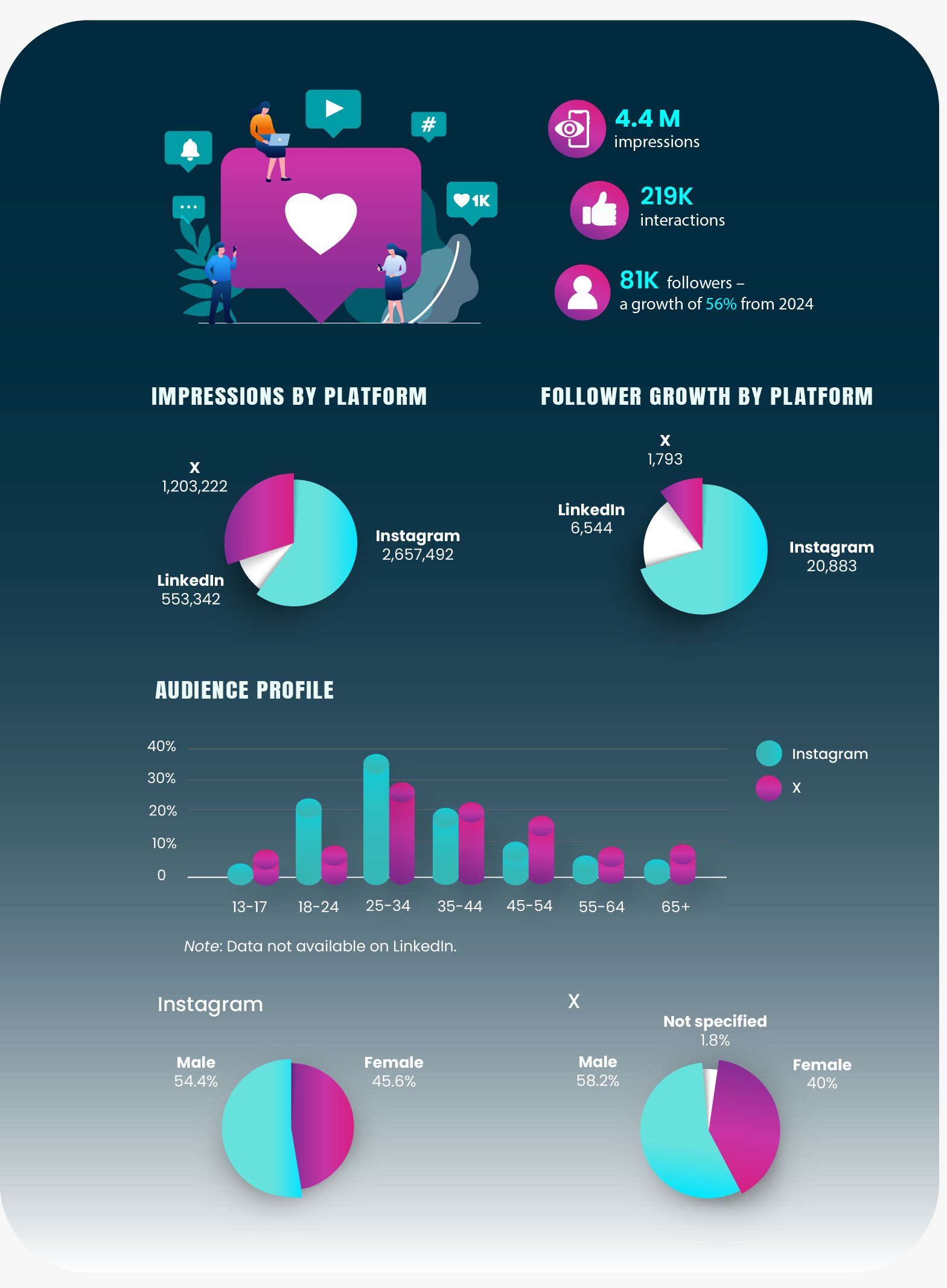
In 2025, the Office for Disarmament Affairs expanded its digital engagement, growing its social media follower base by 56 per cent over the previous year. Across platforms, audiences engaged with content on disarmament, non-proliferation and arms control, while follower growth and demographic trends highlighted a strong core audience of 25-34 year-olds. Instagram, in particular, maintained a robust younger follower base, with a significant share of followers aged 18-24, underscoring the Office’s growing global reach.
Disarmament Information Programme
Publications
In 2025, the Office for Disarmament Affairs issued print materials documenting developments across the field of multilateral disarmament, explaining specialized issues and connecting institutional work to wider audiences. The year’s output combined reference work, thematic analysis and support for public outreach.
In volume 49 of the United Nations Disarmament Yearbook, covering the year 2024, the Office provided a detailed review of developments and trends in multilateral disarmament, non-proliferation and arms control. The flagship reference work contained a detailed exploration of activities in and beyond the General Assembly, the Conference on Disarmament and the Disarmament Commission.
In the 2025 edition of the Civil Society and Disarmament series, entitled Disarming with Story: How Survivor Stories Shape Nuclear Disarmament Work, the author examined how the testimonies of hibakusha and other communities affected by nuclear-weapon production and testing continue to inform disarmament work through witness testimony, digital archiving, storytelling and visual art. Occasional Paper No. 44, Empowering You(th): 10 Stories of Turning (Disarmament) Ideas into Action, brought together reflections by alumni of the Office’s youth programmes on how they had translated disarmament education into practical initiatives, publications and community engagement across different national and regional contexts.
Emerging technologies were the focus of Occasional Paper No. 45, the second of 2025, entitled Handbook on Responsible Innovation in AI for International Peace and Security. The publication is an expert collaboration setting out basic guidance for artificial intelligence (AI) practitioners on understanding, assessing and mitigating the risks associated with the diversion or misuse of civilian AI technologies. The document provided a framework for considering how decisions taken during research and innovation processes could affect international peace and security.
In the area of biological security, Occasional Paper No. 46, The Biological Weapons Convention at 50: Perspectives from Asia and the Pacific, marked the Convention’s fiftieth anniversary through regional perspectives developed from the twenty-third Republic of Korea-United Nations Joint Conference on Disarmament and Non-Proliferation Issues, convened in Seoul on 4 and 5 November 2024. The Office also issued The Biological Weapons Convention at Fifty: Codifying 100 years of efforts to combat biological warfare, bringing together perspectives on the Convention from the diplomatic field, academia and civil society and a third edition of The Biological Weapons Convention: An Introduction, updating a basic reference text on the Convention’s negotiation, implementation and current relevance.
With support from the Office, the Secretary-General launched the landmark report, The Security We Need: Rebalancing Military Spending for a Sustainable and Peaceful Future. The publication addressed the alarming surge in global military expenditures, which had reached a record $2.7 trillion in 2024. The report, which Member States requested in 2024 in the Pact for the Future (General Assembly resolution 79/1), underscored how excessive arms spending undermined the Sustainable Development Goals and exacerbated the climate crisis. By advocating for a “human-centred” security paradigm, it called on Member States to redirect military investments towards diplomacy, conflict prevention and sustainable development to ensure a more stable and equitable global order.
In June, the Office released a briefing paper entitled Supporting the Implementation of the Global Framework for Through-life Conventional Ammunition Management in the Asia-Pacific. The paper outlined the Framework and its relevance to the Asia-Pacific. Drawing on a December 2024 regional meeting, research and consultations, it identified key implementation opportunities and challenges. It summarized the Framework’s 15 objectives; highlighted synergies with other arms control instruments; and assessed regional priorities, risks and capacity gaps. The paper offered recommendations for sustainable implementation and supported preparations for the 2025 Preparatory Meeting of States and the 2027 Meeting of States in the region.
The Office published two new editions of the Newsletter for Nominated Experts and Analytical Laboratories for the Secretary-General’s Mechanism for Investigation of Alleged Use of Chemical and Biological Weapons. In issue 9 (January) and issue 10 (July), the Office provided updates on training programmes, outreach workshops and other capacity-building efforts.
Throughout the year, the Office posted 67 articles in the UNODA Update series, exploring various disarmament-related events, activities and forums at the United Nations.
For a list of the Office’s 2025 publications, including those of its regional centres, see the annex to the present Yearbook.
Websites
The Office for Disarmament Affairs continued to treat its websites as core public information and reference tools. In 2025, it focused on modernizing the main site, consolidating education resources and improving access to specialized disarmament information.
The main website of the Office (www.unoda.org) was fully revamped to align with current Secretariat standards. The work combined a technical upgrade with content restructuring alongside a selective migration of legacy content; about 90 per cent of the selected content was fully migrated to the new system, which was launched in September. The transfer of remaining material continued through the end of the year as part of ongoing clean-up. The Office offered the upgraded website in the six official United Nations languages, with high-quality AI-assisted translation helping to improve and expand multilingual outreach. The Office also continued to improve the site’s reliability, security compliance and responsiveness.
The website recorded 723,500 visitors in 2025, reflecting a 20 per cent increase in traffic from the previous year. Roughly 40 per cent of the site’s visitors were from the Western European and Other States regional group, and about 33 per cent were from Asia and the Pacific. Other site traffic was from Africa, Latin America and the Caribbean.
The Disarmament Education website (www.disarmamenteducation.org) continued to provide centralized access to free online courses (through the site’s built-in Dashboard), publications, fact sheets, virtual events and podcasts. The Dashboard registered 22,551 new users in 2025, bringing the total number to 52,215, which included 13,265 active users. The platform housed 37 public courses and 416 substantive modules at the end of 2025, recording 3,980 course completions, 29,076 module completions and 15,654 examinations. The Dashboard deployed three new self-paced e-learning courses, 29 updates to existing courses and 37 new modules during the year.
The Office also maintained the online United Nations Disarmament Yearbook (https://yearbook.unoda.org) and launched an upgraded online platform for the United Nations Register of Conventional Arms (www.unroca.org), which recorded 7,705 visitors from May through December 2025.
Databases
In 2025, the Office for Disarmament Affairs completed its multi-year effort to modernize its disarmament databases while maintaining existing services. The work included routine updates, technical corrections and targeted improvements to these systems:
- The Documents Library Database remained operational as an archive linked to the Meetings Place website, with the Office making ongoing additions to its documents collection.
- The Treaties Database received regular updates reflecting the latest signatures, ratifications and accessions for disarmament-related agreements.
- The Disarmament Resolutions and Decisions Database remained in operation, with the integration of new voting data alongside back-filled legacy records, contributing to the system’s search and filtering functionality.
- The Gender Database, a portal providing access to sex-disaggregated data on delegates, heads of delegations and speaking roles across multilateral disarmament forums, remained accessible and continued to incorporate data from recent meetings through the Meetings Place website.
- The Military Expenditures Database was revised with updated currency data, supporting accurate analysis of national military expenditure reports from Member States.
- The United Nations Register of Conventional Arms received updates to improve the accuracy of translated content, and its reporting questionnaire was adjusted to capture more precise information during the 2025 reporting cycle. The interactive platform presents data submitted by Member States on transfers of conventional arms types within several categories.
International Days
International Day for Disarmament and Non-Proliferation Awareness
The Office for Disarmament Affairs marked the International Day for Disarmament and Non-Proliferation Awareness, observed on 5 March, through commemorative activities in New York and Vienna centred on disarmament education and youth engagement.
On 5 March, at United Nations Headquarters, the Office, in collaboration with the Permanent Mission of Kyrgyzstan to the United Nations and Cornell University’s Reppy Institute for Peace and Conflict Studies, organized a commemorative event entitled “The History, Success and Challenges of Nuclear Disarmament Education”. The discussion examined the development of nuclear disarmament education and ways to broaden access to it, including through digital tools, storytelling, creative disciplines, social media and locally grounded youth initiatives. In a message for the Day, the Secretary-General called on leaders to strengthen the systems and tools that prevent the proliferation, testing and use of deadly weapons and to advance the disarmament commitments contained in the Pact for the Future.
On 18 March, the Vienna Office, in partnership with the Permanent Mission of Kyrgyzstan to the United Nations in Vienna, held a Vienna Conversation Series panel discussion, “Youth as Agents of Change: Empowering young people to achieve disarmament goals”, at the Vienna International Centre. Speakers considered the role of young people in advancing disarmament objectives and highlighted two of the Office’s youth-focused initiatives: the Youth Leader Fund for a World without Nuclear Weapons and the Youth for Biosecurity Fellowship.
International Day against Nuclear Tests
The International Day against Nuclear Tests,[1] observed on 29 August, was commemorated at a high-level plenary session of the General Assembly held on 3 and 4 September at United Nations Headquarters, convened by the President of the seventy-ninth session of the Assembly, Philemon Yang (Cameroon). The commemorative event included statements from 30 Member States, including 6 delivered on behalf of regional organizations or groups of States.[2] The meeting also included statements from two observer entities, one youth advocate and one civil society representative (see chap. 1).
In opening remarks, the President of the General Assembly stressed that halting nuclear testing remained an essential step towards a world free of nuclear weapons. In a separate message delivered by the High Representative for Disarmament Affairs, the Secretary-General warned that growing mistrust, rising investment in nuclear arsenals and renewed concern about possible nuclear testing had reinforced the need to preserve the global moratorium on tests and to achieve a legally binding prohibition through the entry into force of the Comprehensive Nuclear-Test-Ban Treaty (CTBT). In a separate written statement issued in advance of the International Day, the Secretary-General warned against any return to nuclear testing and called on all States to ratify the CTBT immediately and without conditions.
The Executive Secretary of the Preparatory Commission for the Comprehensive Nuclear-Test-Ban Treaty Organization (CTBTO) described the Treaty as a central pillar of the disarmament and non-proliferation regime, noted that it had 187 signatories and 178 ratifications, and highlighted continued progress in the verification regime, including an International Monitoring System of more than 300 facilities. He emphasized that the Treaty still awaited ratification by the remaining States listed in annex 2 of the Treaty, without whose signature it could not enter into force.
Speaking on behalf of the International Atomic Energy Agency (IAEA) Director General, the Director of the IAEA Liaison Office in New York referred to the Agency’s work in assisting States to assess residual radioactivity in areas affected by nuclear-weapon tests, including at the Semipalatinsk nuclear test site.
The commemoration was also marked in Vienna on 29 August at an event hosted by the CTBTO at the Vienna International Centre, which included video addresses by the President of the General Assembly and the Executive Secretary of the Preparatory Commission, remarks by Mukhtar Tileuberdi (Kazakhstan) and the Chief of the United Nations Office for Disarmament Affairs Vienna Office, and participation by secondary-school Model United Nations students and a representative of the CTBTO Youth Group.
International Day for the Total Elimination of Nuclear Weapons
The International Day for the Total Elimination of Nuclear Weapons,[3] observed on 26 September, was marked at a high-level plenary meeting of the General Assembly held that day at United Nations Headquarters during the high-level week of the eightieth session. The meeting was convened by the President of the eightieth session, Annalena Baerbock (Germany), and included statements[4] from 92 Member States, four observers[5] and two civil society organizations.[6]
In opening remarks, the President of the General Assembly warned that the risk of miscalculation might be greater than at any time since 1945 and stressed that international treaties required implementation as well as reaffirmation.
Speaking on behalf of the Secretary-General, his Chef de Cabinet said the world was “sleepwalking” into a new nuclear arms race and called on nuclear-weapon States to return to dialogue, adopt transparency and confidence-building measures to prevent catastrophic miscalculation, ensure that humans retained full responsibility and accountability for any decision to use nuclear weapons, honour their obligations under the Treaty on the Non-Proliferation of Nuclear Weapons (NPT), ratify the CTBT and support victims of nuclear use and testing. In an earlier written statement issued for the International Day, the Secretary-General recalled that Member States had recommitted in the Pact for the Future to the goal of the total elimination of nuclear weapons and urged States possessing such weapons to honour their disarmament obligations.
Commemoration of Hiroshima and Nagasaki
On 6 and 9 August 2025, the world marked the eightieth anniversaries of the atomic bombings of Hiroshima and Nagasaki. In messages for the Hiroshima Peace Memorial and the Nagasaki Peace Memorial, the Secretary-General honoured those who perished, expressed solidarity with the families of the victims and paid tribute to the hibakusha, whose testimony he described as an enduring moral force for peace. Both messages were delivered on his behalf by the High Representative for Disarmament Affairs.
In his message on Hiroshima, the Secretary-General recalled the devastation wrought in a single moment and warned that, eight decades later, the risk of nuclear conflict was again growing amid deepening mistrust and geopolitical division. He also linked the commemoration to the eightieth anniversary of the United Nations, recalling that saplings grown from trees that survived the bombing had been planted at United Nations Headquarters in May as symbols of resilience and shared responsibility. In his message on Nagasaki, the Secretary-General reiterated that nuclear disarmament remained the Organization’s highest disarmament priority, cautioned that nuclear weapons had returned to the centre of national security strategies, and stressed that peace and security could not be achieved through an arms race. He called for action to strengthen the global disarmament regime, with the NPT at its centre, complemented by the momentum generated by the Treaty on the Prohibition of Nuclear Weapons.
In a related video message to the eleventh General Conference of Mayors for Peace in Nagasaki on 8 August, the Secretary-General urged all States to recommit to nuclear disarmament, underscoring the central United Nations message conveyed throughout the commemorations: the catastrophic humanitarian consequences of nuclear weapons remain a present danger, and the only guarantee against their use is their total elimination.
Media
In 2025, the High Representative for Disarmament Affairs advanced disarmament, non-proliferation and arms control priorities through sustained engagement with national and international media, public dialogues and long-form interviews.
In January, the High Representative spoke with Nippon Television’s News Zero for a feature interview reflecting on the United Nations eightieth anniversary and highlighting emerging risks linked to the military use of artificial intelligence, including concerns about fully autonomous weapons and the need for international guardrails. The High Representative spoke with NHK Radio on what is needed for peace, and she addressed United Nations reform and nuclear disarmament in remarks at the Japan National Press Club.
In April, BAILA, a fashion and lifestyle magazine, published a two-part conversation featuring the High Representative and journalist Mariko Oe, exploring the United Nations role in rebuilding international order through diplomacy and disarmament and reflecting on leadership and career pathways for women in international affairs.[7] The High Representative also took part in a public dialogue co-sponsored by the Japan Society and International House of Japan on the future of the global order and disarmament, including nuclear risk reduction and governance of emerging technologies.
In May, the High Representative gave an interview to the Russian media outlet RBC, exploring potential paths forward on nuclear arms control while stressing the risks of failure to replace the expiring Treaty on Measures for the Further Reduction and Limitation of Strategic Offensive Arms (New START Treaty).
In June, Okinawa-based reporting captured the High Representative’s emphasis on the importance of understanding the lived realities of war during a panel discussion organized by the prefectural government.
In August, Hiroshima Television featured a discussion with the High Representative in its programming around the eightieth anniversary of the atomic bombings. She also participated in a long-form interview with journalist Natsuki Yasuda for Dialogue for People, discussing gender equality in disarmament, the societal impacts of rising military spending and the role of dialogue and civil society in peacebuilding. In her remarks at Expo 2025, the High Representative highlighted how prejudice can act as a “silent architect” of conflict and encouraged young people to help shape a more peaceful future.
In November, the High Representative appeared on the “Silent Killers: International Campaign to Ban Landmines” podcast, discussing the importance of hope, collaboration and incremental progress in humanitarian disarmament. Additionally, the Mainichi Shimbun published her opinion piece on structural shifts in the international order, including the rise of the Global South, the governance implications of AI and rapid technological change, and the accelerating climate crisis.
Also in November, following a mission to Nigeria, TheCable published an interview with Adedeji Ebo, Director and Deputy to the High Representative for Disarmament Affairs, on the Office for Disarmament Affairs’ support for peace, security and disarmament in Nigeria. The interview addressed the proliferation of small arms and light weapons in Nigeria and West Africa, including estimates that between 1 and 3 million small arms are in circulation in Nigeria and highlighted the role of illicit weapons flows, porous borders and weak controls in fuelling terrorism, insurgency and armed violence. The Director situated those challenges within the Office’s broader priorities, including nuclear disarmament, action against the illicit trade in small arms and light weapons, conventional ammunition management, biosecurity risks, and the implications of artificial intelligence and information and communications technologies for international peace and security.
In December, in an interview with the Asahi Shimbun, the High Representative for Disarmament Affairs highlighted her concern about the fragility of the international order amid ongoing conflict and Security Council paralysis. Speaking to the Anadolu Agency at the Doha Forum, she reaffirmed warnings about the risk of nuclear weapon use, pointing to arms-race dynamics, nuclear modernization trends and the need for restraint and risk-reduction measures.
Throughout 2025, the High Representative delivered a steady stream of pre-recorded video messages to disarmament and non-proliferation meetings worldwide, building on remote engagement practices that expanded during the coronavirus disease (COVID-19) period.
The Office for Disarmament Affairs issued eight press releases in 2025 to communicate on key issues and activities.
Social media outreach
The Office expanded its social media reach across Instagram, LinkedIn and X in 2025, generating more than 4.4 million impressions and 219,000 interactions across the three platforms. Instagram showed the strongest growth, gaining more than 20,800 followers during the year and reaching a comparatively younger audience, particularly users aged 18 to 34. Content that combined clear visuals with practical or human-centred messages performed best, especially explainers, observance-day posts and collaborative campaigns. Social media also supported coverage of intergovernmental processes: during the eightieth session of the First Committee of the General Assembly, 25 posts generated more than 46,000 views and 1,100 interactions, with Instagram posts averaging higher reach than typical posts on that platform.
Exhibits
In Vienna, the Office for Disarmament Affairs joined other United Nations entities[8] in hosting a photo exhibition marking the twenty-fifth anniversary of Security Council resolution 1325 (2000). Entitled Women, Peace and Security at 25: From Global Commitment to Lasting Change, the exhibit highlighted the roles of women in peacebuilding, disarmament, science and security, and called for a renewed commitment to the women, peace and security agenda. The display was installed at the Vienna International Centre and made available online.
The Office also co-organized multiple exhibits as part of its outreach in support of the Secretary-General’s Campaign on Humanitarian Disarmament and Mine Action (see chap. 3). In Geneva, the Office partnered with the International Campaign to Ban Landmines to present a photo exhibit on 1 December entitled Upholding the Mine Ban Convention: A Shared Responsibility to Eradicate Mines and Empower Lives. Another exhibit, entitled Forward NOT Fragmented, was on view at United Nations Headquarters throughout the month with support from the Office for Disarmament Affairs, the United Nations Mine Action Service and the United Nations Development Programme (UNDP).
Youth and disarmament
#Youth4Disarmament programme
Throughout 2025, the Office for Disarmament Affairs continued to empower young people in the disarmament and non-proliferation field through its #Youth4Disarmament outreach programme.
Youth4Disarmament Forum
On the margins of the eightieth session of the First Committee of the General Assembly, the Office convened the first United Nations Youth4Disarmament Forum from 14 to 15 October at United Nations Headquarters.[9] The Forum brought together 30 young leaders from 24 countries, nominated by youth-led and youth-focused disarmament and peacebuilding organizations and networks around the world.
Co-designed with youth participants, the Forum created an interactive platform that strengthened existing #Youth4Disarmament networks by connecting them to intergovernmental disarmament deliberations. Participants co-developed the Forum theme, “Nuclear Weapons and Emerging Technologies”, and helped shape the initiative across three phases: pre-Forum preparation, the two-day convening of the Forum, and the beyond-Forum follow-up.
The Forum included three key objectives: to educate youth on the nexus between nuclear weapons and emerging technologies, to engage youth participants in pre-Forum activities to build a strong community and to empower them to shape the Forum’s process and outputs.
Ahead of the Forum, participants completed a mandatory course, delivered through the Office’s Education Dashboard, on nuclear weapons and emerging technologies. They also played a central role in organizing four preparatory webinars that offered in-depth discussion of the theme. To support meaningful participation in shaping the process, the Office established a “Forum Think Tank”, comprising three youth-led crews to drive collaboration and keep youth leadership at the centre of the initiative.
Over two days, the Forum featured nine youth co-organized sessions, with 24 youth participants engaging as speakers, moderators and facilitators. All sessions were youth-led, enabling substantive, policy-relevant dialogue between young experts and Member States, United Nations entities and technical experts.
The Forum yielded multiple concrete outcomes. It strengthened meaningful youth participation, with 95 per cent of the participants reporting increased confidence, greater understanding of how to engage in disarmament spaces and stronger motivation to remain involved. It also expanded cross-regional collaboration through the establishment of an alumni group and follow-on initiatives. In addition, the Forum elevated youth priorities in high-level discussions, with strong engagement by Member States, including participation by ambassadors from Costa Rica, Germany, Japan, Mexico, the Republic of Korea and South Africa. The Forum also increased the visibility of the Office’s #Youth4Disarmament programme and its activities, generating 56,049 views and impressions across the Office’s social media channels.
A major achievement of the Forum was the drafting of a first-of-its-kind, youth-led outcome document on nuclear weapons and emerging technologies. Prepared by the youth participants, the document was validated through a multi-stakeholder round-table discussion during the Forum, with the participation of Member States and key institutions, and was officially published in December 2025. A launch event was convened by the Office in collaboration with the Permanent Missions of Finland and the Republic of Korea to the United Nations. Building on that milestone, the post-Forum phase focused on advocacy and outreach to raise awareness of the outcome document and amplify its key recommendations through the Youth in Action social media campaign.
By linking youth expertise to decision-making spaces and producing tangible, policy-oriented outputs, the United Nations Youth4Disarmament Forum helped set a new standard for youth engagement in disarmament. It also generated momentum towards establishing the Forum as a biennial platform for sustained #Youth4Disarmament leadership and action, as reflected in General Assembly resolution 80/55 on youth, disarmament and non-proliferation.
Not One Nuclear Explosion – N.O.N.E. campaign
In 2025, the Office strengthened its efforts to engage young people with diverse interests and backgrounds in contributing to disarmament and international peace and security. As the year marked the eightieth anniversary of the founding of the United Nations and of the atomic bombings of Hiroshima and Nagasaki, the #Youth4Disarmament programme expanded its Not One Nuclear Explosion – N.O.N.E. campaign, inviting young people, their families and their communities to take a stand against nuclear testing. The campaign encouraged participants to share a photo with “NONE” written on their hands or to walk or run 8.29 kilometres in the #StepUp4Disarmament challenge, commemorating the International Day Against Nuclear Tests on 29 August.
Conducted from March to October, the N.O.N.E campaign attracted significant youth participation from around the world and gained particular momentum in connection with nuclear-related intergovernmental forums, including the third Meeting of States Parties to the Treaty on the Prohibition of Nuclear Weapons and the 2025 session of the NPT Preparatory Committee. A collaboration with the Department of Global Communications featuring the Japanese pop group JO1 in the N.O.N.E. campaign received 43,100 likes on the #Youth4Disarmament Instagram account.
In addition, #Youth4Disarmament continued to connect disarmament with other agendas and activities across the United Nations system. Those efforts included the Office’s active participation in the Working Group on Youth and the Task Force on Meaningful Youth Participation, as part of implementing the Pact of the Future; a series of briefings for United Nations Youth Delegates during various high-level meetings and intergovernmental processes; a side event during the Economic and Social Council Youth Forum; support for #Youth4Disarmament alumni as speakers in sessions such as the Youth Forum session on “Ensuring Decent Work and Economic Opportunities for Youth” (Sustainable Development Goal 8); and efforts to further connect the youth, disarmament and non-proliferation agenda to Security Council resolution 2250 (2015) on youth, peace and security.
The Office’s youth outreach in 2025 also included the following activities:
- In the #YouthInAction for Disarmament Campaign 2025, eight youth participants from the Youth4Disarmament Forum shared the Forum’s outcome document on Instagram to mark the sixth anniversary of the General Assembly’s first resolution on youth, disarmament and non-proliferation (74/64).
- In 2025, the Office published Empowering You(th) – 10 Stories of Turning (Disarmament) Ideas into Action [KK1] as its Occasional Paper No. 44.
Youth Leader Fund for a World without Nuclear Weapons
In 2025, the Office for Disarmament Affairs advanced youth-focused disarmament education through the second phase of the Youth Leader Fund for a World without Nuclear Weapons, a learning programme intended to equip a globally representative cohort of young leaders with both substantive disarmament knowledge and the practical tools to advocate for nuclear disarmament.[10]
At the heart of phase II was a strengthened storytelling and media-training component, reflecting the view that narratives grounded in human experience and evidence can re-energize engagement with nuclear disarmament and expand the space for informed dialogue. Through hands-on skills training, participants explored how to craft compelling and responsible stories linking technical knowledge, the legacy of Hiroshima and Nagasaki, and the experiences of the hibakusha with current security debates. In that manner, the programme reinforced its commitment to youth empowerment through advocacy rooted in the historical lessons of the atomic bombings.
The programme’s core learning journey blended self-paced e-learning, moderated discussions, live webinars with experts and skills-building workshops, creating an interactive environment in which participants could learn, test ideas and translate knowledge into communication products. The online component was completed in November 2025.
To deepen relevance across contexts, phase II of the Youth Leader Fund adopted a stronger regional approach, supporting the launch of two regional activities in Asia and the Pacific and in Latin America and the Caribbean, as well as the creation of affinity groups within regions. Those activities aimed to localize disarmament challenges and goals, strengthen links to regional disarmament communities and facilitate peer exchange and collaboration.
The Youth Leader Fund also launched the first iteration of its Mentorship Programme, which paired 45 phase I participants with 44 experts in the field of nuclear disarmament. The initiative was intended to support follow-up and advance initiatives based on the 2024 Declaration for a World without Nuclear Weapons (DeclarACTION), in which the phase I participants set out their vision for the future of disarmament and non-proliferation.
Youth for Biosecurity
A third edition of the Youth for Biosecurity Fellowship Programme took place from March to August, engaging 20 emerging experts in life sciences from the Global South on issues related to biosecurity.[11] The fellows from 20 countries participated in online learning sessions conducted by experts, a collaborative research project and a five-day immersive study trip to Geneva, during the sixth session of the Working Group on the Strengthening of the Convention in August. Participants from Cambodia, Iraq, the Democratic Republic of the Congo, Peru and Uzbekistan were represented in the programme for the first time, with the cohort achieving gender parity. Building on the momentum of the second edition, the programme received more than 2,500 applicants from over 100 countries, a slight increase from the 2,400 applications received in 2024.
In addition, an exclusive iteration of the Programme was conducted to mark the fiftieth anniversary of the Biological Weapons Convention, bringing together 10 young women scientists from the Global South to explore global biosecurity issues through a gender lens.[12] The fellows, from nine States, participated in online learning sessions led by experts that combined substantive presentations with career-oriented guidance, as well as a five-day study trip to Geneva. The trip took place during the seventh session of the Working Group on the Strengthening of the Biological Weapons Convention in December. It included expert briefings, high-level exchanges and working sessions with the Nuclear Threat Initiative’s Next Generation Biosecurity Delegation to formulate updated youth priorities and reflections on the Biological Weapons Convention process.
Disarmament education
Strategic priorities
Throughout 2025, the Office for Disarmament Affairs advanced its “inform, engage, educate, empower” approach by expanding online learning, strengthening partnerships, developing new resources for educators and broadening youth-focused activities across all regions. To support its efforts, the Office engaged a wide range of stakeholders within and beyond the United Nations system, including Member States, civil society organizations and academia. Those partnerships enhanced the reach, sustainability and impact of disarmament education initiatives, in line with the Office’s commitment to collaborative and context-responsive approaches.
The year marked a significant expansion of global education programmes targeting learners worldwide at different levels of expertise and career stages. Key initiatives included the inaugural cohorts of the United Nations Fellowship on Small Arms and Light Weapons and the launch of an updated cyberdiplomacy course. Landmark anniversaries — including the twenty-fifth anniversary of the women, peace and security agenda and the tenth anniversary of the youth, peace and security agenda — provided opportunities to build momentum through targeted campaigns and events engaging diverse audiences worldwide.
Vienna Office — Education Hub
In addition to its liaison functions, the Vienna Office of the Office for Disarmament Affairs conducted extensive education, outreach and public awareness-raising initiatives throughout 2025. Those efforts aimed to deepen understanding of the Office’s global work, promote broad participation in disarmament processes and highlight linkages between disarmament, peace and security, human rights and sustainable development. The Vienna Office also supported the rollout of new and updated courses on the Disarmament Education Dashboard, working closely with internal and external partners to ensure that content addressed the learning needs of target audiences.
More than 1,000 visitors attended in-person briefings and events organized by the Vienna Office, including diplomats, students, practitioners, military personnel and educators. The Office engaged audiences through a wide range of activities, from regional initiatives such as the United Nations Shadowing Programme to local community events, including film screenings. Its outreach was further amplified through continued growth across social media platforms.
The Vienna Conversation Series remained the Office’s flagship dialogue platform, offered as an in-person or virtual event and as a podcast. In 2025, discussions addressed topics including youth empowerment, challenges facing the disarmament regime, and the implications of military expenditure for the Sustainable Development Goals. Those events brought together intergenerational speakers and audiences from governments, United Nations entities, civil society, academia and youth networks.
The Vienna Office also marked key international days and anniversaries, using those moments to engage both global and local audiences on the importance of disarmament education. It held events in observance of the International Day for Disarmament and Non-Proliferation Awareness, in collaboration with the Permanent Mission of the Kyrgyz Republic to the United Nations; the International Day Against Nuclear Tests, in collaboration with the Preparatory Commission for the CTBTO; Disarmament Week; and the anniversaries of the women, peace and security and youth, peace and security agendas.
Education and outreach activities
Geneva Branch
In 2025, the Geneva branch provided in-person briefings on the Office’s work to a diverse range of audiences, including delegates, United Nations tour guides, university students and representatives of Geneva-based institutions. The Geneva Disarmament Conversation Series resumed in the latter part of the year with two sessions focusing on the Secretary-General’s reports on rebalancing military spending and on the implications of scientific and technological developments for international security.
In collaboration with UNIDIR, the sixth edition of the Disarmament Orientation Course engaged 47 recently accredited diplomats on current disarmament trends and key thematic issues. The branch also organized two specialized training courses for technical experts in biosecurity, including training for virus and pathogen detection. In December, translations of the introductory brochure on the Biological Weapons Convention into Chinese and Russian were published, enhancing accessibility and supporting multilingual outreach.
The Office also contributed to various Member State–led initiatives, including events organized by Kazakhstan for the International Day against Nuclear Tests and by the Kyrgyz Republic on stability in the Central Asian Nuclear-Weapon-Free Zone, as well as several civil society-led activities.
Regional centres
The Office for Disarmament Affairs continued to advance disarmament education through its three regional centres, tailoring initiatives to regional contexts.
The Regional Centre for Peace and Disarmament in Africa strengthened knowledge-sharing, practitioner networks and capacity-building efforts across the continent. Through a regional fellowship, targeted briefings—including participation in African Union fellowship programmes and meetings of regional economic communities—and 15 webinars and civil society dialogues, the Centre engaged more than 500 participants from governments, national commissions, United Nations entities, academia and non-governmental organizations. Topics included small-arms control, gender-responsive disarmament, prevention of violent extremism, and emerging security challenges, such as military applications of AI, increasing military expenditure in Africa, drones, cyberthreats and missile-related risks. The Centre also promoted women’s leadership in arms control and expanded partnerships with civil society to foster more inclusive and evidence-based policy discussions.
The Regional Centre for Disarmament and Development in Latin America and the Caribbean continued to promote disarmament education across the region. It completed the first edition of the GenerAcción Paz programme, aimed at empowering youth in armed violence prevention, and supported the Youth Leader Fund for a World without Nuclear Weapons through four regional education sessions. The Centre engaged civil society through presentations on regional disarmament and international humanitarian law in Brazil, as well as on military expenditure and development in Mexico and on the Pact for the Future and Sustainable Development Goal 16. It also organized civil society briefings on the Central American and Caribbean Firearms Roadmaps.[13] In collaboration with the United Nations Children’s Fund Peru, the Centre convened a webinar on preventing firearms in schools, attended by 145 teachers and public officials. In addition, the Centre collaborated with colleagues of the Office for Disarmament Affairs in New York to hold a regional briefing for national officials on science and technology developments, focusing on uncrewed aerial vehicles, information and communications technologies, and AI in the military domain.
The Regional Centre for Peace and Disarmament in Asia and the Pacific implemented a broad range of activities in 2025, including the annual Disarmament Toolkit, lectures and presentations for students and technical briefings for government officials. The 2025 edition of the Disarmament Toolkit attracted over 1,600 participants from 134 countries, with young women under the age of 30 composing 60 per cent of the participants. The Toolkit covered all thematic areas of the Office’s mandates, including weapons of mass destruction; conventional arms; emerging technologies; gender; the women, peace and security agenda; and youth and disarmament. The Centre also organized four technical briefings for government officials in the Asia-Pacific region, including two seminars on the open-ended working groups on outer space, as well as briefings on information and communications technologies and AI in the military domain.
E-learning and educational resources
The Office for Disarmament Affairs continued to expand accessible and inclusive disarmament education through resources hosted on the Disarmament Education website and the Disarmament Education Dashboard. In 2025, the Dashboard reached over 52,000 registered users, including more than 22,000 new learners, representing a 43 per cent increase and covering users in 192 countries.
Young people aged 18 to 29 remained the largest user group, accounting for 61 per cent of participants, while gender balance was maintained, with women composing 52 per cent of users. Engagement remained strong, with more than 400,000 interactions with e-learning materials and over 15,000 course assessments completed during the year.
This course catalogue expanded to 36 offerings, including two new courses and updates across 80 per cent of existing content. Courses explored both foundational and emerging disarmament topics, as well as cross cutting issues, with subjects including gender perspectives on disarmament, the Biological Weapons Convention, humanitarian approaches to nuclear disarmament and cyberdiplomacy, with the latter attracting particularly strong participation.
The Office further strengthened partnerships through the co-development of learning modules with organizations such as UNIDIR, the Preparatory Commission for the CTBTO, the IAEA and the Organisation for the Prohibition of Chemical Weapons, underscoring the collaborative nature of its educational work.
Instructor-led training reached 2,000 participants in 2025, with live sessions and expert-led webinars complemented by self-paced modules and dedicated spaces for peer exchange. These programmes supported practical skills development for diplomats, government officials, civil society representatives and youth advocates. Key initiatives included the second phase of the Youth Leader Fund for a World without Nuclear Weapons, the Youth4Disarmament Forum and the Disarmament Toolkit 2025 courses, which created vital spaces for connecting young people and shared learning across different regions and backgrounds.
The Dashboard continued to evolve through data-driven management and ongoing technical enhancements aimed at improving user experience and aligning with learners’ needs. Overall, the Office’s integrated educational approach—combining digital learning with targeted in-person engagement—continued to expand its global reach and strengthen understanding of disarmament challenges and solutions.
Education and empowerment initiatives
Promoting responsible innovation in AI for peace and security
In 2025, the Office for Disarmament Affairs, in partnership with the Stockholm International Peace Research Institute (SIPRI), completed the third and final year of its initiative, “Responsible innovation in AI for peace and security”, aimed at strengthening awareness and practical capacity among educators, students, civil society, industry and policymakers to address the risks that the misuse of civilian AI may pose to international peace and security.[14]
From January to May, the Office convened six private-sector round tables on topics including voluntary information exchange for evaluating chemical, biological, radiological and nuclear risks; assessment and disclosure of dangerous model capabilities; lessons from the deployment of foundation models and commercial robots; engagement with small- and medium-sized enterprises; and the governance of interactions between autonomous AI agents. In May, the Office, SIPRI and New York University organized a public dialogue and a two-day international workshop in New York focused on responsible innovation in AI and the mitigation of peace and security risks associated with civilian AI. The programme opened on 7 May with an in-person public multi-stakeholder dialogue attended by 60 participants. That was followed on 8 and 9 May by a workshop that brought together 19 educators, students and AI experts and featured a high-level exchange by the Chair of the First Committee of the General Assembly’s seventy-ninth session, Maritza Chan Valverde; the Under-Secretary-General and Secretary-General’s Special Envoy for Digital and Emerging Technologies, Amandeep Gill; and the Director and Deputy to the High Representative for Disarmament Affairs.
In July, the Office and SIPRI launched the Handbook on Responsible Innovation in AI for International Peace and Security, drawing together insights generated across the initiative on how practitioners can identify and address risks associated with the diversion and misuse of civilian AI technologies. The year also saw the completion of the initiative’s 10-episode podcast series with the release of last two episodes, as well as the publication by SIPRI in November of the report Addressing the Risks that Civilian AI Poses to International Peace and Security: The Role of Responsible Innovation. Outputs were disseminated through targeted public engagement, including a presentation at the AI for Good Global Summit in Geneva.
United Nations-Singapore Cyber Fellowship
From 13 to 17 May, the Office for Disarmament Affairs and the Cyber Security Agency of Singapore co-convened the United Nations-Singapore Cyber Fellowship at the Association for Southeast Asian Nations (ASEAN)-Singapore Cybersecurity Centre for Excellence in Singapore.
Established in 2022, the Fellowship reached its sixth iteration in 2025. The programme offered a week-long, interactive curriculum comprising substantive briefings on information and communications technology security, expert panels, communications workshops and practical site visits to national critical infrastructure facilities, research laboratories and academic institutions. The iteration culminated in a simulated crisis communications exercise. As of 2025, the Fellowship had brought together 140 fellows representing 97 Member States since its inception.
Building on experience from previous iterations, the 2025 programme was refined to address both existing and emerging information and communications technology security threats, with a particular focus on incident management, the development of national strategies and avenues for regional and multilateral cooperation. The sixth iteration was attended by 22 senior government officials serving in policy, legal, diplomatic and technical roles. Gender balance remained strong, with 13 women participants, representing 59 per cent of the cohort.
United Nations Disarmament Fellowship, Training and Advisory Services Programme
In 2025, diplomats and other officials from 25 States[15] participated in the United Nations Disarmament Fellowship, Training and Advisory Services Programme,[16] a capacity-building initiative established by the General Assembly at its tenth special session in 1978. The Programme is intended to promote greater expertise and train officials from Member States, in particular developing countries, to participate more effectively in international disarmament deliberations and negotiations. The Office for Disarmament Affairs implements the Programme each year, selecting up to 25 Fellows nominated by their Governments. By the end of 2025, over 1,149 officials — mostly diplomats or military experts—from 172 States had completed the Programme.
The 2025 Programme was organized into three distinct segments, comprising mandatory self-paced e-learning courses in February and March; study visits conducted in March, April, June and October; and a research period from July to September in which Fellows deepened their understanding of selected topics.
The introductory e-learning segment incorporated courses from a range of major international organizations and the Office for Disarmament Affairs, enhancing the participants’ understanding of the multilateral disarmament architecture, intergovernmental disarmament processes and existing legal and normative frameworks. This phase also introduced participants to key substantive themes related to disarmament, non-proliferation and arms control, including the implications of new and emerging technologies.
The first study visit segment took place from 24 March to 16 April, with components in Geneva, Vienna and the Hague. In Geneva, the Fellows were welcomed by the High Representative for Disarmament Affairs, who outlined the priorities of the Office for Disarmament Affairs. An alumni networking session enabled former participants based in Geneva to share reflections on the Programme’s impact on their professional trajectories.
The Geneva syllabus emphasized humanitarian disarmament, with a particular focus on challenges facing the Anti-Personnel Mine Ban Convention and the Convention on Cluster Munitions. Fellows received briefings from the International Committee of the Red Cross and the implementation support units of the Anti-Personnel Mine Ban Convention, the Convention on Cluster Munitions and the Convention on Certain Conventional Weapons. They also met with ambassadors of Costa Rica, Ireland and Norway and discussed the use of explosive weapons in populated areas.
Practical exercises included a drafting simulation on the working characterization of lethal autonomous weapons systems, facilitating discussion of autonomy and human control. Additional briefings addressed cross-cutting themes, including the environmental impact of conventional weapons and links to human rights, with contributions from the Fondation Suisse de Déminage, the Geneva International Centre for Humanitarian Demining and the Office of the United Nations High Commissioner for Human Rights. The Head of the Arms Treaty Secretariat’s Implementation Support Unit also briefed Fellows on the Treaty’s implementation and current challenges.
Emerging technologies in the military domain and cybersecurity featured prominently during the Geneva segment. Fellows attended the two activities organized by UNIDIR: the Global Conference on AI, Security and Ethics; and a panel discussion on “Imagining Peace in a Digital World”, co-hosted with the Office for Disarmament Affairs. A simulation organized by the Geneva Science and Diplomacy Anticipator explored a hypothetical geopolitical dispute involving quantum computing software and critical mineral export restrictions.
The Biological Weapons Convention marked its fiftieth anniversary during the Programme, and Fellows participated in a dedicated event and received briefings from the Convention’s Implementation Support Unit on national and regional implementation efforts. They were also introduced to the work of Leonardo Bencini of Italy, the first President for 2025 of the Conference on Disarmament, gaining insight into the Conference’s procedures and challenges.
The Geneva segment also included briefings on nuclear weapons issues from UNIDIR and the Office for Disarmament Affairs, covering topics such as nuclear disarmament verification and fissile material for nuclear weapons or other nuclear explosive devices. A simulation on negative security assurances exposed the Fellows to the complexities of multilateral negotiations. In addition, the group attended a public event on human rights and nuclear disarmament organized by the Permanent Mission of Kazakhstan to the United Nations and received a briefing from the Permanent Mission of Austria to the United Nations on the humanitarian consequences of nuclear weapons.
The Fellows travelled to the Federal Department of Foreign Affairs in Bern, Switzerland, at the invitation of the Swiss Government. The day in Bern included briefings on Switzerland’s policies on disarmament, arms control and cybersecurity, as well as on autonomous weapons systems and AI in the military domain. They also visited the Spiez Laboratory (the Swiss Federal Institute for NBC-Protection), where they learned about biological and chemical safety, arms control and emergency response.
In Vienna, the Fellows engaged with key organizations and verification regimes. At the IAEA, they visited the Incident and Emergency Centre, the Safeguards Equipment Laboratory and the Seibersdorf laboratories, while also receiving briefings on safeguards, nuclear safety and security, technical cooperation, peaceful uses of nuclear energy, cooperation with the United Nations Environment Programme and emerging technologies. A round-table discussion with IAEA Director General Rafael Grossi and his senior staff provided further insight into the Agency’s work, including its activities in specific countries.
At the Preparatory Commission for the Comprehensive Nuclear-Test-Ban Treaty Organization, Fellows were introduced to the International Monitoring System, visited seismic and acoustic monitoring facilities and the International Data Centre, and participated in a simulation addressing a hypothetical non-compliance case. Additional analytical perspectives were provided through briefings at the Vienna Center for Disarmament and Non-Proliferation, including on the NPT and naval nuclear propulsion.
Further Vienna-based engagements included a briefing by the Organization for Security and Co-operation in Europe on its history and current challenges, and a session at the Wassenaar Arrangement Secretariat on export control for conventional arms and dual-use technologies, including the Arrangement’s regional scope and complementarity with the Arms Trade Treaty. The United Nations Office on Drugs and Crime presented its work on firearms trafficking, organized crime, counter-terrorism and cybercrime. A dedicated session on European Union policies covered outer space security, emerging technologies, arms control and export control regimes.
In The Hague, the Fellows visited the OPCW, where they received briefings on its current priorities and activities and visited both the Situation Centre and the Centre for Chemistry and Technology.
The second study segment, conducted from 19 June to 5 July, comprised study visits to Kazakhstan, China, Japan and the Republic of Korea, at the invitation of their Governments. These visits familiarized Fellows with national perspectives on disarmament, non-proliferation and arms control, with particular emphasis on emerging technologies such as AI and biotechnology.
During the October segment, the Fellows visited United Nations Headquarters, where they observed the work of the First Committee of the General Assembly during its annual session. They followed real-time deliberations on key disarmament issues and participated in lectures, simulations and panel discussions addressing nuclear weapons, conventional arms and emerging technologies. An ambassadorial-level panel focused on identifying common ground in advance of the 2026 NPT Review Conference. Fellows also presented their individual research projects developed during the summer research period.
The final segment provided further in-depth coverage of core disarmament issues such as gender perspectives and emerging technologies, including outer space security. Building upon their experience attending discussions of the First Committee on regional disarmament and international security, the Fellows met with the Directors of the regional centres of the Office for Disarmament Affairs to learn about their activities.
The Programme concluded at United Nations Headquarters, where Fellows received certificates of participation, marking the successful completion of their training.
Campaigns
United Nations report on military expenditures
In 2025, the Office for Disarmament Affairs conducted a comprehensive outreach campaign for the Secretary‑General’s report The Security We Need: Rebalancing Military Spending for a Sustainable and Peaceful Future (see chap. 3). The report was formally launched in September and was amplified through a series of targeted engagements, including an in‑depth discussion with media partners and a high‑level dialogue with Member States and experts held during the general debate of the General Assembly. The Office also supported a high-level discussion in the First Committee on the implications of rising military expenditure.
The Office collaborated closely across its headquarters in New York and its offices in Geneva and Vienna, as well as with its three regional centres in Lomé, Lima and Kathmandu, to disseminate the report’s findings and recommendations and to engage stakeholders at the global, regional and national levels. Cooperation with other United Nations entities further supported these outreach efforts.
Engagement with civil society was prioritized through targeted discussions organized worldwide, including in cooperation with ODI Global and Transparency International. Youth engagement also remained a priority, building on a side event at the Economic and Social Council Youth Forum and a supported by a dedicated video produced for a broader public audience.
In addition, the Office developed and launched a new self‑paced e-learning module entitled “Excessive Military Expenditure and its Impact on Sustainable Development”, reinforcing the Secretary‑General’s call for a human‑centred approach to security and development.
16 Days of Activism against Gender-Based Violence
From 25 November to 10 December, the Office for Disarmament Affairs participated in the Secretary-General’s annual campaign to end violence against women, held in connection with the 16 Days of Activism against Gender-Based Violence. Under the 2025 theme, “UNiTE to End Digital Violence against All Women and Girls”, the Office and its regional centres conducted a coordinated 16-day social media campaign across their Instagram, LinkedIn and X platforms to highlight the links between disarmament and the prevention of gender-based violence.
Throughout the campaign period, the Office promoted initiatives related to women’s empowerment that took place during the 16 days of the campaign and amplified messaging from other United Nations entities working in this area, including the United Nations Entity for Gender Equality and the Empowerment of Women, the United Nations Office on Drugs and Crime and the UNIDIR, as well as from civil society partners. The campaign generated 17,144 views across the three platforms.
In a video message opening the Office’s campaign, which coincided with the International Day for the Elimination of Violence against Women, the High Representative for Disarmament Affairs addressed the importance of gender-responsive approaches to disarmament and arms control.
United Nations Institute for Disarmament Research
UNIDIR is an autonomous institution within the United Nations that conducts independent research on pressing global challenges related to disarmament, arms control and international security. UNIDIR continually works towards building a more secure world in which States and their peoples are freed from the debilitating threats and impacts of arms-related violence.
Against a backdrop of rapidly intensifying and intersecting global security challenges, UNIDIR in 2025 continued to hone its lean, cost-efficient and high-impact approach. Through independent, evidence‑based research, targeted capacity-building, expert advisory support and the facilitation of inclusive dialogue, the Institute contributed to strengthening multilateral action and delivered tangible benefits for Member States and the populations they serve.
In 2025, UNIDIR marked its marked its forty-fifth anniversary and developed and launched its Strategic Framework 2026–2030. The Framework structures the Institute’s work around three core areas of excellence. In the field of arms control and disarmament, UNIDIR seeks to advance efforts to curb the development, proliferation and use of weapons of mass destruction, while mitigating the devastating humanitarian and security impacts of conventional arms. Through integrated approaches to conflict prevention, it aims to reduce risks of escalation, strengthen resilience, empower communities and ensure space for diverse perspectives. In the area of emerging technologies, UNIDIR focuses on shaping governance, policy and decision-making frameworks that contain risks, while enabling opportunities to be realized for the benefit of all.
At the working level, UNIDIR is organized around five multi-year programmes—on conventional arms and ammunition[KK1] , weapons of mass destruction, security and technology, space security and integrated approaches—alongside two special projects on managing exits from armed conflict and the proposed Middle East zone free of weapons of mass destruction.
During 2025, UNIDIR:
- Responded to sustained demand for its independent, innovative and evidence-based research, with financial support from dozens of States across all five United Nations regional groups, including all five permanent members of the Security Council.
- Expanded its capacity-building activities, particularly in information and communications technology security, delivering 28 initiatives for more than 750 diplomats and policymakers, mainly from and in Africa, Latin America, and Asia and the Pacific. The Biological Weapons Convention Advanced Education Course deepened technical expertise essential to reinforcing the Convention. Inequities in technology-focused policymaking were targeted through the annual Women in AI Fellowship, while regional engagement was enhanced through a dedicated seminar in Sri Lanka. The Disarmament Orientation Course remained a key resource for Geneva‑based disarmament diplomats. Support for implementation of the Arms Trade Treaty was provided through participation in its train-the-trainer programme, and a cross-programmatic initiative contributed to the work of the African Union Verification and Compliance Mission in Tigray, Ethiopia.
- Briefed the Security Council on two occasions, providing expert advice both on “Strengthening Maritime Security through International Cooperation for Global Stability” and on harnessing safe, inclusive and trustworthy AI for the maintenance of international peace and security.
- Produced 132 publications and conducted research on across a wide range of disarmament and international security issues.
- Facilitated dialogue across the disarmament community by convening 175 seminars, workshops, conferences and briefings, involving approximately 21,000 participants worldwide. These included flagship events such as the Innovations Dialogue on neurotechnologies, the Cyber Stability Conference on cyber resilience in action, the Outer Space Security Conference, and the inaugural Global Conference on AI, Security and Ethics.
- Strengthened international outreach through briefings for all five United Nations regional groups on issues including the NPT, craft-produced weapons, the future of information and communications technologies security, and armed conflict and sexual violence. The Youth Disarmament Orientation Course was also made available in French and in Spanish for the first time.
- Provided policy and technical advice to States, regional organizations and intergovernmental forums on a wide range of disarmament issues, including strengthening the Biological Weapons Convention through the associated Working Group and the future-proofing of the Nairobi Protocol for the Prevention, Control and Reduction of Small Arms and Light Weapons in the Great Lakes Region, Horn of Africa and Bordering States.
- Expanded its suite of digital confidence-building tools through the launch of a Youth and Disarmament Hub, offering resources, insights and pathways for engagement in youth-led initiatives. A new Arms Flows and Early Warning Dashboard enhanced cross-thematic knowledge-sharing and served as a unified reference for arms-flows and early-warning experts. Significant progress was also made towards a digital repository of procedures, practices and technologies for nuclear verification and a Nuclear Weapon-Free Zones Hub to support negotiators, decision-makers, researchers and other stakeholders.
- Further strengthened its digital footprint, with total social media followership increasing by roughly 50 per cent to 90,000 users, and website and policy portal traffic exceeding 925,000 visitors from all Member States.
The following subsections present highlights from UNIDIR research programmes in 2025.
Weapons of mass destruction
Under its weapons of mass destruction programme, UNIDIR conducted research in three principal areas: nuclear risk reduction, transparency and verification in nuclear disarmament, and strengthening the norm against chemical and biological weapons.
In 2025, the Institute produced 17 publications addressing topics such as “demonstrative verification”, the range of options for reporting and interactive dialogue on NPT disarmament obligations, the hidden costs of the nuclear arms race, advancing biosecurity education for life scientists, and the potential role of AI in Biological Weapons Convention verification. UNIDIR also completed work on the Biological Weapons Convention National Implementation Measures Database, which now offers detailed implementation profiles for all 187 States parties.
UNIDIR organized or co‑organized 20 workshops and events in this area, facilitating dialogue on arms control and disarmament amid persistent geostrategic tensions. Topics included emerging technologies and the Biological Weapons Convention, pathways to nuclear disarmament verification, and a webinar series supporting preparations for the 2026 NPT Review Conference. The year also saw substantial progress in the development of a new digital tool, the Nuclear Disarmament Verification Repository.
Throughout the year, the Institute’s research informed deliberations in multiple multilateral forums, including the Conference on Disarmament, the First Committee of the General Assembly, the Preparatory Committee for the 2026 NPT Review Conference, and the Working Group on the Strengthening of the Biological Weapons Convention. Programme experts delivered presentations at 75 external events and undertook more than 175 media engagements worldwide.
Conventional arms and ammunition
UNIDIR research on conventional arms and ammunition in 2025 focused on strengthening weapons and ammunition management, preventing armed conflict and armed violence, addressing global development and security challenges, and supporting the implementation of multilateral instruments.
The Institute released 20 publications on issues including the use of arms flow data for early warning, alignment between national security spending and policy priorities, and links between masculinity and armed violence.
UNIDIR organized 46 events in support of efforts to prevent and address the illicit proliferation and misuse of conventional arms. In November, it partnered with the Regional Centre on Small Arms in the Great Lakes Region, the Horn of Africa and Bordering States to convene a conference in Kenya marking 20 years of implementation of the Nairobi Protocol on small arms and light weapons. Together with the United Nations Regional Centre for Peace and Disarmament in Africa and the Swiss Federal Department for Foreign Affairs, the Institute also co-organized a workshop in Togo on integrating measures to prevent violent extremism and manage weapons in West Africa. Additional activities included online regional consultations and an international multi-stakeholder conference held in December on the illicit production of improvised weapons.
UNIDIR and the Economic Community of West African States supported Senegal in conducting a national weapons and ammunition management baseline assessment, while collaboration with the Organization of American States supported similar assessments in Costa Rica and Uruguay.
The Institute also continued to support implementation of multilateral instruments through technical advisory work around uncrewed maritime systems for the Group of Governmental Experts on the continuing operation of the United Nations Register of Conventional Arms and its further development; development of a voluntary guide and reporting recommendations for the Global Framework for Through-life Conventional Ammunition Management; practical, data-driven approaches to implementing the Political Declaration on Strengthening the Protection of Civilians from the Humanitarian Consequences Arising from the Use of Explosive Weapons in Populated Areas; and support for the universalization and implementation of the Arms Trade Treaty in Africa, including measures to regulate arms brokering and strengthen end-use controls.
Programme experts contributed to 82 additional events and capacity-building activities around the world.
Security and technology
UNIDIR’s work on security and technology in 2025 supported multilateral engagement on new and emerging technologies, particularly in cybersecurity, AI and broader science and technology innovations. Activities were aimed at informing policy and decision-making, reducing knowledge gaps and bridging multi-stakeholder communities, while applying strategic foresight to anticipate trends shaping international peace and security.
In cybersecurity, UNIDIR conducted country-level and regional cyber capacity-building interventions in South-East Asia, Asia and the Pacific, Latin America and Africa, focusing on cyber resilience and the application of international law in cyberspace. The Institute also produced research and convened expert discussions on cyberbiosecurity, responsible State behaviour in cyberspace and cooperation among national computer security incident response teams. Analysis of the evolving cyber threat landscape featured prominently in the 2025 Geneva Cyber Week, co-organized with Switzerland, and the 2025 Cyber Stability Conference.
In artificial intelligence, UNIDIR advanced multilateral discussions on responsible use in security and defence through the inaugural Global Conference on AI, Security and Ethics, the annual Women in AI Fellowship, targeted research outputs, and regional consultations on responsible AI in the military domain held across Europe, Latin America, Africa and the Middle East.
In the area of science and technology innovation, UNIDIR launched the Science and Technology Watchtower, a multi-year horizon-scanning initiative designed to track emerging innovations and assess their potential implications for international peace and security.
Space security
UNIDIR’s work on space security continued to expand in 2025. The Institute produced nine publications on topics including the intersection of space security and AI and the enduring influence of the nuclear age on space governance. Events addressed emerging threats and technologies, industry perspectives and space sustainability, while UNIDIR experts delivered presentations at more than 40 external events worldwide.
UNIDIR supported multilateral processes on space security, including the Open‑ended Working Group on Further Practical Measures for the Prevention of an Arms Race in Outer Space at the Conference on Disarmament. The Institute also collaborated with the Office for Disarmament Affairs on a space‑security module for the Disarmament Orientation Course and contributed to regional initiatives such as the ASEAN Regional Forum Workshop on Peace and Security in Outer Space.
In September, UNIDIR convened States and stakeholders, including the heads of UNIDIR, the International Telecommunication Union and the Office for Outer Space Affairs, for its flagship annual Outer Space Security Conference. The Institute also further strengthened its Expert Network on Space Security by engaging academic institutions worldwide to map evolving threats.
Integrated approaches – gender and disarmament
In 2025, UNIDIR relaunched its gender and disarmament programme as “integrated approaches – gender and disarmament“, reflecting an effort to move beyond siloed frameworks by incorporating priorities on gender equality and youth engagement into international security strategies.
To mark the twenty-fifth anniversary of Security Council resolution 1325 (2000), the Institute produced research highlighting linkages between disarmament and the women, peace and security agenda. That work explored resources on risks and opportunities arising from AI and produced guidance on delivering supportive victim assistance. Additionally, building on an analysis of 197 national action plans that identified growing attention to arms control and disarmament in the implementation of resolution 1325 (2000), the Institute prepared a practical toolkit for States fulfilling commitments on weapon-related risks.
Building on earlier findings, UNIDIR published research on how United Nations peace operations can better address conflict-related sexual violence by incorporating arms control and disarmament tools. The Institute also partnered with Franziska Greber, a Swiss artist, to present an immersive art installation at the Office at Geneva during the 16 Days of Activism against Gender-Based Violence.
Additional research examined age- and gender-sensitive victim assistance practices, including cash and voucher assistance, peer-to-peer support and mobile health clinics, to support implementation of obligations under humanitarian disarmament instruments.
UNIDIR expanded its engagement with younger audiences by launching new modules of the online Youth Disarmament Orientation Course, also available in French and Spanish. It launched the Youth and Disarmament Hub as a digital gateway to youth-led and youth-empowering initiatives.
Managing exits from armed conflict
The UNIDIR project on managing exits from armed conflict is a multi-year collaboration examining pathways out of armed conflict and the effectiveness of transition-support programmes.[17] In 2025, the Institute conducted multi-method research for the project across Cameroon, Chad, Colombia, Iraq, Niger and Nigeria, including eight surveys with more than 6,700 respondents, focus groups, key informant interviews and participatory research with marginalized populations.
The findings informed 17 publications and 7 interactive dashboards enabling policymakers and practitioners to engage directly with disaggregated, deidentified data. UNIDIR research in this area featured in authoritative policy publications and academic journals, with the Institute organizing or making relevant contributions to 43 events attracting over 5,000 participants. UNIDIR also launched the Youth Visions of Peace campaign, using photography to engage young people on peace and security issues.
Middle East zone free of weapons of mass destruction
In 2025, UNIDIR continued to support efforts towards a zone free of weapons of mass destruction in the Middle East. The second phase of its project focuses on mitigating proliferation; encouraging relevant security arrangements, norms and processes in the region; deepening understanding of the zone’s relationship to broader developments; and promoting an effective, verifiable, inclusive and sustainable zone.
In an increasingly challenging regional security environment, UNIDIR engaged more than 300 participants through briefings, training courses and workshops, including capacity-building for 30 diplomats, policymakers and experts. The Institute provided policy-relevant analysis on how evolving regional security and technological developments—including AI, extra-regional actors and potential weapons of mass destruction proliferation—affect the zone initiative as well as broader threat perceptions and strategies. It also contributed towards the study on nuclear-weapon-free zones mandated by General Assembly resolution 79/241.
UNIDIR continued adding content to its digital tools supporting the initiative, including the Middle East WMD-Free Zone Compass, timeline and documents depository. Project staff contributed to more than 30 events over the course of the year.
Footnotes
-
[1]
By resolution 64/35 of 2 December 2009, introduced at the initiative of Kazakhstan, the General Assembly declared 29 August the International Day against Nuclear Tests to commemorate the closure of the Semipalatinsk nuclear test site on 29 August 1991. Member States and others were invited to use the Day to raise awareness about the effects of nuclear-weapon test explosions and the need to strengthen the international norm against all nuclear tests as a valuable step towards achieving a world free of nuclear weapons.
↩ -
[2]
See the Journal of the United Nations, “High-level plenary meeting to commemorate and promote the International Day against Nuclear Tests” (Part 1 and Part 2), 3 and 4 September 2025.
↩ -
[3]
The International Day was established in 2013 through an initiative of the Movement of Non-Aligned Countries following the first high-level meeting of the General Assembly on nuclear disarmament. The initiative was introduced under General Assembly resolution 68/32, by which the General Assembly called for immediately commencing negotiations in the Conference on Disarmament on a comprehensive convention on nuclear weapons, as well as for enhancing public awareness and education about the threat of nuclear weapons and the necessity of their total elimination.
↩ -
[4]
See the Journal of the United Nations, “High-level plenary meeting to commemorate and promote the International Day for the Total Elimination of Nuclear Weapons” (Part 1 and Part 2), 26 September 2025.
↩ -
[5]
Holy See, International Committee of the Red Cross, League of Arab States and Pacific Islands Forum.
↩ -
[6]
International Association of Lawyers against Nuclear Arms and Nihon Hidankyo.
↩ - [7] ↩
-
[8]
CTBTO, United Nations Office on Drugs and Crime, United Nations Industrial Development Organization, United Nations Office for Outer Space Affairs and the Organisation for the Prohibition of Chemical Weapons.
↩ -
[9]
The United Nations Youth4Disarmament Forum was implemented with the support of the Republic of Korea.
↩ -
[10]
The second phase of the Youth Leader Fund was implemented with the support of Japan.
↩ -
[11]
The activities of the Youth for Biosecurity Fellowship programme were implemented with the support of the European Union.
↩ -
[12]
The exclusive iteration of the Youth for Biosecurity Fellowship programme was implemented with the support of the European Union.
↩ -
[13]
The Central America and Dominican Republic Roadmap to Prevent Illicit Trafficking and Proliferation of Firearms, Ammunition and Explosives and the Roadmap for Implementing the Caribbean Priority Actions on the Illicit Proliferation of Firearms and Ammunition across the Caribbean in a Sustainable Manner by 2030.
↩ -
[14]
“Responsible innovation in AI for peace and security” was implemented with the support of the European Union.
↩ -
[15]
Argentina, Brazil, Burkina Faso, Canada, China, Haiti, Iceland, Japan, Jordan, Kenya, Libya, Malawi, Maldives, Mexico, Montenegro, Morocco, Nigeria, Qatar, Republic of Moldova, Romania, Singapore, Sri Lanka, State of Palestine, Switzerland and Tunisia.
↩ -
[16]
The Programme was established pursuant to paragraph 108 of the final document of the tenth special session of the General Assembly (S-10/2), which was the first such session devoted to disarmament: “In order to promote expertise in disarmament in more Member States, particularly in the developing countries, the General Assembly decides to establish a programme of fellowships on disarmament.”
↩ -
[17]
The project contributes to the Institute’s broader work on “micro-disarmament” and is implemented in partnership with the International Organization for Migration, the United Nations Children’s Fund, the United Nations Development Programme, the Department of Peace Operations, the World Bank, the Lake Chad Basin Commission and the United Nations University Centre for Policy Research.
↩